Top section
Top section

International investors take most of the book for the first time as Zabłocki's investment firm says it expects to make no further sales

Centralisation, competitiveness and cyber-risk will be political flashpoints

Singapore's BW LPG brings $300m deal to build eight new ships






More articles
More articles
More articles
-
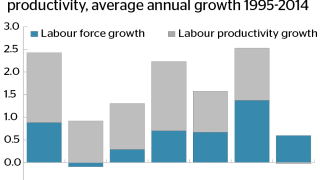
 Given the scale of the task at hand, few should begrudge Prime Minister Abe more time to meet the objectives of his courageous programme to rejuvenate Japan’s moribund economy.
 -
In theory, the Bank of Japan’s gargantuan asset buying programme, which forms a central pillar of its quantitative and qualitative easing policy, should transform international capital markets by forcing Japanese investors overseas en masse. But as so often is the case in Japan, theory and practice are very different things.
-
Given the low cost of debt, sluggish domestic growth and poor demographic trends, it is inevitable that international M&A will continue to increase as Japanese corporations’ management looks for growth beyond Japan to boost returns and growth prospects. This is good news for debt markets, which have also been boosted by an increase in the amount of share buy-backs.
-
Despite the problems that negative interest rates bring to a banking sector, Japan’s financial institutions have more to gain from a stronger economic environment than they have to fear from monetary policy. Given the progress they have made in strengthening their capital bases they appear well placed to see out such unhelpful policy, even if it lasts for longer than many hope.
-
Established in 2011 as a means of providing borrowers with easier access to a marginally more restricted investor base than the Samurai market, the Tokyo Pro-Bond market has had mixed fortunes in its five year history. While it has attracted a diverse range of borrowers, overall volumes have perhaps not lived up to expectations. The Tokyo Pro-Bond market has, however, firmly established its credentials as an alternative to the Samurai market, and market participants remain optimistic about its long-term prospects. Participants in the GlobalCapital Pro-Bond roundtable were:
-
Samurai issuance by borrowers from the Asia Pacific region fell from 47% in 2011, when Australian banks accounted for almost a third of issuance, to 16% in 2015. Nevertheless, it is clear that the region will have a key role to play in the evolution of the Samurai market in the years ahead. In the Asia Pacific Issuers Roundtable, borrowers discuss their experience in the Samurai market and look forward to likely developments over the coming few years.




Sub-sections







shared comment list