Top section
Top section
UK utilities switch on euros and sterling with green bonds
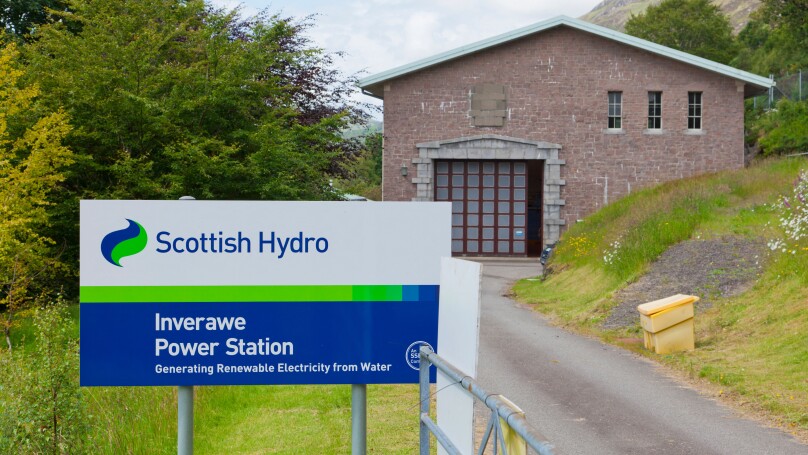
◆ Scottish Hydro tests long-dated sterling demand ◆ Tight pricing limits further tightening from guidance ◆ Cadent extends its euro curve with 10 year trade

◆ French bank returns after January amid scarcity for senior debt ◆ Investors like what they see as there is no book attrition ◆ Seven year tenor lures broader appetite

RWE builds sticky book for green dual trancher
◆ German utilities taps improving bond market ◆ Demand holds firm across six and 11 year tranches ◆ Fair value debated

Taking on a tyrant
How to go about the delicate business of dealing with bad behaviour from the boss
◆ French bank returns after January amid scarcity for senior debt ◆ Investors like what they see as there is no book attrition ◆ Seven year tenor lures broader appetite
Sub-sections
-
 ◆ Pair of real estate borrowers print four euro tranches ◆ Vonovia draws strongest demand on shortest leg of €2bn three-part trade ◆ Realty Income pays small concession on €600m outing
 -
◆ Pair more than 3.5 times covered at final terms ◆ Suez lands flat, Air France pays up ◆ Airline paper performs in secondary
-
◆ French utility returns a week after A$1.25bn debut ◆ Six year tranche pulls stronger demand than 12 year ◆ Both legs land close to fair value
-
Head of funding Jochen Schader says strong promotional lending has pushed the 2026 target above €15bn, as the agency caps its dollar programme before the summer
-
◆ BBVA opts for green five year bullet ◆ Pays concession for secondary performance ◆ Outperforms SNP supply from last week
-
All as expected by the market, but lack of more details regarding bill issuance somewhat disappoints






-
Singapore’s UOB has appointed Eric Lim as its chief sustainability officer, a newly created position to support the bank’s focus on ESG, which got a fresh impetus this week with the sale of the lender’s first sustainability bond.
-
CLOs have 'by nature' a limited exposure to the industries commonly excluded under ESG criteria, meaning their investment flexibility will be preserved, despite the exclusions appearing in more and more deal documents. This bodes well for the growth of ESG screening in the US CLO market, which has lagged behind other markets, with only 10 deals so far featuring the language, according to Deutsche Bank.
-
The G20’s Financial Stability Board is cranking up its action on climate change again now that Donald Trump is no longer US president. This will feed the hopes of some sustainable finance supporters who want the FSB to drive progress on issues including environmental accounting.
-
The equity market — and beyond — has been puzzling over how Deliveroo, one of the most anticipated IPOs of the year, could have suffered so badly in trading on its first day on Wednesday. Some blamed ESG concerns about the working conditions of the firm's delivery riders, others the dual class-share structure but the simplest explanation was that Deliveroo came at the wrong end of an IPO market that was losing steam.
-
Deliveroo and its shareholders raised £1.5bn this week. The IPO was a dog, priced at the bottom of its range and falling 20% on its debut. But it’s hard to feel sympathy for the investors.
-
The IPO market looked on in despair on Wednesday as Deliveroo, the UK food delivery company, began trading. The stock fell more than 20% in early trading and shell-shocked bankers fear that IPOs planned for after Easter may have to be put on hold. Sam Kerr reports.





-
UK government can find direction by being determined on defence and green growth
-
Growing company gets new bank lenders and equity investors
-
Recently departed banker to resurface in Asia
-
Five year bond set to be priced much tighter than the development bank's last senior issue
-
International Finance Corp’s drive to introduce development finance to the CLO market is advancing. Its second deal of $509m had more investors, more tranches and better pricing, supporting its rapid growth
-
Investors were eager to tender their bonds despite initial resistance


-
Issuer asks for interest payment holiday, parent DigitalBridge likely to step in
-
Credit quality of loans in CLO portfolios becomes increasingly important following the first CLO 2.0 liability impairment
-
CLO mezzanine investors are paid high spreads precisely because impairments are a possibility



-
US drug company Eli Lilly jolted the dollar market awake on Wednesday with an eight-part jumbo trade to fund two recent acquisitions
-
The US dollar market buoyant this week despite escalating hostilities in the Middle East
-
Redwood will be a repeat issuer



-
Sponsored by Republic of Côte d’Ivoire
Bond Awards 2026: Most Impressive Issuer in Africa — Republic of Cote d’Ivoire / Most Impressive Funding Official in Africa — Lancine Diaby
-
Sponsored by Crédit Agricole CIB
Syndicated Loan Awards 2025: Crédit Agricole CIB: Driving France’s loan market and ESG transition
-
Sponsored by Islamic Development Bank (IsDB)
Sukuk market’s next chapter: Financing the future, sustainably
-