Canada has taken the lead among a group of countries in agreeing to be the founding members of the Defence, Security and Resilience Bank, a new multilateral lender intended to help Nato members and close allies raise money for defence spending and improve industrial capacity and procurement in the sector.
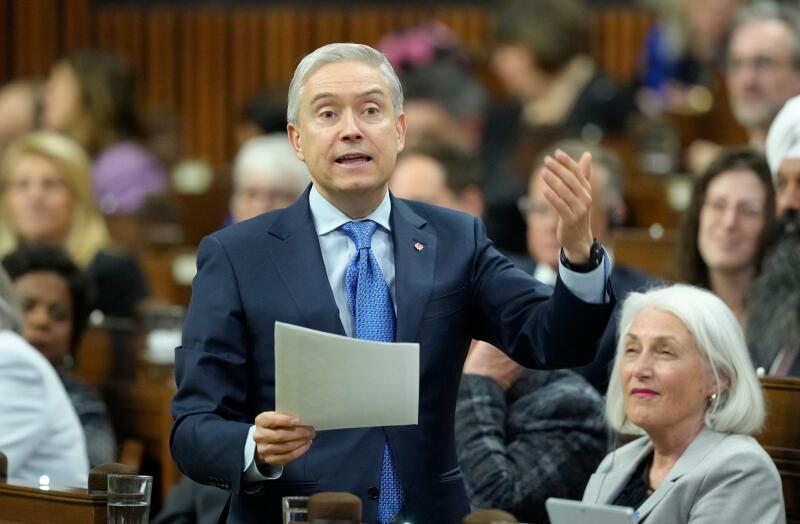
“Canada was pleased to host discussions with more than ten nations today on the Defence, Security, and Resilience Bank — an initiative to bring together likeminded partners to mobilise capital and support collective security,” said François-Philippe Champagne (pictured), the Canadian finance minister, on X on Friday. "In the months ahead, Isabelle Hudon, CEO of [Business Development Bank of Canada] will be working closely with international partners to lead Canada’s contribution in advancing the DSRB."
It was the first official statement of involvement from any national government, underscoring Canada's lead in role in the initiative.
The other countries likely to be in the first wave of members, which will take part in the first round of negotiations on the bank’s charter, have not yet been disclosed. However, it is understood that there was a high degree of interest after an information day about the institution held in London in September. Membership will be drawn from Nato members and politically aligned countries.
The DSR Bank will be set up according to the model established by multilateral development banks (MDBs), to help it achieve triple-A credit ratings so it can borrow as cheaply as possible in the bond market.

The DSR Bank Development Group, a non-profit organisation with the sole purpose of bringing the bank to fruition, has been presenting the idea to governments for many months, culminating in the shareholder day in London in September.
At that event were 37 of the 41 governments invited. None refused to join, GlobalCapital understands. This suggests other countries could join the first group in later waves, enlarging the bank.
Of keen interest will be whether the US, UK and France join. They together account for more than half of global arms exports, with the US alone making up 43%, according to data from the Stockholm International Peace Reporting Institute.
Given the scale of the US’s defence industry, its membership would seem to benefit the DSR Bank, especially in the short term.
Europe in particular needs to rapidly scale up its defence capabilities, which will be easier to achieve with US collaboration — even if in the longer term European policymakers want to build greater capacity and resilience of their own.
New joiners
Indeed, it was US president Donald Trump’s agitation at other Nato members for not meeting their defence spending commitments that lit a fire under the DSR Bank initiative early last year. Several countries agreed to increase defence budgets to Trump’s new requested level of 5% of GDP and looked for other ways to counter military threats such as Russia.
The UK government has previously made statements in support of the DSR Bank. Most recently, John Healey, UK defence secretary, said in parliament on January 7, when asked by Alex Baker MP whether the country would join others in creating the DSR Bank: “We are certainly interested in the proposals that [Baker] has been championing. Led by the Treasury, this government have been in discussions with those who are developing such proposals, and we will continue to hold those discussions, because such proposals will potentially play a significant role in contributing the sort of financial investment that we must see in Ukraine for the long term.”
Three aims
The DSR Bank idea was conceived in 2018 by Rob Murray, CEO of the DSR Bank Development Group and another former UK soldier who was also previously head of innovation at Nato.
The bank has three aims. The first is to raise bond market funding at cheap rates to lend to member states for defence investments.
The second is to make the defence procurement process more robust by adding conditions to the loans the DSR Bank makes to governments or defence contractors. This would require borrowers to meet contract terms in full, reducing some of the risks caused by multi-year defence projects being cancelled or redesigned midway through, because they do not match annual government spending cycles.
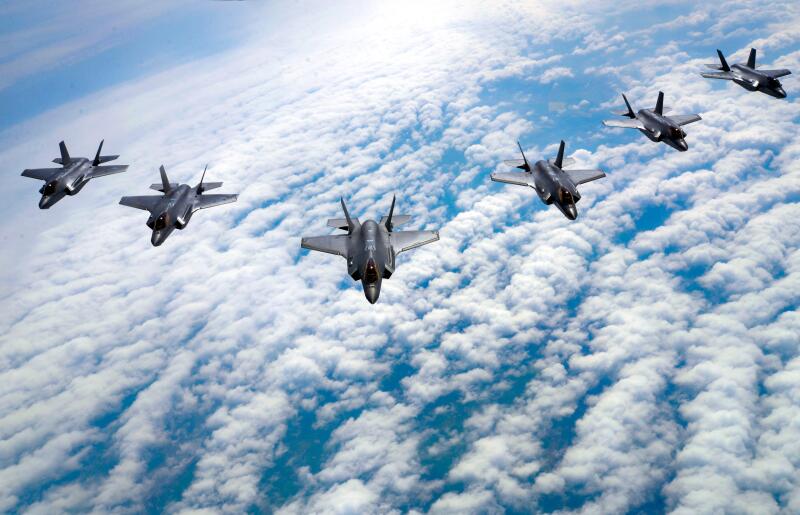
The third is to boost production capacity by providing loan guarantees to commercial banks within member states, so they can make more loans to defence suppliers, especially smaller ones that struggle to obtain credit otherwise.
There is a possibility that the bank will be headquartered in Canada, since the country is leading the way on setting it up. Several Canadian cities have made their cases publicly in recent months to be chosen as the bank’s home.
The next stage for the founding members is to agree the DSR Bank’s charter — the conditions under which it will operate and its objectives.
Attention will then turn to when the bank can become operational. Murray told a conference in June that “it’s realistic to see charter negotiations happening and in my mind completed this calendar year” and that the bank could be operational “in 18 months, so the back end of Q4 [2026], it’s not unrealistic to see the very first operations [by the Bank].”
Sources familiar with the MDB sector suggested the process might take longer. While it is true that, in order to obtain triple-A credit ratings, the DSR Bank’s rules will probably not deviate too far from what has been long established by other organisations such as the International Bank for Reconstruction and Development, there is still much to be negotiated.
Road ahead
The most recently founded major MDB was the Asian Infrastructure Investment Bank. The first memorandum of understanding (MOU) between founding members was signed in October 2014, already a full year after Chinese president Xi Jinping first proposed the bank.
From then, it took until May 2015, with five meetings of member states, to agree the articles of association (AOAs), as more countries joined along the way.
Then the member states spent months ratifying the AOAs in their national parliaments, acceding to the AIIB treaty and subscribing to their shares of the bank’s capital. Meanwhile, the bank’s premises and interim staff were found.
Enough of the paid-in capital had been deposited by December 2015 for the bank to open its doors a month later — 15 months after the MOU was signed.
DSR Bank will need to go through a similar process but there are hopes it could be swifter than the AIIB’s, given the urgency of the bank’s mission and the likely smaller cast of protagonists and their closer political alignment.
The bank’s capital shares have also yet to be worked out. The convention for MDBs is that each member’s contribution is weighted by GDP and supplied as one part paid-in capital to four parts callable capital, said a source with knowledge of the sector.
Once established, the DSR Bank will need credit ratings to support its bond issuance. It is likely that some preparatory work has already begun with major rating agencies and with the Basel Committee, to determine the risk weighting its bonds will be subject to.
Competition for the DSR Bank’s first bond mandate will be fierce. Several banks have supported the DSR Bank Development Group in a formal capacity.
Commerzbank, Deutsche Bank, ING, JP Morgan, LBBW and RBC Capital Markets have publicly stated their support. There are said to be 10 in total, with the other four coming from France, Greece, Spain and the Asia-Pacific region.
The DSR Bank Development Group chose not to comment for this article.