Top Section/Ad
Top Section/Ad
Most recent
The interventionist approach of the US government in forcing Anthropic to pull cutting edge model should worry Europeans

◆ What now for European Secured Notes ater long-awaited debut? ◆ The mood in European securitization amid MFS fallout and reg reform ◆ Digitalisation of bond market is up to the regulators

Markets are looking to the authorities to simplify blockchain issues, but they may not have the purest motives

The new European Secured Note market is keen to secure regulatory recognition for the new product but there are advantages to not having it
More articles/Ad
More articles/Ad
More articles
-
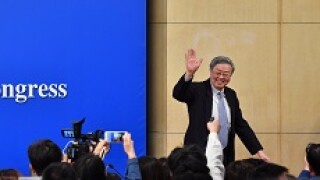
 As he heads towards the exit, Zhou Xiaochuan, the governor of the People’s Bank of China, is not only handing over the baton of RMB internationalisation to his successor, but to market participants as well. He also insisted the central bank will not let risk prevention get in the way of further reform.
 -
The European Commission’s proposals for a principles-based covered bond directive have been broadly welcomed, but the lack of detail on assets that might be eligible for covered bonds has caused concern.
-
The China Securities Regulatory Commission (CSRC) lifts restrictions on foreign investors seeking a majority stake in local securities firms, lawmakers consent to move to scrap the two-term presidential limit, and the Chinese commerce minister says the country will not fight a trade war with the US.
-
In the third of a four-part series of articles on China’s financial transformation, cash management experts tell GlobalRMB the wheels are again in motion for foreign corporations in China to move past nearly three years of strict capital controls that have all but killed their intent of using the country as a regional treasury hub.
-
UK finance minister Philip Hammond finally laid out the country’s position on Brexit and financial services in full on Wednesday, in a speech greeted warmly by the City. However, it was in stark contrast to the position of some EU member states, notably France, that financial services cannot be included in a free trade agreement.
-
Regulators in China have finally published issuance guidelines for Belt and Road bonds. But the rules still do not clearly define which bonds qualify, and fail to address issuers’ concerns on capital repatriation and borrowing costs.