Top Section/Ad
Top Section/Ad
Most recent


Investor appetite for CLO ETFs is increasing in Europe, as the asset class matures. But regulation and investor wariness may limit the eventual size of the market, writes Thomas Hopkins, meaning it will be some time before it can reach the scale of that in the US

Artificial intelligence’s capabilities could speed up some of the work involved in securitization, but its implementation poses risks. Building governance frameworks is key to deploying the technology safely, writes George Smith

Specialist mortgage lenders are optimistic that funding for asset-backed lending will improve in the long run, despite the difficult developing situation around the fall of specialist bridging lender Market Financial Solutions, writes Tom Hall

The possible further internationalisation of the covered bond market will present challenges as well as opportunities
More articles/Ad
More articles/Ad
More articles
-
 The European Parliament's Committee on Economic and Monetary Affairs (ECON) has voted through regulation to harmonise the secondary market for NPLs across Europe, pushing through a key stage of its Action Plan aimed at rebuilding the European economy post-pandemic.
 -
Anyone who thought the culmination of a trade deal between the EU and UK would provide a shining ray of clarity for financial services as to the level of market access between the two has been proved wrong. Little progress on regulatory equivalence decisions has been made, and while this points the way towards divergence, it is still unclear how exactly the UK would go about this.
-
It’s been almost a year since a Dutch tax ruling sent CLO managers scurrying to Ireland to avoid a VAT charge. But with the changes coming into action in 2021, some CLO managers are leaving their vehicles in the Netherlands and taking their chances on a ruling from the supreme court.
-
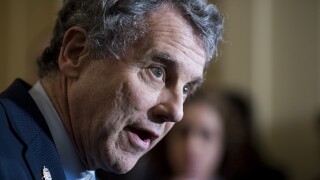
A blue Senate is posing a new threat to the ABS market, as regulators and lawmakers are set to turn their focus to consumer protection. Sherrod Brown, a critic of big banks and a loud consumer rights advocate, is now favourite to chair the Senate Committee on Banking, Housing and Urban Affairs, which could lead to a stream of headline risks for lenders.
-
In this round-up, consumer inflation in China turns positive in December, Beijing announces rules to protect Chinese companies from sanctions of foreign governments, and the banking and insurance regulator hands a Rmb200m ($30.1m) fine to financial institutions including China Development Bank and Industrial and Commercial Bank of China.
-
In this round-up, the central bank sets working goals for 2021, the Chinese government extends its policy to support small and micro-sized enterprises, and the US bans eight Mainland-based applications including the popular Alipay and WeChat Pay.