CEE Bonds
-
 Hungary is planning to sell a Rmb2bn ($290m) three year Panda bond on December 17, becoming the first and only sovereign returnee to the market.
 -
Akbank, one of the largest banks in Turkey, is preparing a TL3bn ($558m) rights issue amid fears of an increase in non-performing loans as the Turkish economy enters a slowdown.
-
The first green bond from a Slovenian borrower came to market this week. SID Bank will use the proceeds for green mortgages and financing low carbon aircraft.
-
The Turkish government is mulling plans to print asset backed securities against the country's banks' mortgage stock. Some are calling the idea a “bad bank in disguise”. It isn't, but Turkey will need one.
-
Turkey’s Ziraat Bank is planning to issue covered bonds and has published a base prospectus for its €1bn programme. However, it is questionable whether a euro benchmark from the issuer will be seen any time soon.
-
VTB Capital is encouraging Russian borrowers to consider the dim sum market as a supplementary source of funding because their access to core markets has been restricted since the US imposed sanctions in April. However, the potential scale of the dim sum market is limited.
-
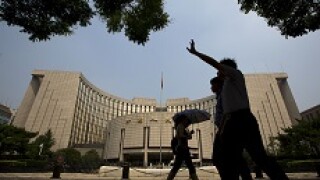
In this round-up, the China Banking and Insurance Regulatory Commission (CBIRC) published 18 new regulations for foreign banks in China, the People’s Bank of China (PBoC) has not injected money through reverse repo for a number record number of days and Spain and China sign MoU for closer financial collaboration and potential Panda bonds.
-
International uproar over Russia seizing three Ukrainian navy ships last weekend did not stop Russia selling a €1bn 2.875% 2025 bond on Tuesday. But investor fears are growing ever higher over the likelihood of further US sanctions on the country. Russia’s pivot away from dollars seems to indicate the same concerns. Francesca Young, Sam Kerr and Lewis McLellan report.
-
-
VTB Capital has no interest in adopting blockchain technology for banking, said Dmitry Snesar, VTB’s head of client coverage, at VTB Capital’s Russia Calling conference in Moscow this week.
-
Bankers love to advise their clients to look at the bigger picture and print now, for fear that that in just a few weeks or months, they could be facing a much tougher time. So the chorus of DCM officials criticising Russia for its timing in selling a €1bn seven year bond this week is more than a little hypocritical.
-
Fears that the Russian Federation's €1bn bond issue would only find demand domestically seem to have been assuaged as a source close to the deal said well over half the deal was sold to international investors. That source also denied the deal was in any way designed to bait the West, and said its timing was simply a matter of wanting to get ahead of worsening market conditions.