
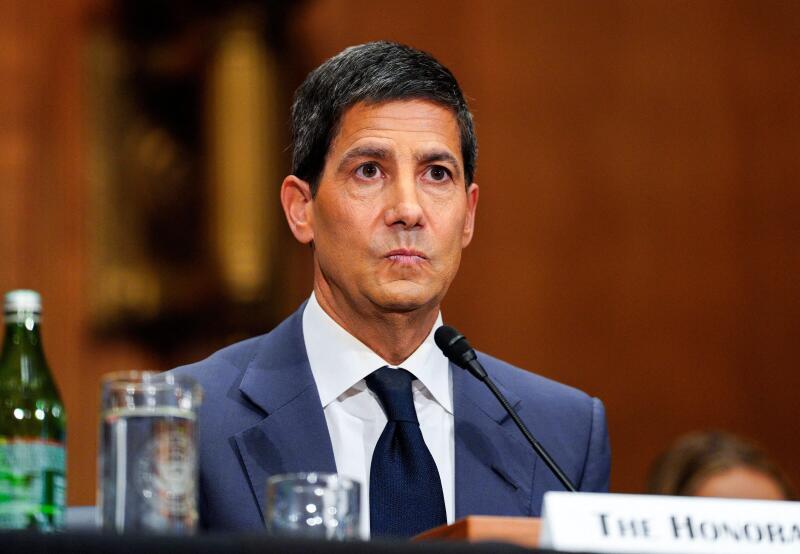
Kevin Warsh, the soon to be new chairman of the US Federal Reserve, faces a tricky task. His predecessor, Jerome Powell, has come under intense scrutiny from US president Donald Trump over his supposed tardiness in cutting interest rates.
Unsurprisingly, Trump wants the (currently impartial and independent) Fed to cut rates and bring down the cost of funding for the US government, rather than keep them high to combat inflation.
However, easing US monetary policy will not be easy for Warsh. At Powell’s final meeting as chair, only one of the 12-strong Federal Open Market Committee voted to cut rates: Trump loyalist Stephen Miran, who Warsh is set to when he takes over from Powell later this month.
As a result, if Warsh is to lower the cost of government funding like Trump wants, then he will likely have to do so through other means. If Warsh cannot change rates, then he could instead look to change the operations of the Fed.
For starters, Warsh stated during his Senate confirmation hearing that he is not a fan of the Fed’s favoured measure of inflation, the Personal Consumption Expenditures (PCE) index, which, like the Consumer Price Index, looks at a basket of goods.
Instead, Warsh is a fan of “trimmed averages”, which would exclude outliers and purportedly allow policymakers to look through the noise caused by one off or sharp inflationary shocks, like sudden tariffs or a war-induced energy price shocks.
Unsurprisingly, cutting off the outliers can produce lower inflation prints.
The Dallas Fed, for instance, publishes both PCE and trimmed inflation figures. PCE inflation for March came in at 3.5%, dropping to 3.2% when food and energy were excluded. The trimmed mean measure, however, came in at 2.4%, not far off the Fed’s 2% target.
Of course, there are merits to the trimmed inflation method. The latest level, for instance, excludes at the lower end, the cost of religious organisations to Americans and typewriters, while at the high end, stationery and video discs are excluded.
Shifting to an alternative measure of inflation could help paint a rosier picture of the economy and strengthen the case of a rate cut — but this might not reflect the financial reality.
The recent spike in inflation has been predominately driven by the sharp energy price hikes, stemming from the US’s war with Iran. As shipments through the Strait of Hormuz have dwindled, inflation has risen.
Oil and energy costs have skyrocketed, dragging other costs up with them. But these costs could be transitory, to borrow a word favoured by the Fed in another era.
A resolution to the conflict with Iran and a reopening of the Strait could bring inflation down as easily as closing the waterway brought it up.
Separating the transitory from the persistent has long been a problem for inflation-busting central bankers worldwide but trimming the outliers is not always the best option.
PCE inflation is an easy metric to understand. To meddle with it in search of a lower reading risks complicating one the Fed’s clearest data points.
Reforming inflation is akin to reforming the narrative or moving the goal posts. Discarding extreme contributing statistics from the final number does not change the underlying macroeconomic picture.
Just because something is left out of the official inflation number does not mean prices are not still rising. Warsh's preferred measure of inflation might show one thing but it won't matter if US consumers feel something quite different.