

Eight years after he appointed Jerome Powell to lead the Federal Reserve, US president Donald Trump has finally got him out of the chair — and installed his new favourite man.
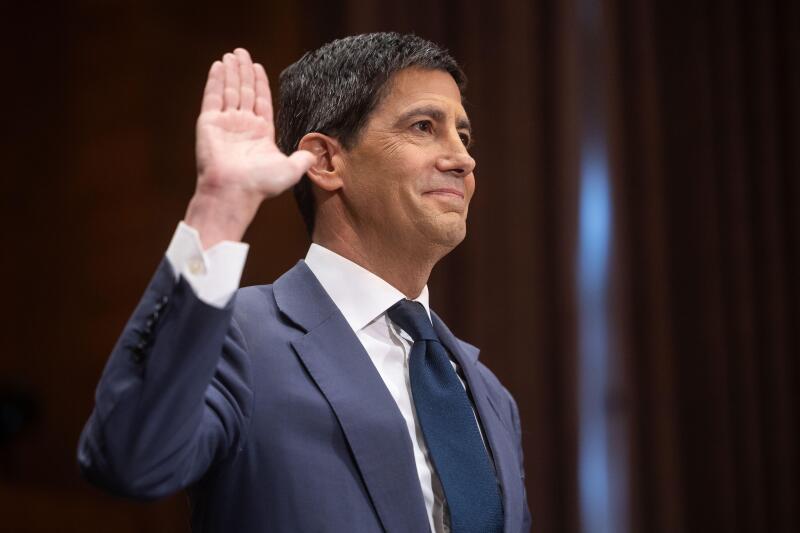
Kevin Warsh, attorney and former Fed governor, was approved by the Senate Banking Committee earlier this week.
A full Senate vote is still needed but Warsh will likely enter the soon-to-be-renovated Eccles Building and chair his first Federal Open Market Committee meeting in June.
Warsh’s ascent will be warmly welcomed by Trump, who has long criticised “Jerome ‘Too Late’ Powell” for not cutting the Fed Funds rate more quickly.
In Powell’s final meeting as chair, the FOMC kept the rate on hold at 3.5% to 3.75%.
Trump wants Warsh, a hawk turned dove, to hasten the cutting and bring down borrowing costs.
However, Trump’s monetary policy wishes will not come true easily — or quickly.
Although the Fed chair has changed, the macroeconomic situation has not.
When Warsh sets foot in his new office just off Constitution Avenue next month, inflation will more than likely still be high and the job market stagnating.
The latest US personal consumption inflation print was 3.5% and it is likely to climb as higher energy prices caused by Trump's assault on Iran filter through into the economy.
In fact, US CPI has been above the Fed’s 2% target for over five years, last meeting the goal just one month into Joe Biden’s term.
Of course, inflation might fall as quickly as it climbed. If a deal is reached in the Middle East that stably reopens the Strait of Hormuz, inflation could tumble.
It is likely to be much more transitory than during previous supply shocks — as the pain is so clearly centred on energy costs, rather than increased goods and energy costs during the recovery from the Covid pandemic.
But these are — for now — just hypotheticals. Events in the Middle East are constantly shifting, and could just as easily escalate as calm down.
Can't have your Eccles cake and eat it
As a result, the outlook for interest rates is just as uncertain. Analysts at ING and Rabobank expect two cuts from the Warsh-led Fed later this year, but BNP Paribas thinks the Fed will hold until 2027 — and might even hike this year.
Thankfully for the market, Warsh cannot come in and cut against the grain, no matter how much Trump urges him.
Ultimately, the rate is decided by a vote of the 12 member Federal Open Market Committee, not by its chair.
This week's meeting was the most divided for 34 years, with four governors dissenting from the FOMC's statement.
Trump loyalist Stephen Miran voted for a 25bp cut, while three governors were more hawkish than the majority, voting against as they “did not support inclusion of an easing bias in the statement at this time”.
Any hint towards future easing, however, was omitted from the latest Fed statement.
FOMC members Beth Hammock, Neel Kashkari and Lorie Logan’s dissent is a clear warning to Warsh that not all Fed officials share his dovish tilt.
And with Warsh set to replace Miran on the FOMC when he takes over from Powell next month, the committee will lose its only current rate cutting advocate.
Warsh’s dilemma looks set to be further complicated by Powell’s decision to stick around as a Fed governor until the Department of Justice’s investigation into his handling of the renovation of the Fed’s headquarters is resolved.
The DoJ dropped the probe last week, removing a potential hurdle to Warsh’s confirmation, but Jeanine Pirro, the former Fox News host who is now US attorney for the District of Columbia, has suggested she could reopen it.
Powell will be the first ex-chair to continue as a governor since Marriner Eccles in 1948, after whom the office at the centre of Pirro's investigation is named.
During his Senate hearing last week, Warsh repeatedly denied that Trump had tasked him with lowering rates, insisting he would not be Trump's “human sock puppet”.
But there is no simple option for Warsh: side with Trump and risk going against the 11 other FOMC members, or fall foul of the president — just like Powell — and open yourself to personal and professional attacks.
When it comes to easing, making a decision will not be easy.