
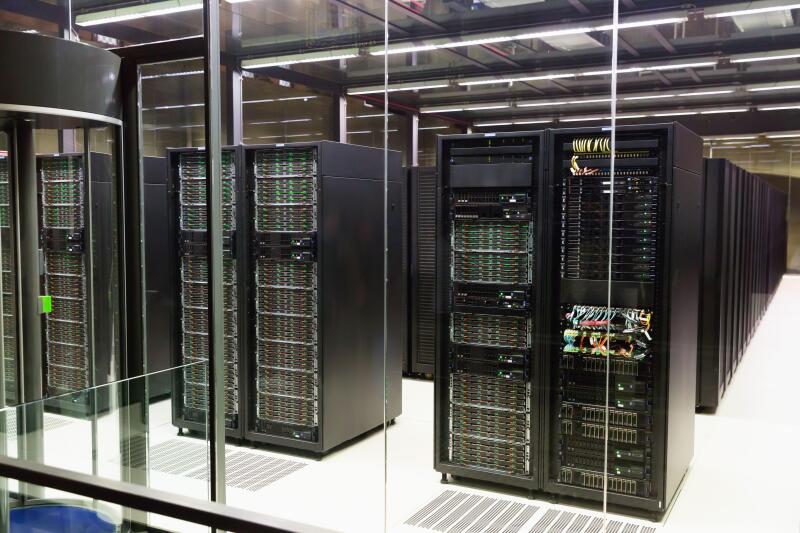
Amid the flurry of capital flowing into data center ABS deals in the US, Standard & Poor’s should be lauded for maintaining its single-A ratings cap.
Moody’s and Fitch have rated data center ABS as high as triple-A this year, so S&P is an outlier.
The arguments to go up to triple-A sound persuasive. Many data center ABS are backed by leases to some of the highest credit quality companies in history, like Microsoft, which is rated Aaa/AAA by Moody's and S&P. There is unlikely to be a reduction in need for cloud computing any time soon, meaning demand for data center space is likely to stay strong.
These factors, among others, led Morningstar DBRS to rate Compass Datacenters’ 2025-2 deal AAA in October. Not every deal gets to triple-A: KBRA rated five senior tranches of Flexential’s $1.17bn deal A- in March.
But amid a generally bullish stance by rating agencies, S&P is sticking with a more cautious outlook.
A microcosm of the issue played out on the $1.4bn ABS priced by CloudHQ last week.
Of the three class A2 notes, the first two were rated by Moody's and Fitch, at Aaa/AAA and Aa3/AA-, the third by Fitch and S&P, at A/A.
The CLDHQ 2026-1 deal also contained class B1 and B2 notes, both $100m. They were only rated by Fitch.
Out of 70 data center ABS tranches, including variable funding notes, S&P lists on its online dashboard of these deals, rated between 2020 and 2025, 42 are rated A- and 12 are A.
None have higher ratings. Seven of the A rated bonds were from deals by Sabey.
S&P’s data center ABS methodology allows it to go up to A+, but it has not done that, according to the dashboard.
Data center ABS deals are often issued with legal final maturities of 30 or 35 years, and the rating agencies rate them to those, rather than to their much shorter anticipated repayment dates (ARDs), typically five or seven years.
Usually a long final maturity is a credit strength for a securitization, as it gives plenty of time for the assets to yield enough money to repay the bonds.
However, data center ABS are not structured to amortize before their ARDs.
If for some reason they are not refinanced at the ARD, the deals will depend on the data centers remaining attractive to tenants into the medium and longer term.
But computing technology is developing so fast that it is inherently difficult to project the attractiveness of data centers to tenants or their liquidation value very far ahead.
The specialized nature of these properties, which are fitted with high grade security devices, liquid cooling capability and high-powered electricity generators, mean it is unclear how easily they could be repurposed if they were no longer needed for cloud computing.

The financial performance of these new facilities has also not been tested through recessions.
S&P's assumptions predict that there is a high likelihood of three recessions over a 35 year period.
Many of these deals rely on leases to only one or a very small number of tenants.
Additionally, dig a little deeper into what one investor called the "pristine" cash flow backing most data center ABS and you will find leases to hyperscalers like Microsoft, Meta, Amazon, Oracle, Google, CoreWeave and Nvidia.
It is concerning how often similar subsets of this group crop up in the collateral of deals— essentially giving investors very similar exposure in a different wrapper.
The inter-related artificial intelligence, cloud computing and data center investment booms are sweeping all before them at the moment in US capital markets, prompting fears of irrational exuberance, even mania.
S&P's level-headed restraint is a welcome and praiseworthy exception.
Data center ABS issuance in the US — 144A market
Data as of January 24, 2026 with Sabey ABS deal in premarketing
Source: BofA, MUFG, KBRA, S&P