
Relocations are afoot in the private placement arena, as banks and investors jostle for position in a traditionally slow-moving market that is undergoing some tectonic shifts.
Change comes at a glacial pace in the US private placement market, which one investor memorably argued is no bad thing, "because you don't want glaciers moving quickly".
Industry grandees are accustomed to chewing over the same topics year after year at the annual Private Placements Industry Forum, which takes place in January in Florida.
It is true that the long discussed question of whether US insurance regulator NAIC, founded in 1871, would add more granular subdivisions to its credit rating scale has finally been answered — in the affirmative. But the question has now shifted to whether the commissioners will ever get around to linking the new rating subdivisions to risk-based capital charges.
Another perennial feature of the market is the imbalance between supply and demand. Arguably, this has become more acute as insurance companies are increasingly looking for a home not only for their own substantial funds but also for money they manage for third parties.


However, the pressure of all that cash looking for a way into the market is bringing some change, as ever more aggressively competitive investors such as Pricoa and Metlife side-step the traditional syndication process, or even outmanoeuvre it, to strike bilateral or club deals.
Insurers are also being joined in the increasingly crowded private debt market by asset managers such as Apollo Global Management, which has just hired private capital markets banker Ravi Modha from Barclays for a push into investment grade private debt.
The trend toward self-arranged deals may be worrying for the banks that traditionally act as placement agents on syndicated or even club deals, but the added pressure on investors to source their own deals at least means that there are job opportunities on the buy-side.
Could that be what is in store for Steve Valvona, who recently departed from the private placement desk at Lloyds? One portfolio manager in London seemed to think so: "He may go to one of the larger buy-side players, as they can leverage his contacts to better develop their bilateral businesses," said the PM. "But if he wants to stay on the banking side, he could go to any bank looking to increase market share in private placements.”
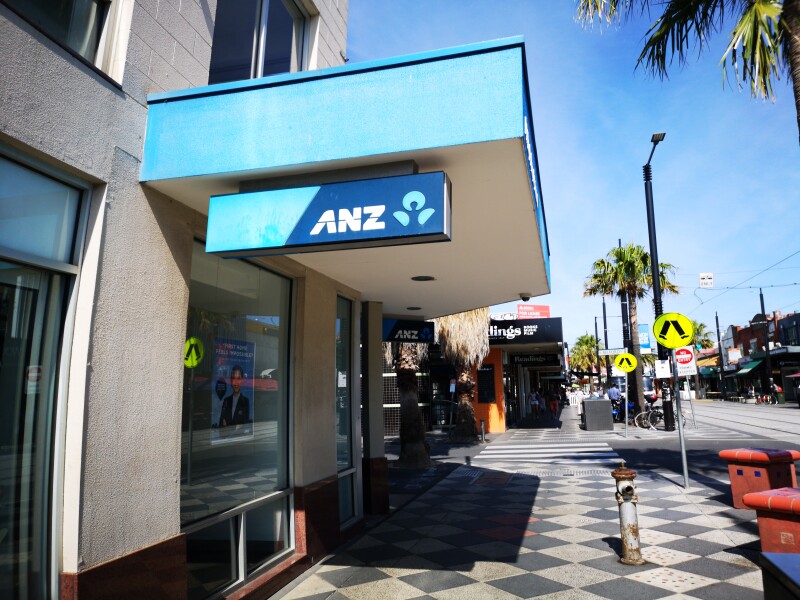
Speaking of banks looking to increase market share, the antipodean lender ANZ has just hired ING's erstwhile head of US private placements, Michael Thilmany, to mastermind its own expansion plan. ANZ had previously participated in the market through a joint venture with JP Morgan.
Yunusova crops up at IFAD
Elsewhere in the capital markets, the International Fund for Agricultural Development has appointed Gulnara Yunusova as its new treasurer as it prepares for its bond market debut. The previous treasurer, Ben Powell, left in June after just 15 months, having had a "rethink" about moving to Rome in the middle of a pandemic and its effect on family life.
Gulnara joins from the International Finance Corporation, where she led the origination and execution of CEEMEA local currency, fixed income an derivatives business.
Picking greens
There was also activity in the busy job market for impact bankers, with Crédit Agricole selecting derivatives banker turned ESG debt specialist Romina Reversi as its new head of sustainable banking in the Americas and HSBC Asset Management's former head of responsible investment, Melissa MacDonald, starting a new role at rating and index provider MSCI.
New York-based Reversi joins Créd Ag from JP Morgan, where she had specialised in debt with an environmental, social and governance flavour since 2016. She is an active member of the Green and Social Bond Principles organisation.
MacDonald, meanwhile, is now global head of ESG and climate indexes at MSCI in London. She left HSBC AM in June.
New Yorkers won over by Danish
Finally, Copenhagen-headquartered credit investor Capital Four has attracted three researchers and a business development manager to join its team in New York ahead of its planned debut in the US CLO market later this year.
Researchers Austin Nelson, Anthony Han and Adam Wueger join the firm from AIG Asset Management, Benefit Street Patners and Angelo Gordon, respectively, while client relations specialist Brian Walsh makes the move from Avenue Capital Group.
More top stories
-
 The US Alternative Reference Rates Committee (ARRC) has updated its reference rate guidance for the move away from dollar Libor that removes the need to get a lending syndicate’s consent. But trade bodies on both sides of the Atlantic do not agree on the details, writes Mike Turner, and some lawyers claim that major issues still need to be addressed before the ARRC-recommended method can work.
 -
EU leaders meet this weekend to hash out the multi-annual financial framework — the €1tr plan guiding the bloc’s next seven years of spending. The budget contains the €750bn recovery fund, which will likely prove a contentious topic but, if approved, it could reshape the European economy and lead to big changes in its public sector bond market. Lewis McLellan reports.
-
Huge capital markets revenues helped US banks stack up more provisions against loan losses in the second quarter, as they prepare to weather the economic impact of the coronavirus pandemic. But analysts warn that firms will not be able to repeat this trick in the second half of 2020, with trading and underwriting returns likely to climb down from their peaks.
-
Financial institutions are set to spend the summer months monitoring conditions for issuance in order to continue funding this year or to frontload funding needs for next year, according to deal arrangers.
-
Credit Suisse has made three senior appointments to its China securities joint venture.
-
HSBC’s global head of ECM is under no illusions about the challenges the bank faces but says HSBC’s restructuring is not one of them. David Rothnie reports.