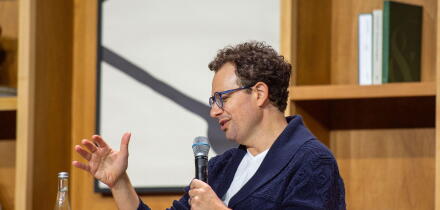
The $58bn deal, announced after US markets closed on Wednesday, means that Bank One's chief executive Jamie Dimon, formerly of Citigroup, will become CEO in 2006 of the second largest bank holding company in the US by assets.
Bill Harrison, CEO of JP Morgan Chase, will keep his job for the next two years and then cede power to Dimon, knowing that, despite all the flak he has suffered over the years, he has helped create a financial giant. Harrison will stay on as chairman.
Alongside Citigroup and Bank of America, the new JP Morgan Chase — subject to shareholder and regulatory approval — will become a third US super-bank.
Attention is now likely to turn to Europe, which bankers believe is due for another round of consolidation.
In some markets, such as Germany, this is likely to be driven by small local and regional banks, but many expect a high-profile cross-border — or transatlantic — merger before long.
One head of an investment bank's debt capital markets financial institutions group, speaking before the JP Morgan announcement on Wednesday, described the market in Europe as resembling a scene from a cowboy film, where all the gunslingers are ready, but they are waiting for the first fighter to draw.
Cross-border mergers have taken place in Scandinavia and the Benelux region — even across the Anglo-Scottish border — but no truly international link-ups have affected the leading banks in Europe's biggest economies.
The new JP Morgan Chase is likely to be busy digesting its merger for a while, but there is no other bar to its expanding overseas. The two partners' limited global presence — on the international stage they still lack the reach of Citigroup — would mean they faced no anti-trust or competition law obstacles .
The merged bank is also likely to be in good financial health. Because it is an all-share trade, there is no effect on capital ratios, which will be about 9.1%.
Dimon said the two banks would generate excess capital.
If the fourth and fifth largest US banks, Wells Fargo and Wachovia, were to merge, they would still be 25% smaller than the new group, by assets, according to M&A research firm SNL Financial.
Citigroup had $1.2tr of assets in 2003, according to statistics from Bloomberg. The new JP Morgan Chase will have an estimated $1.083tr.
After merging with FleetBoston, Bank of America will have $933bn. B of A, the largest bank by deposits, announced 2003 earnings of $10.8bn today (Friday).
Wells Fargo, the fourth largest commercial bank in the US, has assets of $391m.
The Morgan-Bank One combination not only brings size, but will give both banks a much better diversified revenue stream. Theoretically, this should make revenues much more stable.
"At JP Morgan Chase we were too weighted to the investment banking side," Harrison said, "and this merger will give us balance."
Bank One shareholders will receive 1.32 JP Morgan shares for each Bank One share. Based on JP Morgan's Wednesday closing price of $39.22, that will value Bank One's common stock at $51.77.
The combined bank will have a market capitalisation of around $130bn.
Bank One has substantial commercial and investment banking businesses, but brings a hefty ballast of retail lending to the mixture.
Moody's and Fitch concurred in placing the ratings of both banks on review for upgrade — an unusual reaction to a merger.
Standard & Poor's expects the merged company to carry JP Morgan's A- rating. "Strategically, the merger represents an excellent fit," said Tanya Azarchs, head of investment bank ratings at S&P. "It solves certain weaknesses in the business franchises of the two companies."
Together, the two banks stand a better chance of achieving their potential, S&P said.
Moody's said that "once cost synergies are attained, the new entity still faces the challenge to generate earnings growth in key businesses such as credit cards and retail banking."
Although the combined bank will be called JP Morgan Chase at a holding company level, it will retain the brands Bank One and Chase at retail level.
There is relatively little overlap between the two groups, so cost synergies may be relatively limited — management predicts $2.2bn in three years — but the two partners complement each other well.
Bank One brings a branch network that, while focused geographically in 14 states — chiefly in the midwest and Texas — exceeds JP Morgan Chase's, which is heavily concentrated in the northeast.
They overlap only in Delaware, Florida and Texas, while Bank One is the largest bank in Illinois, and JP Morgan is in New York state.
Bank One has fixed income and securitisation businesses, and is a leading player in the US loan market.
The combined enterprise will be the largest global corporate loans bank, the second largest US investment grade bond house, the largest derivatives firm, the largest dollar clearing house, the largest US corporate trustee, the largest securities lending institution and the biggest US private bank.
The bank is expected to shed 10,000 of its combined 160,000 staff.
Dimon's ambition rewarded
Once the protégé of Sandy Weill at Citigroup, Dimon is regarded on Wall Street as highly talented and ambitious.
Many felt that it was only a matter of time before he made an audacious move, especially as Bank One's share price climbed and climbed.
Indeed, when JP Morgan's share price was languishing — it sank as low as $15.26 in October 2002 — there was speculation that Bank One might make a hostile move for JP Morgan. As it turns out, the two banks had been in discussions since November 2003.
For the next two years, Dimon will be president and chief operating officer.
The wholesale banking business, headed by vice chairman David Coulter, will be called JP Morgan.
The new bank's executive committee will include Don Wilson as head of risk and Linda Bammann as deputy head.
Bill Winters will run credit and rates. James Staley will lead investment management and the private bank.
Steven Black is to head equities and Walter Gubert will take charge of investment banking in EMEA. Dina Dublon is head of finance.
Bank One is based in Chicago, but the combined entity's headquarters will be in New York, with middle market and retail based in Chicago.
There is execution risk, but senior management at both firms have experience of undergoing large mergers.