Top Section/Ad
Top Section/Ad
Most recent


Investors should feel more confident when BNPL products are regulated like mainstream consumer credit

Ares middle market deal in 2025 was the first CLO incorporated in Luxembourg

Eight conditions banks must satisfy to issue a covered deal have been proposed by Israel's regulator

The interventionist approach of the US government in forcing Anthropic to pull cutting edge model should worry Europeans
More articles/Ad
More articles/Ad
More articles
-
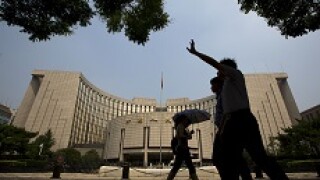
 There was little understanding among market watchers to news that the Chinese central bank is planning to introduce a counter-cyclical component to the calculation of the daily fix of the onshore RMB (CNY). Analysts say the move contradicts earlier statements from the PBoC about giving markets more say in the exchange rate.
 -
A plan buried in the Conservative Manifesto calling for the creation of UK sovereign wealth funds should be taken on whichever party finds itself in power next month.
-
The European Securities and Markets Authority has refused to give Europe’s banks the certainty they need on whether Pillar 2 capital 'guidance' constitutes inside information or not, leaving it up to individual institutions to assess on a case-by-case basis and pointing out that national supervisors are in charge of inside information.
-
A new formula to determine the daily renminbi fix could be a prelude to more exchange rate policy reform from China, said HSBC.
-
Banks are beginning to grapple with the implications of funding the One Belt One Road (OBOR) project following the Belt and Road Forum for International Cooperation this month. While the initiative will likely help the renminbi go global, it is unclear how far and fast a boost RMB internationalisation will get from it.
-
The US Federal Reserve’s economics team have finally found academic evidence for what the market has thought all along — regulation has shrunk dealer balance sheets, and cut liquidity in corporate bonds.