Most recent/Bond comments/Ad
Most recent/Bond comments/Ad
Most recent


Only one Gulf issuer has printed a blue bond in the public market

Some say UAE central bank liquidity has prompted banks to retrench

Cracks emerge in underlying quality as banks appear to teeter further into cautiousness

The trade may persuade other top-tier GCC sovereigns that the public market is open
More articles/Ad
More articles/Ad
More articles
-
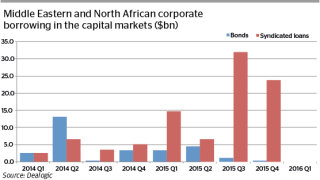
 The loan market has provided ample support for corporates across the Gulf Co-operation Council (GCC) and Egypt in the last 18 months. This will continue, but issuers will also reacquaint themselves with the bond market with innovative products this year, writes Elly Whitaker.
 -
For all the difficulties facing bond issuers in the Middle East, at least local investors are still participating in deals. But issuance itself is scarce which could lead to more cash being sent to find opportunities further afield, writes Chris Wright.
-
The liquidity crunch in the Middle East may have positive consequences for the development of infrastructure finance in the region — and in particular the role of private capital, says Chris Wright.
-
A swathe of ratings downgrades. one of which prompted Bahrain to first cancel a tap and then reprint it this week at a higher yield, is just one factor that will force Middle East sovereigns to pay up for bond funding just when they need it the most, writes Virginia Furness.
-
Bahrain’s decision to revive last week's cancelled bond sale was driven by reverse enquiry from investors who were unperturbed by the issuer’s new junk status, according to bankers on the deal.
-
HSBC Group’s Middle East business took a $300m hit in 2015, mainly due to higher loan impairment costs as the bank expects an increase in loan defaults in the UAE, according to its annual report.