Most recent/Bond comments/Ad
Most recent/Bond comments/Ad
Most recent


The bank's regular appearances in primary markets stopped after Russia invaded Ukraine

Japanese government bond yields have risen during the last few months

BSTDB has had a tricky time since Russia attacked Ukraine, both of which are shareholders

Demand peaked at six times the deal size, but many orders dropped out
More articles/Ad
More articles/Ad
More articles
-
 The Federation of Russia is returning to the bond markets for the first time since a set of US sanctions in April sent the country’s bond trading into a tailspin. But despite books for the bond already being in excess of €1bn, several bankers away from the deal are describing it as a “political statement” rather than a well thought out trade, and are heavily criticising the timing and choice of euros for the note.
 -
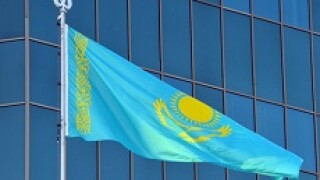
Kazakhstan Temir Zholy (KTZ), the Kazakh state-owned rail company, sold Sfr150m five year Swiss franc bonds on Tuesday, in choppy market conditions.
-
The seizure of three Ukrainian navy ships by Russia on Sunday has sparked civil unrest in Ukraine and driven the tension between the two countries to new heights, wreaking havoc on Ukraine’s capital markets.
-
In this round-up, China and the Philippines sign Memorandum of Understanding (MoU) for a new Panda issuance, survey finds that 64% of Chinese investors choose to invest domestically rather than overseas, and foreign firms are getting approvals to help China build a nationwide credit information monitoring system.
-
VakıfBank has closed an $855m-equivalent refinancing loan, making it the fifth Turkish financial institution to successfully refinance this season. Vakıf is set to be followed closely by Garanti Bank, as Turkish financial institutions defy the crisis of confidence in the country's economy that was triggered when the lira crashed in August.
-
VakıfBank will close its loan refinancing in the coming days and is set to be followed closely by Garanti Bank, as Turkish financial institutions defy the crisis of confidence in the country's economy triggered when the lira crashed in August.