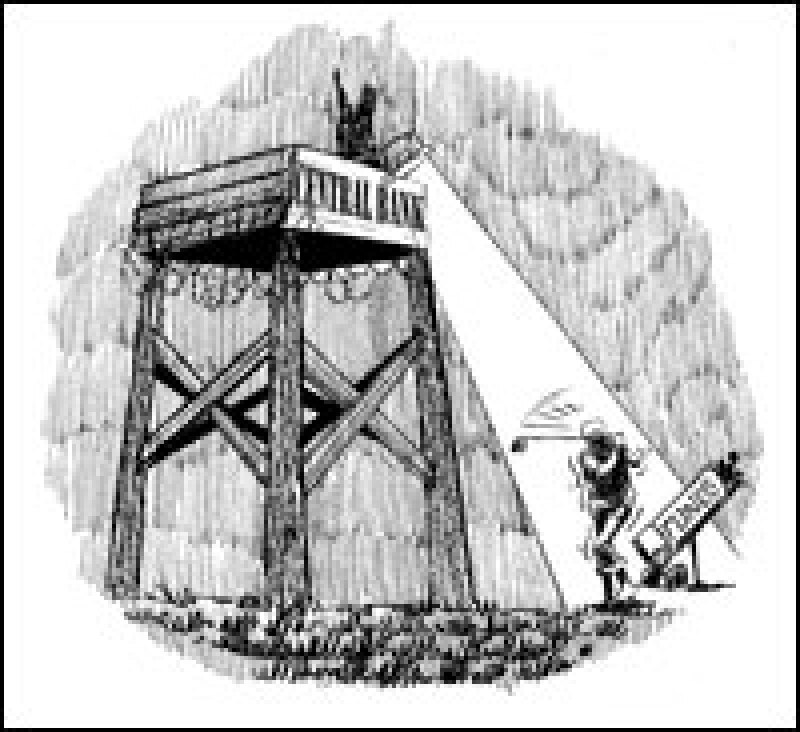
Guardians of minor currencies, including the Israeli shekel, Chinese renminbi and most of the European Union accession currencies, are starting to take more of an interest in hedge funds' foreign exchange trading activities because they fear it could put undue pressure on the country's exchange rate. The central banks' moves are prompted by a switch toward emerging market currencies by hedge funds because of the lack of volatility in the major foreign exchange markets.
One foreign exchange trader said he has spoken to several central banks this year that are actively looking to understand and predict how funds profit from currency trading. In July, Jonathan Kearns and Phil Manners at the Reserve Bank of Australia wrote a paper titled, 'The Profitability of Speculators in Currency Futures Markets,' which considered explanations of how currency speculators are able to profit at the expense of other market participants. One suggestion is speculators have more accurate forecasting techniques at their disposal. The trader said some central banks looked at using the triggers of black box trading strategies to give them warning as to when their currency might come under pressure.
Meir Sokoler, deputy governor of the Bank of Israel, said he looks at data on flows in the local currency and has noticed hedge fund trading. "We find that the speculative activity of these bodies is of a stabilizing kind," he noted. But the bank would be concerned if the funds all took a similar position against the shekel. "From my perspective it's important to see that they behave heterogeneously," he added.
China has recently taken action against speculative trading of its currency. Funds appear to have flooded China with so-called hot money this year. Peter Zhang, author of Chinese Yuan Derivative Products, estimates the non-trade current account will be USD80.6 billion this year, compared to USD20.3 billion last year. China announced last week it had fined 70 companies and banks for speculative trading. One currency fund manager noted this kind of reaction could become more common from countries where the currency is being squeezed and it could result in closing out both speculative and genuine investment.
The Bank for International Settlements said hedge funds are largely responsible for the exponential growth of the foreign exchange market in its triennial study of the global foreign exchange market, published in September. It estimated daily global turnover in the OTC derivatives market had grown 112% at current exchange rates to USD1.2 trillion in April 2004.