
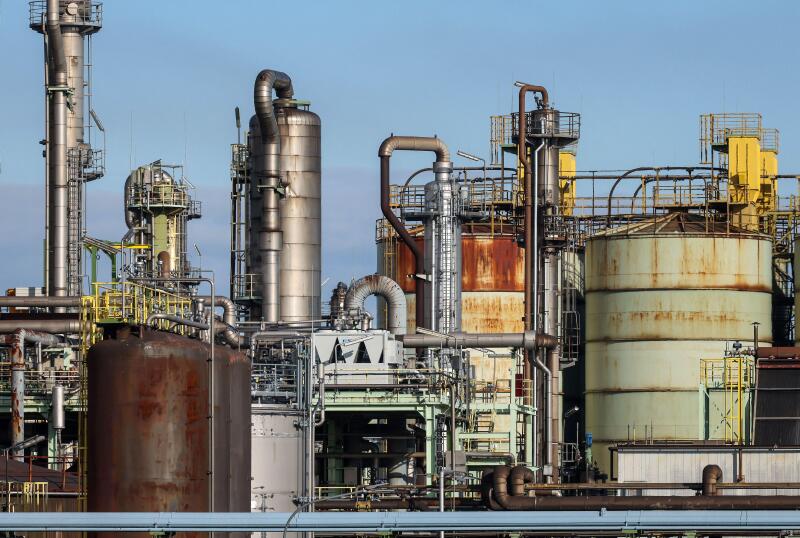
The European chemicals sector has been making CLO managers nervous for several months, as leveraged loans to chemicals companies have traded steadily downward in price.
In January, more than 35% of chemical company floating-rate debt held by CLOs was trading below 90, according to research from Bank of America (BofA).
The majority of leveraged loans are currently trading at par or above, meaning that any loans that fall much below 98 are likely to be troubling for CLO managers. Loans do not plummet in price arbitrarily — prices drop because of rating downgrades and deteriorations in credit quality.
One of the largest sectors in CLO portfolios, the chemicals industry, also has several borrowers rated B3 by Moody’s, including INEOS Quattro Holdings, Caldic and Archroma.
Loan prices that are in freefall make it difficult for CLO managers to sell out of positions in chemicals loans without making a loss on these investments. Managers that retain chemicals credits may face problems if these credits are downgraded to triple-C.
A higher proportion of triple-C credits might cause these managers to breach their overcollateralisation (OC) tests, directing cash away from CLO equity to pre-pay notes. Defaults from chemicals companies would also dent CLO equity returns.
But beyond the confines of CLO portfolios, the distressed chemicals sector represents a graver problem with investment in European industry.
European chemicals companies are struggling to remain profitable and are less attractive to CLOs because they are uncompetitive, weighed down by high energy costs, cheap imports and US tariffs.
The same factors that are blighting chemicals companies are creating problems for all of Europe’s major industrial sectors.
An EU report commissioned last year singled out the automotive, basic metals, chemicals, fabricated metals, machinery, and non-metallic minerals sectors as being under threat.
Unflatteringly titled Mapping the impact of industrial decline on European regions, the report noted that the sectors mentioned represent 15% of EU GDP and diagnosed all of them with “worrying signs of ‘ill health’ and/or significant downside risks”.
It is not just the chemicals sector, but most of Europe’s industries that have become less attractive to current and prospective investors.
Poor investment
An overreliance on imports and energy has severely threatened the health of European industry.
Industrial energy prices have surged since Russia’s invasion of Ukraine, as European countries have tried to reduce their dependence on imported Russian oil and gas.
Simultaneously, cheap imports from markets like China have soared. In the chemicals sector specifically, the share of chemicals from China in EU imports increased from about 9% to 18% between 2014 and 2024, figures from the European Chemical Industry Council (Cefic) show.
In short, high energy prices have raised overheads for European industrial companies relative to their global competitors as these competitors export more to Europe.
European industrial companies and projects increasingly make a poor investment prospect for capital markets participants. But the capital-intensive nature of heavy industry means that industrial companies need regular access to capital.
This could take the form of leveraged loans financed by CLOs and other lenders, or corporate bonds, or project bonds designed to fund specific projects. Listed companies or those contemplating a listing will also depend on capital from equity investors.
Additionally, major industrial projects are often financed through syndicated bank loans, such as the €3.5bn financing for INEOS’s ethane cracker chemical plant in 2023.
An ailing European industrial sector will find it harder and more expensive to raise debt and equity through the capital markets, as limited profitability translates into less reliable debt service and poorer equity returns.
Self-sufficiency
In their approach to industry, European governments have failed to adjust to the fact that globalisation and the post-Cold War order are crumbling.
As the global political environment becomes more fractious, economic self-sufficiency is crucial, as Europe is less able to depend on foreign markets. This is not an argument for protectionism, but it is a pragmatic approach to global trade in a less secure world.
Several assumptions from the late 1990s no longer hold true. China’s entry into the World Trade Organisation has not resulted in it becoming more democratic. Russia has not integrated politically with most of its European neighbours.
The US is no longer a reliable economic and political ally to Europe, as demonstrated by US president Donald Trump’s recent wild threats to impose tariffs on several European countries over the future sovereignty of Greenland.
Europe’s complacency about its changing relationship with foreign powers has left its industrial sector at a disadvantage when it comes to raising capital, precisely when this capital is most needed.
European governments and the EU must develop credible industrial strategies that provide incentives for capital markets participants to invest in domestic industry. Failure to do so will only entrench economic decay and geopolitical irrelevance.