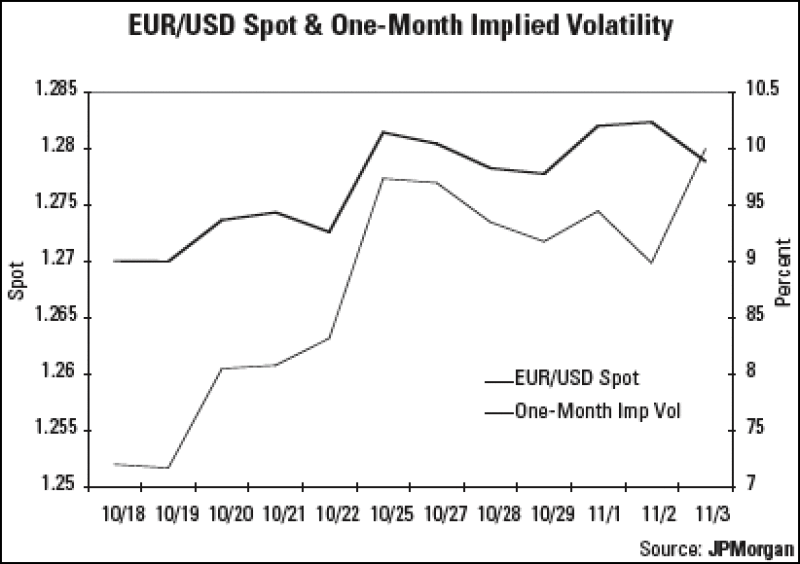
The euro reached a high of USD1.28 against the dollar last Wednesday as the reelection of Bush saw market participants confirming their view of further dollar weakness by selling options. Jean-Claude Trichet, president of the European Central Bank, also aided the dollar's depreciation by indicating at a press conference last Thursday that the ECB would not hold back a stronger single currency.
The spot move, an eight-month euro high, did not have a similar effect on implied volatility, which remained static at around 10% for the one month. Low volatility and cheap options, however, did not tempt players to buy, reported traders. Most market players were selling dollar call options with at-the-money strikes at the front-end of the curve. As DW went to press, traders were expecting a further sell-off of options and volatility to follow the U.S. non-farm payroll data release on Friday. "People are trading the digital events: that's what it's all about these days," said one trader at a German house. Traders said there are options barriers at USD1.29, but there were few people willing to support them by buying more options.
Hans Redeker, currency strategist at BNP Paribas in London, noted Trichet's comments clear the way for further euro appreciation. He noted, however, the spot move is driven by fundamental dollar weakness rather than euro appreciation. Redeker expects the euro to be around USD1.30 in one month and USD1.33 in six months.