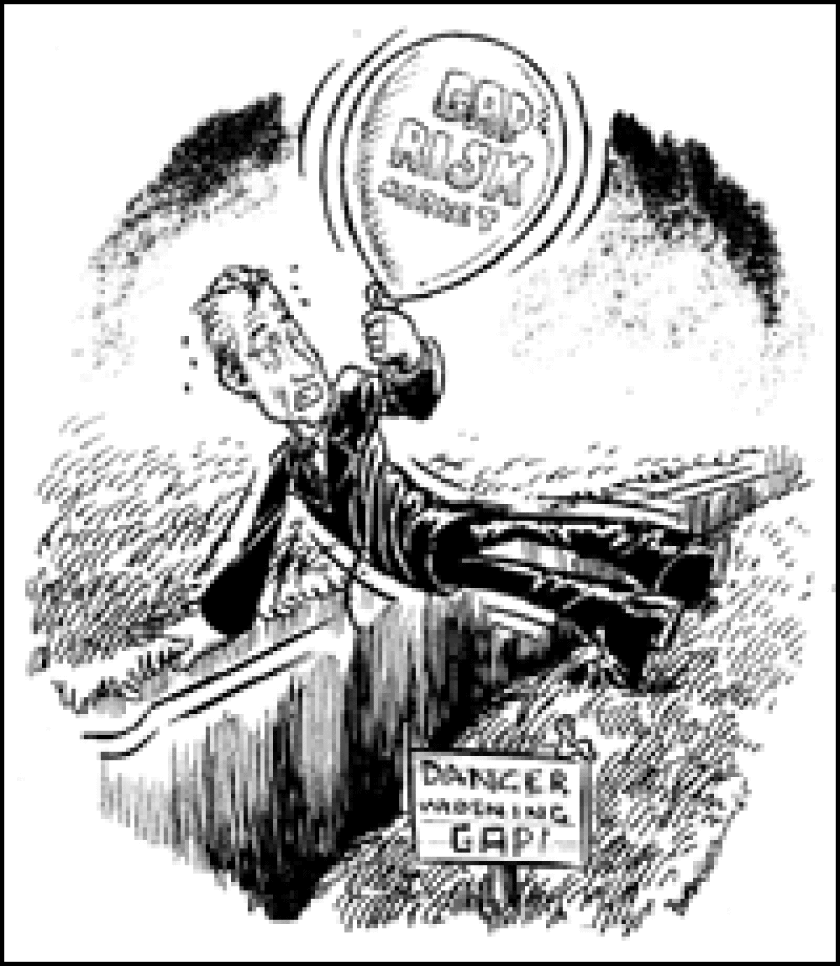
Inter-dealer gap risk trades are picking up in the U.S. The trades, already a feature of the European market, are in demand as firms look to lay off some of the risk associated with structured products. "There is a market for laying off risk and I think it will grow," said John Neubauer, v.p. in structured alternative investments with JPMorgan in New York.
Firms are trading gap risk in the form of deep-out-of-the-money equity index options with one or two day maturities to partially hedge risk. Trading in the inter-dealer market has been building for a few months and firms are starting to eye buysiders as possible counterparties to dump the risk on. Insurance companies are seen as likely candidates.
Neubauer said he has seen so-called stability or crash notes traded whereby the buyer pays LIBOR plus a spread for protection against an index or security collapsing in value. For example, the buyer can buy protection in case a hedge fund index drops by 20%. If the index drops below 20%, the buyer loses a proportion of how much the hedge fund index drew down below threshold and if the threshold is not hit, the buyer gets back par.
Neubauer said currently most dealers are retaining risk and those that are trading it do so within the dealer community. But this will change as their books get bigger. "Some books have gotten very, very big," said one market participant, adding firms structuring constant proportion portfolio insurance products are piling up risk. "They're choking on gap risk," he said.
Banks are expected to turn to insurance companies, as they have begun to do in Europe (DW, 7/18/04). Neubauer said eventually gap risk instruments will be pitched to insurance companies and high-net-worth clients, where dealers can secure better prices.