Free content
-
 European politicians may be tempted to make a show by founding a new development bank. That would be a mistake. Results are what matter, not branding. To supercharge development and climate finance, the EU should choose the simplest and fastest option.
 -
The postponement of the WeWork IPO last month and the under-performance of other 2019 debutants should not be the cause of woe for the US IPO market, but a sign that investors are adopting similar price discernment to European IPO buyers.
-
Clauses to stop investors who are ‘net short’ a particular credit influencing any restructuring or default are becoming more common, with buyout debt for Bain Capital’s Kantar spinout and Blackstone’s Merlin take-private including the new terms. These may not be watertight, but that doesn’t matter — the point is to make it awkward for investors taking this approach.
-
GlobalCapital China is pleased to invite you to participate in the GlobalCapital China Capital Market Awards 2019. Inaugurated last year under the GlobalRMB banner, the awards celebrate the accomplishments of the leading players in the renminbi debt capital markets, onshore and offshore, as well as key service providers.
-
Please take a few minutes to cast your confidential vote 11 recently issued euro covered bonds - including those from Caffil, BPCE and Deutsche Kreditbank.
-
Hedge funds have been accused of backing UK prime minister Boris Johnson in order to profit from a no-deal Brexit through short positions. But the shorts that Crispin Odey’s fund has outstanding in UK companies look to have failed to deliver over the past month, with share prices of companies rising.
-
If the ECB wishes its new risk free rate €STR to take off in the way that its UK and US cousins have, it must learn lessons from those country’s central banks on how to promote it.
-
Metro Bank joined Deutsche Bank this week in demonstrating how regulatory debt capital issues drive fears over business sustainability. Will regulators get cold feet and pull back?
-
An evening at Captain’s Bar always provides me with an endless source of gossip, anecdotes and entertainment. This week proved as reliable as ever, when I took up my perch with my usual glass of whisky.
-
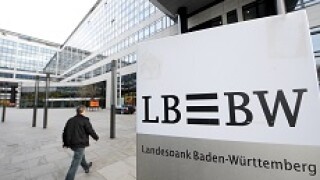
Landesbank Baden-Württemberg has long held the crown as the top Schuldschein arranger, but even as the market internationalises the Stuttgart-based bank has retained its ability to cope with deal flow, as well as push the market beyond its usual borders.
-
China’s Star board, the local version of the US Nasdaq, has great potential to highlight the country’s move towards reforming its IPO market — if it’s done right.
-
Financing a dirty industry to clean up serves a different purpose to keeping a portfolio pure, and appeals to investors with different theories about the economy and the world. It's time for markets to start making the distinction.