
It began as a story about investors fleeing the dollar. It turned out to be something narrower and more durable. A hawkish Fed is about to show just how durable.
When investors' rotation out of US Treasuries was first spotted last year, analysts' instinct was to call it de-dollarisation — money leaving dollar assets.
It surfaced briefly in equities, but fixed income order books told a different story. Investors were not leaving the dollar, they were moving within it, out of Treasuries and into dollar bonds from other supranational, sovereign and agency issuers.
De-dollarisation was redefined as de-Treasurisation, and the market has run on that footing since.
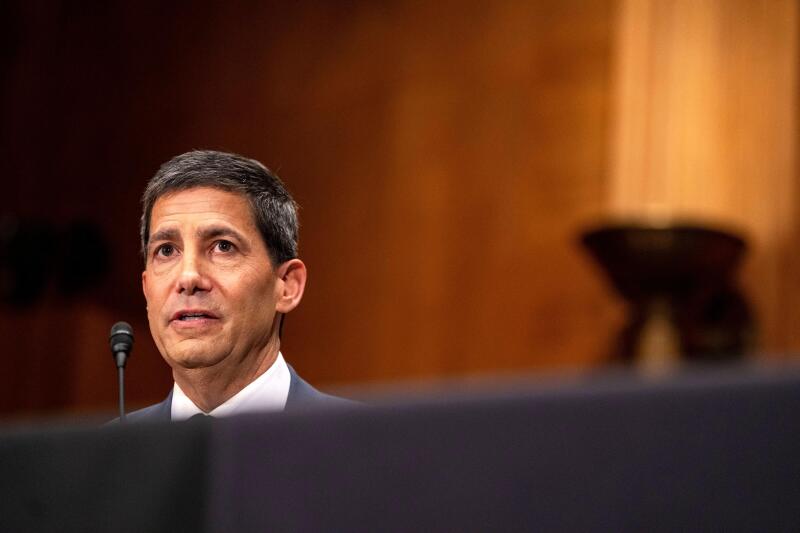
The reflex now is to assume a hawkish Federal Reserve will undo it. Kevin Warsh's first Open Market Committee meeting as chair of the Fed last week was seen as lending towards tightness.
The front end and belly of the Treasury yield curve repriced upward and a market that opened the year expecting two cuts is pricing a real chance of a hike before December.
If the rotation was investors reaching for SSA paper because they didn't love Treasuries, then Treasuries paying well again should pull that bid back.
It will not, however, because of who is driving the trade. The dominant force is central bank reserve managers and bank treasuries, and many of them are not free to leave the dollar.
A central bank mandated to hold a fixed share of its reserves in dollars cannot rotate into euros even if it wanted to. Its only real lever is what dollar assets it holds — and the decision some have taken is to stop holding around 90% of their piles in Treasuries and diversify into other high grade dollar exposures.
SSAs are the obvious destination, and the move has been sharp. Tier one five year paper that paid double digit spreads over Treasuries a year ago now prints in the low single digits. That tightening is the mechanical result of the reallocation, not a yield bet that a resolute Fed can talk anyone out of.
De-Treasurisation is also bigger than the dollar. Government bonds have been underperforming across the board — thanks to swelling deficits, rising debt to GDP ratios, German defence spending, French budget wrangles.
Investors have been reallocating out of govvies and into SSAs everywhere, to pick up extra basis points. The dollar is the sharpest example of a broad weakening of sovereigns, relative to the issuers they stand behind.
Yield? I'll take it with spread
Where yield does bite, the hawkish turn helps SSAs rather than hurts. For the slice of the Asian bank treasury bid that plays the pick-up of dollar paper over lower domestic yields, Warsh lifting dollar yields has widened the gap, not closed it.
On both the mandated flow and the opportunistic one, a tough Fed leaves the bid intact or larger.
The real risks may sit elsewhere. The SSA market has been resilient to the point where even aggressively priced deals clear. But the closer spreads grind to Treasuries, the more an execution can wobble if short end swap rates rise a couple of basis points between setting the level and pricing — accounts sensitive to pricing over swaps simply drop.
The opportunistic investor flow has in any case thinned as the year has worn on. The hedge fund-heavy books earlier in 2026 have given way to cleaner ones, as Canada's PSP Capital found this week. Its $1.25bn five year trade drew a high quality bid that left it a little over twice subscribed.
This shift in the book's composition tilts what remains further towards the mandated accounts the Fed cannot reach.
At some point the liquidity-minded bank treasuries may stop paying up for paper they cannot trade as readily as the Treasuries they sold to buy it. That, not the Fed, is what bears watching.
The evidence will be in the books. If the reserve manager and bank treasury cohorts keep carrying dollar benchmarks, as they have recently, the structural lean-in to SSAs is intact, whatever the dot plot says.