Central and Eastern Europe (CEE)
-
 The European Central Bank will begin supervising financial institutions in Bulgaria and Croatia from October 1, as the two countries prepare to join the euro. Firms entering the Banking Union for the first time will also fall under the Single Resolution Board’s remit for the minimum requirements for own funds and eligible liabilities (MREL).
 -
-
Emerging market corporate bond supply grew on Thursday, with a strong showing from the Central and Eastern European region added to by Czech Gas Networks.
-
Central and Eastern European commercial real estate operator NEPI Rockcastle issued a green bond on Tuesday, attracting new investors to its debt.
-
Otkritie Bank, the Russian financial services company, sold a 3% stake in gold and silver miner Polymetal on Tuesday night, the third trade in the firm in three months, as investors flock to take advantage of rising gold prices.
-
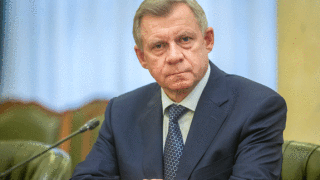
Following the high drama in Ukraine last week when the sovereign pulled a long anticipated bond issue after the governor of the central bank resigned just after the deal was priced, investors are now casting a cautious eye on who will take over.
-
Bankers and investors say FIG issuance will return to the fore after a sovereign-dominated first half of the year. Three bank issuers this week showed that the market is open for non-sovereign issuers. As fears of a second wave of Covid-19 infections and November's US presidential elections threaten volatility, some say the usually quiet summer period may be inundated with EM issuance.
-
-
-
Europe’s equity capital markets bankers are preparing for a busy autumn of IPOs and have been meeting with investors to secure early support for these deals. Bankers are hoping the new deals retain some of the features of successful listings in the first half of the year.
-
Poland has become the first CEEMEA country outside the eurozone to sell a bond with a negative yield since the onset of the coronavirus pandemic.
-
The shock resignation of the governor of Ukraine’s central bank on Wednesday night led the sovereign to pull its much-anticipated Eurobond, which had priced just moments before. As investors grow more unsettled, experts fear for the sovereign’s access to institutional funding and capital markets, writes Mariam Meskin.