

Oil prices dipped in mid-September, after a commitment from Saudi Arabia to increase supply and following more downbeat economic news from China. But a new bout of fever may well cripple the convalescent global economy. Weeks of fears that the impact of high oil prices would push the US into recession prompted speculation that the White House might tap into emergency reserves to stem the rises, as the geopolitical risk is on the increase again in the Middle East.
“Geopolitical risk is the most important factor right now. There is a real concern with what happens with Iran,” Ruchir Kadakia, director of global oil fundamentals at IHS Cambridge Energy Research Associates, says. It’s not just Iran’s output which is at stake but rather the backlash of sanctions against Tehran. “The concern today – and what is keeping the price of oil elevated – is fear that Iran is going to somehow disrupt 17 million [barrels per day] bpd of oil that moves through the Strait of Hormuz,” says Kadakia.
STRAITJACKET
According to the US Energy Information Administration, the Strait of Hormuz is the world’s most important oil chokepoint because around 20% of the world’s total petroleum and around 35% of the total oil traded by sea pass through it each day. Iran has repeatedly threatened to block the strait in retaliation for the sanctions imposed on it to force it to allow inspections at its nuclear power plants.
Tensions are running so high that geopolitical concern may take precedence over macroeconomic woes. “We are in an environment where fear is keeping the prices up,” says Kadakia. “Every $10 average increase in the price of oil reduces global economic growth by 25–30 basis points. So a conflict with Iran cannot even be calculated other than by saying that it would throw the world back into recession.”
“The market is not driven by a bunch of speculators; it is being driven by commercial buyers. People are actively hedging. They are buying protection because they are concerned about rising prices due to the political risk,” Kadakia adds.
Should tensions over Iran’s alleged nuclear programme explode, the impact on oil-importing emerging markets is bound to be significant, analysts say. Non-OECD demand (45.48 million bpd) will be overtaking OECD demand (45.25 million bpd) next year for the first time, according to Paul Horsnell, Barclays Capital’s main oil specialist.
A spike in oil prices could have a devastating effect on oil importers and their current and fiscal accounts. Yet, the dramatic events of four years ago need not be repeated. “2008 was a once in a generation event... that caused severe economic discontinuity. We are not heading to the same outcome.
Emerging markets were still growing rapidly back in 2007–08. This time around China and India have seen a marked slowdown in growth,” says Sudakshina Unnikrishnan, director of commodities research at Barclays Capital.
Disruptive factors
To make matters worse, there are additional concerns coming from Libya as separate factions are fighting for power following the demise of Muammar Gadaffi, and angry and religiously motivated anti-US riots led to the murder of the US ambassador in Benghazi last month. All this may disrupt the resumption of oil output in Libya. In addition, the bloody civil war in Syria has the potential to destabilize the whole region.
Meanwhile in Iraq, there have been reports of attacks on population centres and oil facilities. “An already unstable situation has been worsened by the deterioration in the Syrian crisis. On top of this, the extremely poor performance of the supply side, especially in the North Sea, is tightening up the front end of the Brent futures market. Meanwhile, third-quarter global oil market balances are looking exceptionally tight, as demand is set to ramp up strongly on a seasonal swing in non-OECD demand and a stronger OECD performance,” says Unnikrishnan.
Oil supply, too, looks very tight. “There is only around 2.5 million bpd of spare crude oil productive capacity that could be used to make up for any kind of disruptions. When you pull out the very heavy crude that the Saudis have, the number is right under 2 million bpd. This is around the amount of production that we do daily in the US Gulf of Mexico,” says Kadakia. “This is only enough to cushion [the impact of] a hurricane. This is not much at all.”
Yet, in mid September, the International Energy Agency said that inventories have become “more comfortable”, and there are some who say the commodities super cycle now may well be behind us. Last April, the IMF was issuing a veiled warning: “The broad-based boom in commodity markets started about a decade ago (with some differences across commodities), and there are doubts about its continued sustainability.”
Its World Economic Outlook pointed out that “by the end of 2011, average prices for energy and base metals in real terms were three times as high as just a decade ago, approaching or surpassing their record levels over the past four decades.”
Nevertheless, the IMF stressed that “if geopolitical risks to the supply of oil materialize, oil prices could rise temporarily, but the ensuing slowdown in global growth could lead to a decline in the prices of other commodities.”
EBB AND FLOW
Continued money-printing by the world’s major central banks and uncertainty have heightened volatility in the commodities’ market. After a period of decline that extended until the second quarter of the year – “the worst ever for commodity investment flows, with a net outflow of $5.3 billion”, according to Barclays Capital – the markets bounced back, as July and August proved to be the strongest two-month period for commodity index returns since early 2009. The move was largely motivated by the expectation of a new stage of quantitative easing in the US (QE3), which finally materialized last month, and the summer lull on the European front.
Then, the global environment turned supportive for commodity markets, despite serious structural problems in the global economy. The latest stimulus package in China, which intends to inject $170 billion in infrastructure, and last month’s policy initiative of the European Central Bank to intervene more actively on the short-term bond markets to shore up the eurozone’s most vulnerable members have paved the way for a recovery in most hard commodity prices. The green light given by Germany’s constitutional court to the European Stability Mechanism and, to a lesser extent, the electoral victory of the pro-European right-wing liberal VVD party in the Netherlands (the first time an incumbent won in a series of a dozen elections in Europe), also seemed to point to a less stormy political environment.
“The announcement of new investment projects by China, especially those in infrastructure (power and transportation) and QE3 are fairly beneficial in terms of commodity markets,” says Unnikrishnan. Precious metals have started to rebound – especially gold – although the reaction of most other metals has been fairly muted, except for copper, which touched a four and a half month high in mid-September, after the Bank of Japan followed the Federal Reserve in announcing more quantitative easing, with speculators hoping the measures will be enough to boost manufacturing and construction.
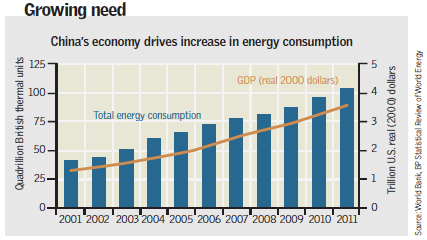
But the degree of uncertainty remains high. China, of course, is the big ‘if’. The intensity of the slowdown of its economy will have a key impact on the market. Following the Chinese government downward revision of economic growth, most economists have cut their GDP forecast. Barclays Capital now forecasts 7.5% economic growth for China in 2012 (in line with the official target) and 7.6% in 2013 (down from its previous forecast of 8.4%). “This would not have a significant impact on the markets,” Unnikrishnan says. “The current growth downturn in China is a combination of both structural and cyclical changes, and it seems 7–8% growth has become the new normal. However, if we have a hard landing in China, this would affect the commodities market more significantly, but this is not our current forecast.”
Brazil’s Vale, the world’s largest iron ore exporter, has suffered a sharp drop in its shipments to China, its main client, in recent months. Company executives agree that the era of exuberance may be over, but they insist that metals are not running out of steam yet. “We don’t have a negative vision of the commodity markets. We believe there is a structural change going on in the global economy, as the gravity centre is moving towards Asia. Most commodities face a long-term perspective of scarcity. Maybe they have lost some of the glitter they have had over the past 10 years, but we believe that demand will continue to grow,” José Carlos Martins, executive director of iron ore and strategy at the Brazilian company Vale, said last month, before a trip to China.
The current volatility is increased by a set of persistent risks. “This latest rally in commodities is very different to previous ones, with geopolitics and weather impacts in energy and agricultural markets the main drivers, and improving sentiment in financial markets playing a much smaller role. The key difference is that this time round the move is much more narrowly based, driven mainly by a rise in Brent crude, grains and soybeans prices. In contrast, previous ‘risk on’ trading periods have seen a much larger group of commodities participate, with roughly similar gains made in different sectors and markets,” says Barclays’ Unnikrishnan.
Gold and precious metals, which were boosted by bloody strikes in South Africa last month, are also expected to gain further ground, with Bank of America forecasting gold may hit $2,400 per ounce by the end of 2014 from the current level of around $1,770.
 |