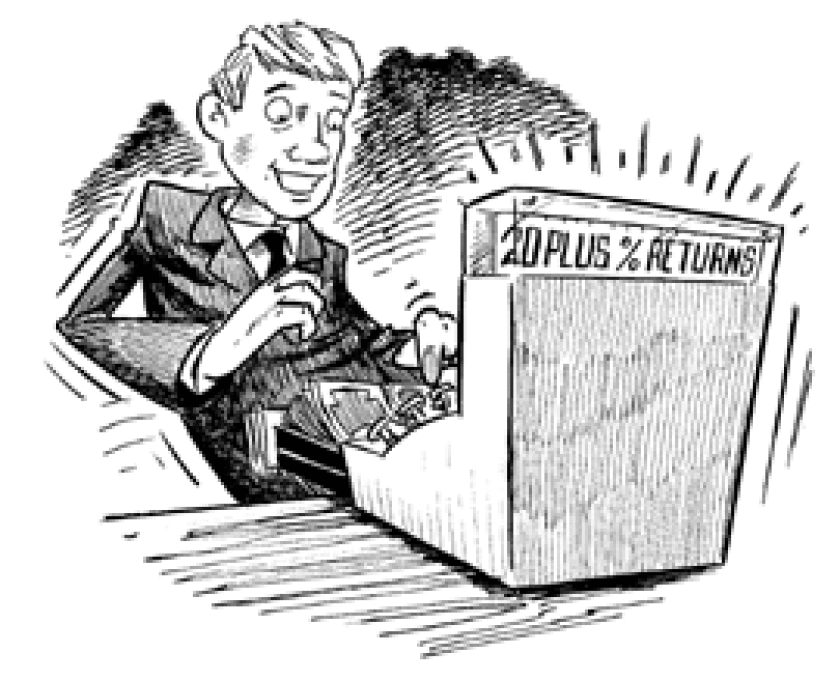
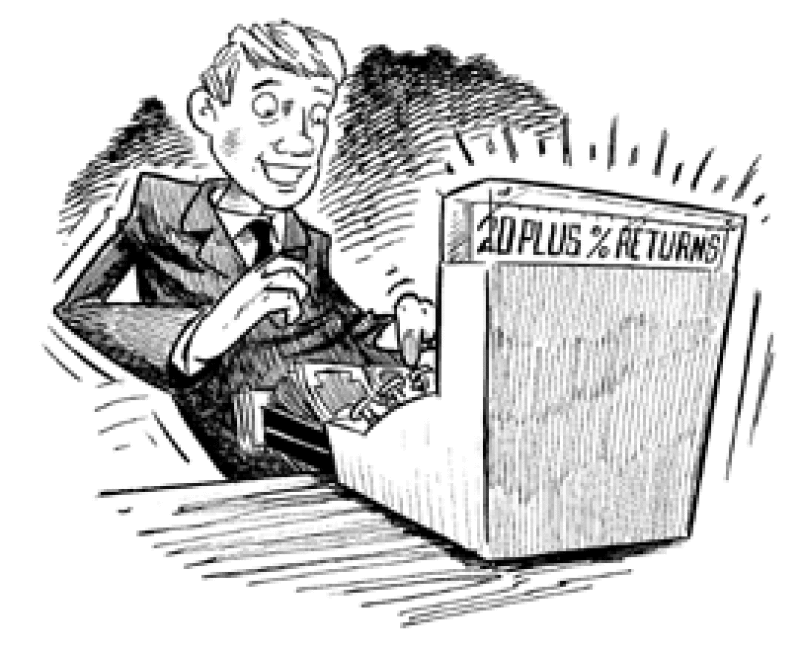
Nearly all of the performance measures indicate just how solid of a year the high yield market had, but perhaps the best one has to do with the growth in supply. New issuance rose a whopping 95% this year, to $112 billion, according to Standard & Poor's. Meanwhile, positive fundamental and technical developments helped create one of the best years in the junk bond market in recent memory. Andy Van Houten, managing director and co-head of high yield research at Deutsche Bank, says that demand increased as investors moved money into the high yield market, partly on the advice of Warren Buffett, who declared the market was undervalued earlier in the year. The Merrill Lynch High Yield Index posted a 25% return up to the end of November. Roger King, a high yield analyst at CreditSights, an independent research firm, says the high returns are a result of a market that has gotten ahead of itself. "We've snapped back from the dark days of 2002 when things were oversold. Now, things are overbought. The market is too hot," he states. King notes that more than 15% of the Merrill index's gains came from price appreciation. Currently, 72% of bonds in the benchmark are trading over 100, whereas at the bottom of the market in 2002, only 23% were over par. At the last market peak in July of 1998, 73% were above par. "We've come full circle. There's no more upside in high yield. We are left with clipping our coupons," King says. He recommends investors focus on better-quality names to protect against a downturn in the market.
Bruce Walbridge, portfolio manager at State Street global Advisors, points to fiscal policy as the real driver, with its focus on "restoring the economy's growth at any expense, even at the expense of re-inflation." The Federal Reserve, he says, views inflationary risks as very small and is intent on generating sustained growth by providing money. The high yield market, Walbridge says, loves an environment where you can expect higher rates of inflation but don't have to pay them because the yield curve doesn't reflect the likelihood that consumer prices will increase.