Middle East
-
Emerging market assets took a hit after several days of US rates volatility this week as market participants braced for further gyrations and issuers avoided raising dollar bonds. Market participants are praying that further central bank stimulus will pacify markets and believe that the asset class is far better prepared for higher rates than it was for the 2013 taper tantrum. Oliver West, Lewis McLellan and Mariam Meskin report.
-
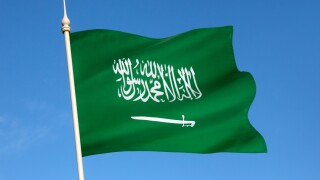
Saudi Arabia sold its second euro denominated bond on Wednesday, achieving a negative yield — the first bond of its kind from a Middle East issuer. However, some in the market were underwhelmed with the transaction, which they say is evident in the deal statistics.
-
Emerging market loan bankers say that despite a drought of activity, discussions with Middle East borrowers may offer a reprieve.
-
Saudi Arabia was set to sell its second ever bond in euros on Wednesday. The bond, which will allow the kingdom to further diversify its investor base, is expected to tighten considerably from initial price thoughts.
-
Saudi Arabia mandated banks on Tuesday to arrange a bond in euros, just a month after it last entered the market to raise dollars. The "opportunistic" bond will enable the kingdom to achieve tight pricing and diversification, market participants said.
-
HSBC has shifted responsibility for its regional businesses and given chief financial officer Ewen Stevenson a broader remit, ahead of updating investors with results on Tuesday and amid its overhaul of operations.
-
Expectations of increased demand for emerging market local currency bonds are starting to wane, as the macroeconomic backdrop and interest rate volatility point to a stronger dollar in the short term.
-
National Bank of Kuwait, the country's largest lender, was set to raise an additional tier one (AT1) bond on Thursday as FIG issuers across the Gulf take advantage of good credit conditions. More subordinated funding from the region's banks is expected in the coming weeks.
-
Despite a modest recovery in oil markets after an unprecedentedly volatile period last year, hydrocarbon-dependent emerging market governments are being warned to diversify urgently, amid estimations that a multi-trillion dollar revenue gap looms over some of the most vulnerable oil exporters. Capital markets must play a critical role in that transformation, say industry experts.
-
A sustained revival of confidence in Turkish markets has caused the lira and other metrics to improve in recent days. That, market participants said, has strengthened the country's standing in international debt markets to the point where it could consider a long dated new issue, though concerns around rising US rates are simmering away in the background.
-
National Bank of Kuwait, the country’s largest financial institution, has mandated banks to arrange an offering in its return to the additional tier one market. Market participants, however, are still holding out hope for the Kuwaiti sovereign to make an appearance.