Europe
-
Late on Friday the Bank of Italy published a consultation paper which aims to bring the Italian covered bond framework into line with the fourth iteration of the Capital Requirements Directive (CRD IV), and which could potentially broaden the number of Italian covered bond issuers.
-
 Moody’s announced a positive rating action on CaixaBank on Friday, reflecting declining asset-quality pressures, and an improvement in its earnings. The news comes as its most recent deal has performed well, and amid growing expectations that the worst is behind for the Spanish economy. With the interest rate outlook likely to remain constructive and Cédulas likely to stay technically squeezed, the sector’s performance outlook has not looked this good in years.
 -
Hypovereinsbank followed Bayerische Landesbank (BayernLB) on Wednesday with a similarly sized deal of the same tenor. But with a marginally lower rating, and hence a wider spread, it was able to attract an incrementally larger book.
-
Banco Popular Español (BPE) returned to the covered bond market on Tuesday to issue only the third Cédulas of 2014, and the issuer’s largest covered bond in three years. Though by no means the most attractive spread seen this year, the triple digit pick-up enticed a broad audience of real money investors.
-
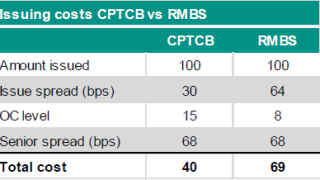
NIBC Bank returned to the covered bond market on Tuesday to launch its second conditional pass-through covered bond (CPTCB). The unreconciled book suggested that the issuer attracted greater scale of demand from a wider group of buyers compared to its first deal. The growing acceptance of this innovative product at a much tighter spread bodes well for future use of this structure.
-
Bayerische Landesbank returned to the covered bond market on Tuesday with a 10 year €500m public sector Pfandbrief, the longest dated issue from Germany this year and highest yielding for its Triple A rating. Despite the borrower’s problems with its Hungarian subsidiary, legal troubles in Austria and the repayment of state aid, the transaction enjoyed a stellar response. It attracted one of the highest oversubscription levels for a German deal, which was testimony to the strength of the Pfandbrief brand and the quality of the issuer’s cover pool.
-
Berlin Hypothekenbank AG mandated joint leads on Monday for a euro Pfandbrief and a roadshow to explain its forthcoming ownership structure, in which it will be directly owned by the savings banks and become an affiliate of Landesbank Berlin rather than its subsidiary.
-
The bastion of the covered bond market is imposing greater transparency requirements on issuers, but the greater immediate challenge for banks is smooth deal execution in a stiflingly tight spread environment.
-
Brussels-Capital Region wants to raise €70m in private placements by April 8 but is receiving more inquiries for longer tenors than it wants to print. French regions could look to take advantage of the excess demand and print longer notes, according to medium term note dealers.
-
A revaluation of Spanish properties that serve as Cédulas collateral would boost transparency, said Fitch on Thursday. More transparency would improve investors’ ability to analyse cover pools and be positive for the market.
-
The Dutch covered bond market could be poised to expand, after the Finance Ministry published draft proposals that would allow lower-rated borrowers to issue bonds and set up programmes backed by small to medium sized enterprises. The news comes as NIBC prepares for the return of its conditional pass-through structure and amid talk that other Dutch RMBS issuers are now considering setting up such programmes.
-
The new Danish covered bond law, which comes into effect on April 1, is a more complicated structure where a maturity extension is possible under limited circumstances. Because the new bonds carry a higher risk compared to the existing legacy bonds, issuers looking to sell bonds face increased execution risk. The Cover spoke to various buy and sell-side market participants to gauge their thoughts.