Europe
-
 Ukraine announced a moratorium on the $3bn bond held by Russia’s National Welfare Fund on Friday. The moratorium also covers Ukraine’s sovereign-guaranteed loans for Ukravtodor and Yuzhnoye.
 -
Aegean Oil Terminal Corp, a Greek oil rig construction firm, has signed a $120m loan with four Gulf banks.
-
A lack of trading activity on Monday shielded Spanish FIG spreads from the worst effects of an inconclusive general election result, but the riskiest paper took a hit.
-
The London Stock Exchange (LSE) is working with Chinese authorities on the possibility of London-listed RMB-denominated shares, most likely in the form of global depositary receipts (GDRs), Jon Edwards, head of primary markets, Greater China, LSE, told GlobalRMB.
-
Industrial and Commercial Bank of China (Europe) has received approval from the Luxembourg regulator for its ICBC Credit Suisse S&P China 500 Index Fund this week. The fund is the first Ucits product using Luxembourg’s own quote under the RMB Qualified Foreign Institutional Investor (RQFII) scheme.
-
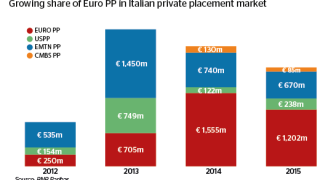
The Italian loan market, benefiting from an injection of central bank cash, is providing the country’s corporates with increasingly competitive terms and pricing. It’s rise, however, has left private placements in the shade, writes Elly Whitaker.
-
The last time a newly rated Italian issuer tried to issue a corporate high yield bond was in May — but take a step back and the wider picture points at a resilient, vibrant market with an investor base up for the challenge. Victor Jimenez reports.
-
Italian corporate DCM bankers are looking forward to a busy 2016. Last year may not have been as active as hoped, but an upcoming raft of redemptions and falling competition from the loan market mean volumes are only likely to go up, writes Nathan Collins
-
Italy’s economic recovery has not yet encouraged an increase in corporate bond issuance, with Italian companies still focusing more on deleveraging than on raising new finance to support capital expenditure or M&A activity. The result is a striking imbalance between supply and demand in the Italian corporate bond market which has led to new issues from frequent as well as less established borrowers being heavily oversubscribed. In this GlobalCapital roundtable, which was held in December, issuers and intermediaries gathered to discuss the outlook for the supply-demand dynamic in the Italian corporate bond and loan universe.
-
Italian banks have come through a challenging year as pressures — from regulators, markets and the economy — waxed and waned. Issuers and investors have had to navigate the looming introduction of the Bank Recovery and Resolution Directive, Total Loss Absorbing Capacity and Minimum Requirement for own funds and Eligible Liabilities, which have changed the dynamics between senior unsecured paper, covered bonds and capital issuance. The Italian market also felt one of the strongest impacts in the eurozone from the European Central Bank’s quantitative easing programme, which provided cheap liquidity and tightened issuance spreads, but in some cases appeared to drive investors away and into higher-yielding asset classes. Meanwhile, an economy clawing its way back to health continued to impose a heavy burden of non-performing loans, and legislative reforms left smaller players in the sector looking for merger partners. In this roundtable, held in early December, leading funding officials and bankers gathered to discuss these issues and more.
-
Balanced budget laws and government-backed refinancings are keeping Italy’s sub-sovereigns out of the bond markets, writes Phil Moore.
-
The Italian banking sector is adjusting to life in the new European regulatory landscape but the key senior unsecured and tier two markets are proving difficult for some. Virginia Furness reports.