
The European collateralised loan obligation market is experiencing déjà vu. A foreign power has started a war that has caused oil and gas prices to rise, increasing the risk of defaults in CLO portfolios.
Russia’s invasion of Ukraine in 2022 and the current US-Israeli war with Iran have created chaos for global energy markets.
Europe’s move to reduce its reliance on Russian oil and gas following the war has kept its energy costs elevated for the last few years.
And Iran’s closure of the Strait of Hormuz has cut off about 25% of seaborne oil exports and 20% of LNG exports globally, causing further price rises.
For CLOs, surging European energy prices create headaches in energy-intensive sectors such as chemicals, building materials and manufacturing. Higher energy prices raise production costs, making companies in these sectors less competitive and more likely to default on their loans.
Chemicals loans were falling in value in CLO portfolios before the Iran conflict began, but have traded down since the war as CLOs have sold out of positions in these loans. According to Bank of America (BofA), chemicals loans have a weighted average price of just 89.
Should the war persist, inflation from raised energy prices and potential interest rate increases could negatively affect other sectors in CLO portfolios. The Bank of England recently held its bank rate at 3.75%, referring to concerns about inflation stemming from the war.
Higher interest rates, or even the expectation of rate increases, have an impact on areas of the capital markets beyond CLOs, raising corporate and sovereign borrowing costs. For example, the yield on 10 year German government bonds reached a high of 3.025% last week.
Renewables crucial
Europe is particularly susceptible to energy price hikes, as a large portion of the EU’s oil and gas is imported. According to Eurostat, the EU imported an average of just over €30bn of energy products each month in 2024.
Some of these imports are from non-EU European countries like Norway and the UK, but the EU does buy a substantial portion of its oil and gas from non-European countries like the US and Qatar.
Regardless of where Europe's oil and gas originate, importing large volumes of these commodities will always leave Europe exposed to energy price fluctuations.
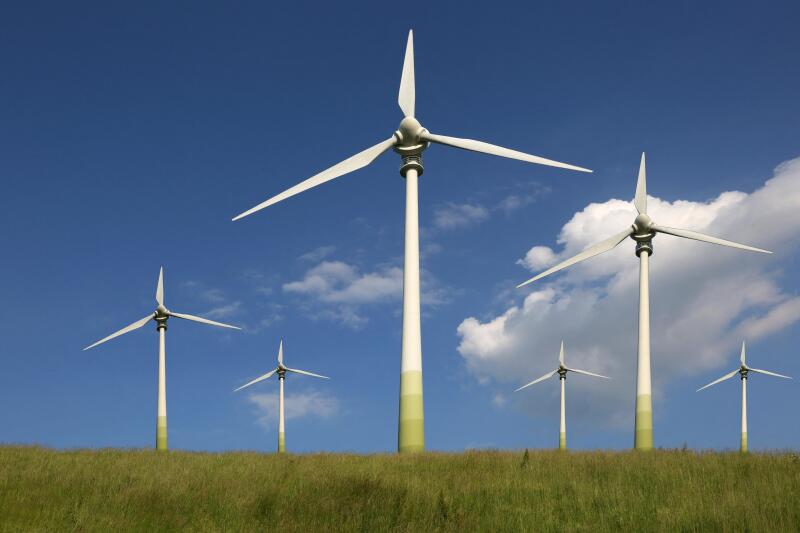
One way to untether the fortunes of European economies and capital markets from oil and gas price instability is for Europe to redouble its efforts to invest in renewables.
Eurostat figures show that last year 47.3% of the EU’s electricity came from renewable sources. While this represents progress, it is not nearly enough to decouple European electricity prices from natural gas prices.
Gas-fired power often represents the last unit of electricity required to meet demand in Europe, meaning that it sets the wholesale electricity price. This is particularly absurd considering that the levelised cost of energy for renewables is often lower than it is for gas-fired power.
Only when renewables can satisfy European energy needs most of the time will electricity prices be immune to gas price volatility. Even then, gas will need to be expunged from industrial processes and domestic use through electrification.
Were renewables Europe’s predominant energy source, this would offer some protection from the vagaries of international politics. In simple terms, an economy powered by wind and solar is insulated from the inflationary effect of oil and gas price spikes.
Reforms needed
Increasing the pace of European renewables investment means changes to its permitting and grid connection processes, as well as to its capital markets.
The problem is not one of liquidity as such. It is one of channelling private capital into renewable energy.
The European Central Bank (ECB) identifies both permitting and grid connection queues as a barrier to renewable energy development.
If investors are to deploy capital to renewables projects, these projects have to receive regulatory approval and be able to connect to the electricity grid. Delays push up costs and deter investment.
Another problem is Europe’s fragmented capital markets. The ECB refers to the need to progress the Capital Markets Union (CMU) to allow more capital to flow to clean energy projects.
First envisioned in 2014, the CMU would create an EU single market for capital, unifying European capital markets and making them more competitive with the US.
At present, Europe is still painfully reliant on banks to fund long-term infrastructure development. In the US, most renewables financings originated by banks are refinanced through the capital markets after a few years.
Since the Basel reforms, banks have become less suited to long-dated financings. While banks still have a role to play in funding renewables projects, Europe needs to expand the reach of its capital markets to accelerate renewables investment.
Pushing ahead with the EU’s planned package of securitization reforms will also be crucial. The ABS and CLO markets can be useful ways to shift debt off bank balance sheets and inject further liquidity into the European renewables sector.
Reforms that encourage the growth of these markets will be a boon for renewables.
Investing more in green energy will not solve Europe’s current energy problems. But it could leave European economies better prepared for future crises as the world becomes more geopolitically fractured.