Market participants have been longing for the return of sustained equity capital markets activity ever since the last boom year of 2021. The recovery has been tipped many times since but finally looks to be coming good.
GlobalCapital’s poll of heads of equity capital markets at leading banks shows bankers are confident the end of the year’s positive dynamic will continue in 2026, with 80% of respondents predicting IPO volumes will rise 10%-20% next year.
“We are seeing some real improvement in the quality and scale of what’s coming to market and in the pipeline,” says Luca Erpici, EMEA head of equity capital markets at Jefferies. “Investor engagement is really strong on all deals we are pre-marketing for next year.”
Hiring is back on the agenda too, with half of survey respondents saying they will be hiring one or two bankers to cope with the increased deal flow.
EMEA equity capital markets have had a solid 2025 with deal volumes up 2% on 2024’s number. That is especially impressive given the volatility in stock prices at times during the year, particularly once US president Donald Trump had announced tariffs in April, which virtually closed ECM.
According to Dealogic data, year-to-date ECM issuance in EMEA for 2025 stood at $128.2bn from 921 deals to mid-October, compared to $126.2bn from 959 deals for the same period in 2024.
“The expectation was it would be a pretty good year for ECM given the pipeline and two years of pretty slow issuance,” says Gareth McCartney, who was promoted in October from co-head of global equity capital markets to global head of capital markets origination at UBS. “We were pretty well set-up until the tariff volatility.”
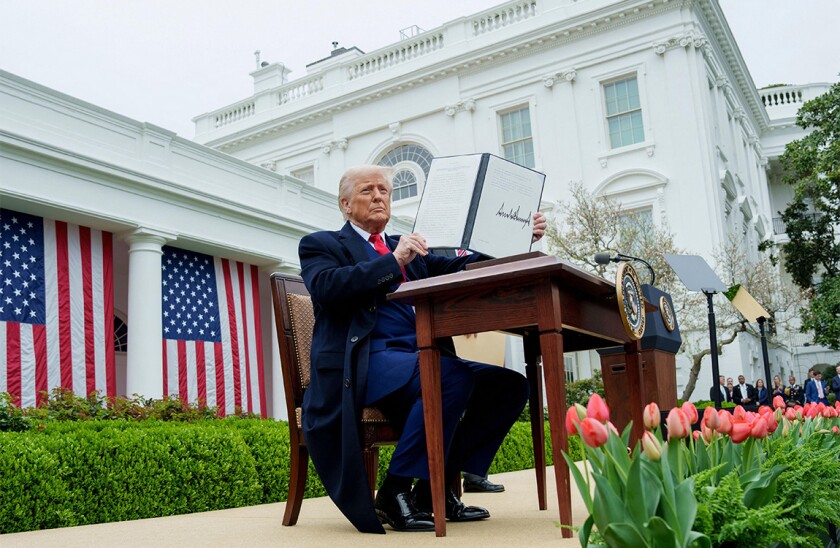
Falling stock markets and a spike in volatility in the wake of Trump’s Rose Garden speech made for poor dealmaking conditions across the market.
The Vstoxx index, which measures implied volatility in European share prices, reached a three year high of 46 on April 7. A number of deals in the market at the time were postponed.
Yet the instability turned out to be short lived. The spring IPO window was weak, but follow-ons came back strong, with high volumes in the summer.
IPOs then came roaring back in the autumn, capped by Verisure’s €3.2bn raise. It was the largest ever European private equity-backed IPO and the largest listing in Sweden in 25 years.
“Clearly everything has recovered since then from the market side of things, and we’ve now had what we expected at the beginning of the year,” says McCartney.
“New listings are performing well and it’s encouraging others that it’s worth doing an IPO, and investors have appetite for more. It feels better, though we’re not quite in that 2021 phase where everybody thinks it’s an unbelievable market and so they have to come to market.”
What is your expectation for IPO volumes in EMEA in 2026, versus 2025?
Source: GlobalCapital
What is your expectation for other cash ECM volume, including blocks?
Source: GlobalCapital’s Primary Market Monitor
PEs focused on IPOs
The willingness of private equity companies to part with assets will also be a main driver of IPO market activity in Europe next year.
Differences on valuation between sponsors and investors were once again a problem this year, but the gap appears to be closing.
“What we have seen lately is IPOs pulled because the price was too low,” says Eric Leupold, managing director and head of cash market at Deutsche Börse.
This was the case of Apollo’s listing of German car part seller Autodoc in Frankfurt, which was pulled at the last minute in June.
On other deals, private equity sponsors opted for strategic exits. Two private equity-owned European banks were sold to French lenders with Apollo selling its stake in Germany’s Oldenburgische Landesbank to Crédit Mutuel for €1.7bn, while BPCE bought Portugal’s Novo Banco from Lone Star for €6.4bn.
In early September, Bain Capital and Cinven agreed to sell a majority stake in Stada to CapVest Partners, the London-based private equity firm, for €10bn.
The Stada deal turned out to be an outlier as the underwhelming spring IPO window was followed by a summer of preparation for what may turn out to have been a breakthrough autumn window.
Deals in private equity-owned lenders Noba and Shawbrook succeeded in Stockholm and London respectively.
Particularly welcome was Swiss security company Verisure’s listing, the largest IPO in any market this year.
All three deals saw strong first day pops.
Market participants say the success of Verisure is driving more interest in IPOs from private equity funds, which are under pressure from investors to monetise their stakes after years of underwhelming exits amid higher interest rates.
“Today there’s more urgency in terms of distribution,” says Leupold. “LPs are expecting much [better returns]. Portfolios are pretty full; we’ll see more and more IPOs.”
“We’re seeing much broader engagement from private equity on IPOs,” says Erpici. “Aside from large cap deals like Verisure, some mid-cap deals have also been successful this year.”
The Galderma model
These IPOs could in turn drive the secondary market, which enjoyed another strong year thanks in part to several jumbo accelerated bookbuild offerings from recently listed companies.
Strong block performance can in turn drive IPO market activity, as it validates the model of selling a smaller stake at a higher discount to begin with but then maximising returns through block sales thereafter.
“IPOs can succeed at a lower price if [sellers] do sell-downs over time, which happen at a much higher price,” said Leupold.
Galderma and Lottomatica were flagship examples for this approach.
Shareholders took advantage of strong performance in both stocks to raise large sums this year: $9.64bn across four block trades in Galderma and $2.7bn—also across four deals—in Lottomatica.
“From a secondary market perspective, the strong performance of Galderma and Lottomatica, for example, have also been helpful,” says Erpici.
That approach is striking a chord with private equity owners. “The dynamic of selling less at the time of the IPO and monetising at higher prices through follow-on offerings is resonating if you own the right assets,” he adds, “with some sellers approaching the exit from a volume-weighted average selling price across the IPO and follow-ons.”
What is your expectation for equity-linked volumes in EMEA in 2026?
Source: GlobalCapital
Aggressive equity-linked pricing
The equity-linked market also performed well in 2025 as it benefited from bouts of stock market volatility.
Notable deals include a €1.3bn dual tranche convertible bond by debut issuer Vonovia in May and a €750m eight-year convertible by Schneider in September.
Equity-neutral deals also drew strong demand, with the relative paucity in issuance continuing to make aggressive pricing possible.
Vinci raised €400m in the first equity-neutral convertible bond for six years in February, while Pinault’s Artémis raised €400m with an equity-neutral exchangeable into Kering in June.
Activity could be higher still next year: 40% of survey respondents expect equity-linked issuance to be more than 20% higher in 2026, 40% expect it to be 10%-20% higher, and 20% the same volume as 2025.
Do you expect to be growing or shrinking your ECM team in EMEA in 2026?
Source: GlobalCapital
Healthy blocks
Accelerated deals continued to provide a steady flow of business as shareholders took advantage of record high stock markets to monetise stakes.
As well as the Galderma and Lottomatica blocks, flagship deals include the completion of Pfizer’s exit from Haleon in the first quarter, in two deals which raised a total of $6bn.
The Middle East’s secondary market continues to mature, headlined by a $2.84bn deal in Adnoc Gas. In most cases, blocks were well received, with tight discounts followed by healthy trading.
One rare miss was a €3bn block in Ferrari in February. Having started the year well, the shares fell heavily following the trade and have not recovered: the stock was down 14% this year by mid-October.
On the primary accelerated bookbuild front, Iberdrola raised an impressive €5bn in late July to fund electricity network investments.
Other companies opted to raise equity through rights issues, led by troubled Danish wind developer Ørsted’s successful €8bn deal, the largest equity capital markets deal in EMEA this year.
Bankers expect an even better year next year for other cash equity capital markets volumes, including blocks: 70% of survey respondents expect them to be 10%-20% higher in 2026, with 30% of respondents predicting no change in volumes.
As for regions expected to be busy, Erpici says activity would be “fairly spread out” in 2026.
“We still expect a very strong pipeline from the Nordics and Germany, but potential issuance is building in most other European regions, including eastern Europe.”