Germany
-
Berlin Hyp is set to open books for a quick-fire five year on Monday and ahead of the Germany-Portugal World Cup match later that day. MuHyp and BPCE have also mandated leads.
-
The EBA have decided that they really don’t think it is a good idea that aircraft pfandbrief get a preferential risk weight along with other types of covered bond. Economically that is fairly trivial, there are only €1bn of these bonds outstanding and, since it is doubtful that many are held in banking books, it is questionable if they would get any benefit from a better risk weighting.
-
Deutsche Kreditbank (DKB) opened books on Wednesday on an Aa1-rated €500m 10 year mortgage-backed Pfandbrief, its second deal of the year and the third 10 year print to come out of Germany in 2014. A lead banker on the deal described the reception as tepid — a further indication of investor frustration with slender coupons offered by second tier Pfandbrief issuers, particularly on longer tenor bonds.
-
Deutsche Kreditbank has mandated leads for its second deal of the year and the third 10 year issued from Germany this year. Meanwhile, there is speculation that several Canadian issuers could return to the euro market.
-
The widely anticipated public sector-backed Pfandbrief from Dexia Kommunalbank on Tuesday had been expected to go well, given the juicy spread that was likely. But the level of oversubscription was the highest of any German deal this year and even put competing issuance from Portugal into the shade.
-
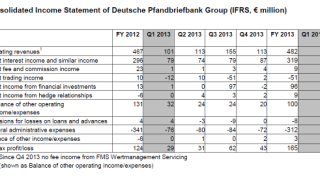
 Deutsche Pfandbriefbank (Pbb ) reported a 31% pre-tax rise in profit on Monday, boding well for its privatisation — in marked contrast to Depfa plc. Pbb has launched two Pfandbrief deals this year and is likely to return to markets at least once and possibly twice this year, it confirmed to The Cover on Monday. For the time being, however, the covered bond market is expected to trade sideways as participants await news from the European Central Bank.
 -
Sovereign bond market volatility continued to buffet markets on Thursday and, after the slew of FIG issuance in the last week, there was a degree of supply indigestion. But covered bond bankers did not think there was much to be read into the lacklustre execution of this week’s German and Australian deals. The two issues were solid trades, but for idiosyncratic reasons lacked the sparkle of earlier deals.
-
The prospective amendment to the German Pfandbrief Act to give the German regulator authority over minimum overcollateralization (OC) may prove a credit positive, said Fitch on Tuesday. But the proposals are too thin on detail for any concrete rating action on programmes to be taken.
-
The covered bond market is in danger of losing a swathe of real money investors who have been put off by low returns and declining issuance. But a rich new stream of demand from bank investors looking to fill their liquidity buffers could fill the vacuum in time. However, these buyers should be more interested in looking at the nascent floating rate format and not the fixed rate market that until now has prevailed.
-
After a long string of syndication success stories this year, the covered bond market finally saw some investor pushback on Tuesday when Landesbank Hessen-Thueringen (Helaba) issued a tightly priced two tranche Pfandbrief. The outcome gives ammunition to those that are concerned valuations have become overstretched. However the funding was very cheap, attracted exceptionally strong international demand and was placed with high quality accounts.
-
Landesbank Hessen-Thueringen (Helaba) mandated leads for a dual tranche triple-A rated public sector Pfandbrief on Monday, for launch on Tuesday.
-
Depfa Bank plc will not be sold to an unrated entity, but will be transferred to the German government’s wind-down institution for Hypo Real Estate Holding, FMS Wertmanagement (FMSW). The issuer’s covered bonds tightened by around 60bp on Wednesday from Tuesday’s open as uncertainty over its future was removed.