Free content
-
 Italy’s retail bond market is going through a profound shake-up in which alternative investments are set to replace bank bonds among the securities of choice for Italian households. Tyler Davies reports.
 -
Italy’s economy, like those of its European neighbours, is showing encouraging signs of consistently strong growth. But how much of it should Italy take credit for — and how much is down to the broader improvements in Europe? Has Italy made the most of improving economic conditions and central bank support to enact enough reforms to escape its unwanted tradition of growing more slowly than other economies in the good times and shrinking further in the bad times? Ignazio Visco, governor of the Bank of Italy, answered these questions and many more in an interview with GlobalCapital’s Toby Fildes.
-
Contrary to expectations, the fall of Matteo Renzi has not slowed down Italy’s reform drive. Admittedly, much of the recent progress started under his leadership and even before it, but the country’s continued commitment to economic reform under the Gentiloni administration has been warmly welcomed by economists and investors. The next big test will be a general election in March. By Philip Moore.
-
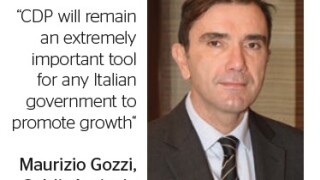
If Italy is decisively to address the persistent challenges presented by its low growth, poor productivity, elevated debt, high unemployment and weak financial services industry, then CDP will need to play a pivotal role in mobilising over €250bn of resources. Philip Moore reports.
-
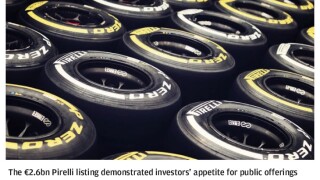
Ask people to name the centres for capital markets in Europe and most will probably pick London, Frankfurt and perhaps Paris. But Milan will not be on many people’s shortlist, at least not outside Italy. But that may be about to change as a series of major transactions on the city’s stock exchange has shone a spotlight on a growing trend that could point to a boost to the eurozone economy’s growth outlook. By Phil Thornton
-
After a year of predictions that a bear market is coming off the back of monetary policy normalisation, people shouldn’t be surprised that investors are a little jumpy.
-
Italy’s growth trajectory, at around 1.5%, may look modest in comparison to the 2.3% growth that UniCredit is projecting for the eurozone as a whole in 2018 and 2019 but by Italian standards, it represents an encouraging advance, given that the root cause of so many of Italy’s problems is its chronic lack of growth. Philip Moore reports.
-
Cyclical or structural? This is a question which I have often been asked about Italy’s economic recovery. Italy began showing some first signs of recovery in 2014, a year in which Italy posted a 0.1% increase in GDP after a double-dip recession between 2009-2013 which led to a 10% drop in the country’s output. In the following years the recovery grew stronger and now the economy is growing at a rate similar to that of other euro-area countries.
-
Commodity Futures Trading Commission chairman Christopher Giancarlo on Tuesday criticised the oversight regime of cryptocurrency spot transactions, saying that a “rationalised federal framework” could be more effective at ensuring the market’s integrity.
-
Last week’s chatter in the bond markets about the US applying a new round of sanctions on Russia served to highlight how little investors feel threatened by this kind of talk. Now the US has to take action to affect Russia.
-
The votes are in and the scores have been calculated. Read on to see how deals priced in the week beginning January 22 fared with our voters.
-
In the latest Clawback, columnist Philippe Espinasse takes a closer look at two new IPO guidance letters released by the Hong Kong bourse.