Free content
-
 China unveils plans to kick start RMB-denominated oil futures next month, the Philippines gets regulatory greenlight for its Panda bond issuance, and foreign ownership of bonds in the interbank bond market rises again in January.
 -
The People’s Bank of China eyes bond market reforms, China’s FX reserves stand at $3.16tr after another month of growth, and Cambodia moves closer to replacing the dollar with the renminbi for trades with China.
-
Protecting retail investors is a laudable goal. But what they are protected from often seems arbitrary.
-
GlobalCapital revealed the winners of its 2017 Loan Awards at its annual Loans and Leveraged Finance Awards Dinner at Gibson Hall in London on February 7. The full results are below: GlobalCapital congratulates all the winners and nominees.
-
Panda bond issuance has so far been dominated by overseas-incorporated Chinese names. That bolsters volumes, but it does little to help the market fulfil its role of boosting RMB internationalisation. Policymakers have the chance to fix it — but only if they are bold enough to let markets play a bigger role.
-
Demand for a deal can be accurately reflected only in the context of a specific spread. Anything other than that can mislead investors, so the ECB should demand better.
-
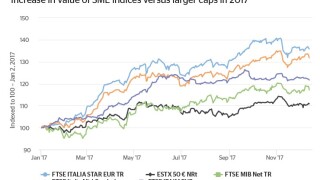
Italy’s large companies had a bumper 2017 in the bond markets but they are well known names with investment grade ratings. What about the backbone of the Italian economy — how are the SMEs that form the supply chains of larger companies finding finance as the country emerges from its long economic winter and seeks out stable growth? By Nigel Owen.
-
What is the outlook for 2018 for Italy’s corporate borrowers, after a year in which old and new names came to the bond markets with great success? Some of Italy’s most important treasury teams met GlobalCapital to discuss the prospects for the year ahead. Funding teams and investment bankers shared their views on the state of the local and international economies, how they are finding access to capital markets and what the future holds as the ECB tapers its corporate sector purchase programme and investors adjust to a new era of normalisation.
-
Italian financial institutions had an exceptional year in 2017. Banks that had been flirting with collapse were either recapitalised or allowed to fail, with very little disruption spilling over into the broader market. All this helped to make Italy an attractive destination once again for international investment, clearing some of the clouds hanging over the financial system and allowing firms to increase the volumes of debt they placed into the public capital markets.
-
Italy’s biggest corporate bond issuers such as Enel and ENI have been agile players right through the crisis years. Spreads were turned upside down and companies traded inside the sovereign. Many still do, but Italy’s corporate bond market has changed greatly. The group of issuers has swelled and they have gone far beyond merely securing market access, to considering how to optimise their funding with a range of instruments, from liability management to green bonds. Nigel Owen reports.
-
Authors of last week’s HLEG sustainable finance report seem unsure whether they want green capital relief or not — while the European Banking Federation (EBF) seems unsure about why.
-
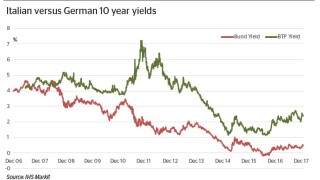
Italy may be holding the eurozone’s only major election in 2018 but the vote is causing little concern for bond investors, with a backdrop of solid growth and a new electoral law likely to keep fringe parties from wining outright power. While the improving economic outlook is generally good news, it does raise potential political challenges of its own — although the sovereign is confident enough about 2018 that it is planning to tap the dollar market for the first time in eight years, writes Craig McGlashan.