Europe
-
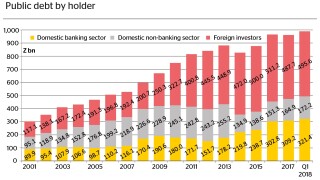
 The Republic of Poland has proved itself to be one of the most prudent and innovative borrowers in central and eastern Europe, leaving it well placed to navigate increasing volatility in global rates, while some less prepared issuers may run into funding difficulties. Virginia Furness reports.
 -
When Standard & Poor’s revised its outlook on Poland to positive in April, it was the latest in a series of welcome surprises. The economy has grown faster than most analysts expected, leading several of them to upgrade their forecasts for growth in 2018. In the capital market, meanwhile, it was Poland, rather than any of the core eurozone economies, that became the first sovereign in the green bond market. What next for Poland’s vibrant economy and capital market? Participants answering this question in the GlobalCapital Poland roundtable, which took place in London in early June, were:
-
Equity-linked investors got a second opportunity this week to buy new European paper when Soitec, the French maker of semiconductor materials, hit the market on Thursday with a €150m five year convertible bond.
-
After an absence of more than two years, Royal Bank of Canada this week issued its first covered bond in euros, attracting a comfortably oversubscribed order book for a €1.5bn deal which was priced with a skinny new issue concession.
-
Spanish electricity utility Iberdrola has been one of the leading corporate issuers of green bonds and, on Thursday, it took its total green issuance to more than €7bn with its latest offering.
-
Deutsche Hypo this week priced an eight year Pfandbrief at the widest level of any benchmark sized German covered bond this year, suggesting investor sensitivity is particularly pronounced in this part of the curve when the spread to mid-swaps is negative.
-
The market for equity block trades in EMEA has lost some of its shine, with volumes down on last year, and a string of failed trades. This poor performance is in stark contrast to a resurgent IPO market, which in the last two weeks has generated strong returns for investors.
-
Clients of bank index platforms are adapting to a new investment climate, increasingly opting for more defensive strategies and specifically positioning for volatility spikes similar to the ones markets experienced in early February.
-
French toll road operator Autouroutes du Sud de la France kept up the positive tone in the IG corporate bond market with a 10 year deal on Thursday, which it was able to increase in size and price with a single digit new issue premium.
-
KfW has hired a new head of government relations with a strong background in climate change and energy issues.
-
Caixa Geral de Depósitos brought a well-flagged capital trade on Thursday, offering investors a premium to complete a requirement of its recapitalisation plan. But some investors did not participate, citing disgruntlement with how the Bank of Portugal handled Novo Banco's bonds.
-
The Republika Srpska region of Bosnia and Herzegovina is seeking to issue a five year bearer bond of up to €200m through Hong Kong-based broker BMI Securities, but investors are cautious that this is not a run of the mill CEE bond issue.