Middle East Bonds
-
We remarked last week that emerging markets could face a difficult time ahead. Well, we didn’t have to wait long before the early manoeuvers in a possible currency war had an impact on sovereign CDS spreads.
-
Kuwaiti financial Burgan Bank has receive approval to buy back $400m and KD100m ($329.7m) in subordinated debt, which will no longer count as capital under Basel III regulation.
-
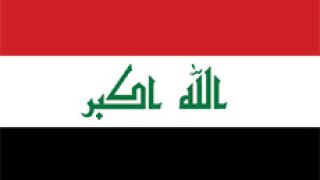
An Iraq sovereign bond deal looms ever closer, but is not expected to open the floodgates for bonds from other entities from the region.
-
 Iraq is said to have awarded a bond mandate to Citi, Deutsche Bank and JP Morgan for a deal that could come as soon as the fourth quarter of this year.
 -
Abdulla Ali has joined Abu Dhabi Islamic Bank (ADIB) as head of agency, corporate finance and investment banking.
-
Kuwaiti financial Burgan Bank has receive approval to buy back $400m and KD100m ($329.7m) in subordinated debt, which will no longer count as capital under Basel III regulation.
-
After being left behind by their Asian and Latin American brethren in recent years, CEEMEA borrowers are finally moving towards issuing green bonds in size, writes Steven Gilmore.
-
An Emirati financial has mandated banks for a tier one dollar transaction, adding to the Middle East post-summer pipeline.
-
At least one CEEMEA borrower is hoping to bring that market’s first dollar green bond before year end, and in a size larger that the modest euro prints done so far.
-
The Lebanese sovereign is planning to issue a request for proposals in September for a dollar benchmark, according to bankers familiar with the borrower’s plans.
-
BNPP Paribas made redundant another banker in its CEEMEA DCM team.
-
Once the wild west of finance, emerging markets had dodginess and defaults aplenty. Now ethical investors want socially responsible investments. But if SRI criteria are too strict there will be nothing to buy, writes Steven Gilmore.