
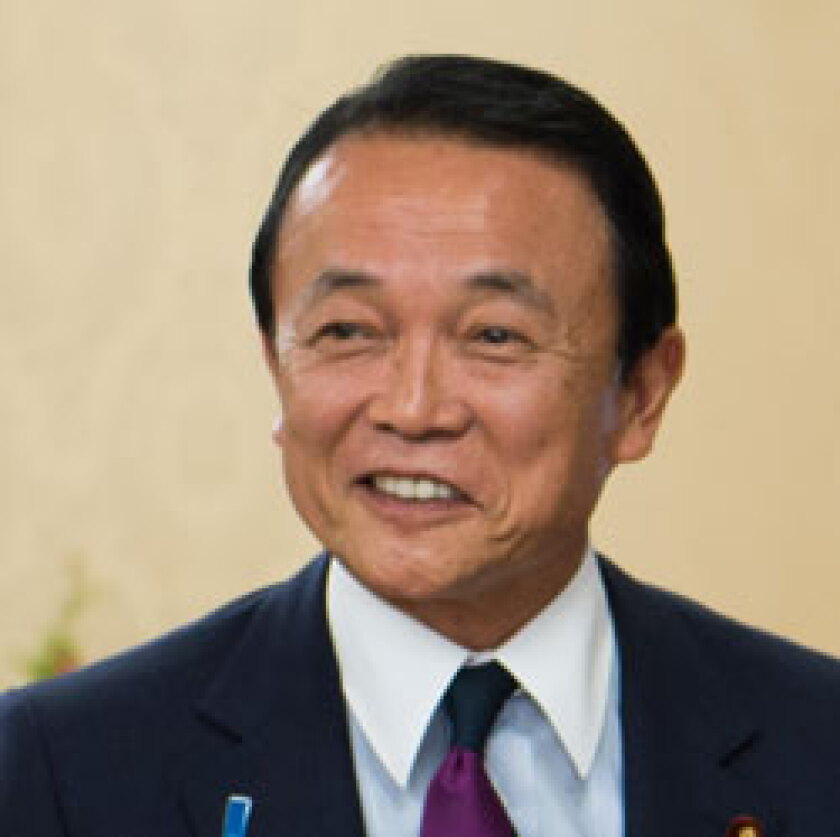
Japan is concerned about the “speculative” and abrupt firming of the yen and will respond if necessary to stem the currency’s rise, finance minister Taro Aso warned on Tuesday night.
In a late evening briefing on the fringes of the Asia Development Bank meetings in Frankfurt, Aso insisted that any steps taken would be in accordance with G-20 agreement on exchange rates.
“The economy is a living animal... one-sided, abrupt movements could have adverse impact on the economy, which is not desirable,” he said.
The yen, which has appreciated by 13% against the US dollar so far this year, slipped from an 18-month high against the dollar on Wednesday. The dollar rose 0.6% to ¥107.22, pulling away from Tuesday’s low of ¥105.55, the yen’s highest level since October 2014. The yen had gained ground as market participants harboured doubts as to whether Japan would intervene in the market to stem the yen’s gains given wider opposition to such moves globally.
However in an interview with Emerging Markets, William Thomson, a former US Treasury and ADB official, said there had been signs of some Japanese “smoothing” intervention.
Aso’s comments came after central bank governor Haruhiko Kuroda used an exclusive interview with Emerging Markets to deny that the yen’s recent surge had been due to a “Shanghai Accord” or agreement with other G-20 countries.
Asked about reports that the US and other countries had reached a tacit agreement in Shanghai recently to cap the dollar in a new version of the 1985 Plaza Accord, Kuroda replied: “There is no Shanghai Accord.
What we agreed in Shanghai is clearly stated in the G20 communiqué and there is no secret agreement apart from the communiqué.”
He said it reiterated previous G20 commitments, including avoiding competitive devaluations and excessive fluctuations of exchange rates. G20 nations also agreed to consult before making moves that could influence their exchange rates.
Some analysts have suggested that the focus of policy in Japan is shifting from monetary easing to fiscal stimulus as a more effective means to stimulate activity in the world’s third largest economy.
Kuroda insisted that the two were wholly separate. “Fiscal policy is fiscal policy and monetary policy is monetary policy,” he said.
“Fiscal policy is decided by the government parliament and monetary policy by an independent central bank. Of course from an economic point of view there is some connection but as far as the decision-making process it is separate.”
Speaking alongside Aso, Kuroda added that the bank would not hesitate to take additional steps to achieve its inflation target.