
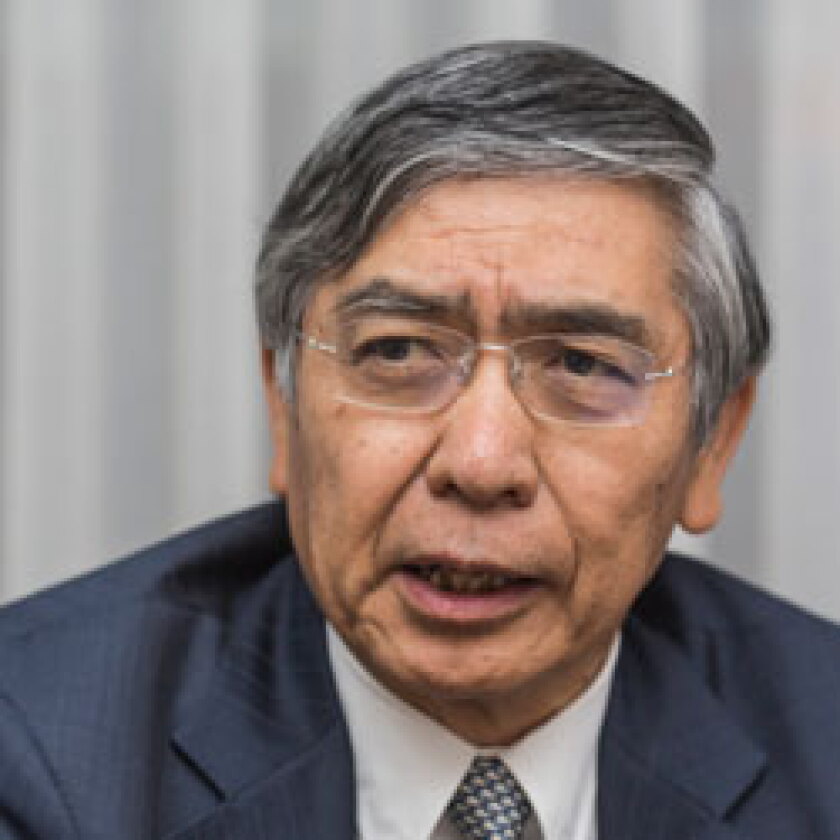
In an exclusive interview with Emerging Markets, The Bank of Japan on Tuesday rejected the view that the yen’s recent surge had been due to a “Shanghai Accord” or agreement with the other G-20 countries aimed at depreciating the dollar against the yen and the euro.
“Our monetary policy is not targeted at the exchange rate," BoJ governor Haruhiko Kuroda insisted in the wake of the decision by the US Federal Reserve to place the yen — along with the currencies of China, Korea, Taiwan and the eurozone — on a “monitoring list” to check for unfair exchange rate practice.
Asked about reports that the US and other countries had reached a tacit agreement in Shanghai recently to cap the dollar in a new version of the 1985 Plaza Accord, Kuroda replied: “There is no Shanghai Accord. What we agreed in Shanghai is clearly stated in the G20 communiqué and there is no secret agreement apart from the communiqué.”
He said it reiterated previous G20 commitments, including avoiding competitive devaluations and excessive fluctuations of exchange rates. G20 nations also agreed to consult before making moves that could influence their exchange rates.
Some analysts have suggested that the focus of policy in Japan is shifting from monetary easing to fiscal stimulus as a more effective means to stimulate activity in the world’s third largest economy.
Kuroda insisted that the two were wholly separate. “Fiscal policy is fiscal policy and monetary policy is monetary policy,” he said.
“Fiscal policy is decided by the government parliament and monetary policy by an independent central bank. Of course from an economic point of view there is some connection but as far as the decision-making process [goes, it] is separate.”
The yen has appreciated by 13% against the US dollar so far this year, the best performance of any developed economy. That offset a 36% weakening over the previous four years, which was sparked by prime minister Shinzo Abe’s pledge to keep monetary policy easy in order to correct the strength of the yen. The BoJ left monetary policy unchanged last week, triggering a 5% rise in the yen/dollar exchange rate.