
A proposed Chinese-financed, Asia-focused regional infrastructure finance lender must adopt the “highest standards of governance” if it wants to work with the ADB, senior bank executives warned on Friday.
In interviews with Emerging Markets they voiced their concerns about safeguards, due diligence and internal controls at the new Chinese-backed lender.
The Chinese government said last month it had begun preparations to create the Asian Infrastructure Investment Bank (AIIB), a freshly-minted multilateral designed primarily to invest in major infrastructure projects across the region, with capital of around $50bn, paid for by its members.
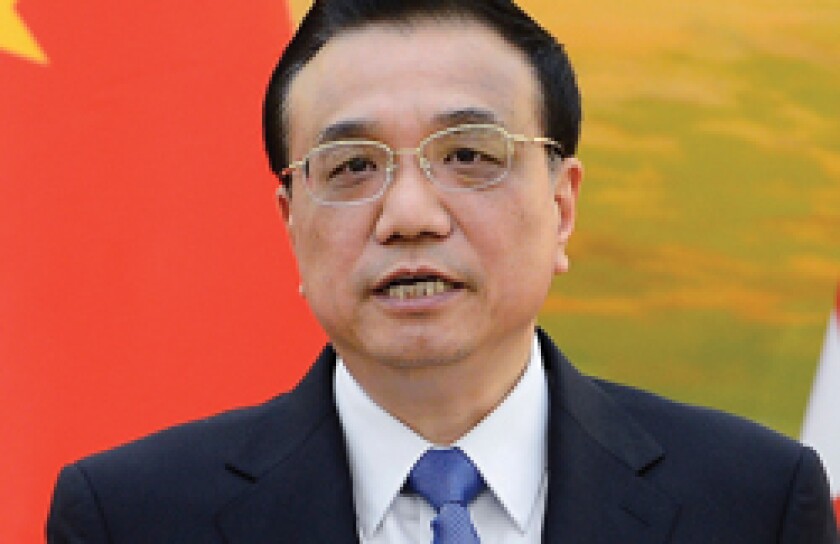
Chinese premier Li Keqiang told the Boao Forum for Asia that consultations with potential global investors were “intensifying” and that he hoped the bank could be launched “at an early date”.
Asia has a glaring infrastructure deficit: the need for development finance across the region has always outweighed supply.
ADB vice president Bindu Lohani said he hoped any new bank would abide by the “highest standards of governance, so that it can be considered globally as a high quality institution.
“It will make it difficult to co-operate [with them] if their standards are lower than ours.”
Takehiko Nakao, the ADB’s president, told Emerging Markets the AIIB would be a shot in the arm for the entire region but insisted the ADB would “never compromise on safeguards and social standards or governance issues”.
He added: “I think that China also knows the importance of a safeguard policy and of [assessments of the] environmental and social impact [of infrastructure projects].”
Last year leaders of the Brics countries — Brazil, Russia, India, China and South Africa — proposed a multilateral development bank as an alternative to the IMF and World Bank.
Nakao said he hoped all the institutions could work together. “Although we ourselves try to increase our lending capacity, we are happy to co-operate with others” such as the mooted Brics development bank or the AIIB.
“If they are established, we are happy to co-operate” with them, he said. “They want to do it sooner rather than later, but we are not following the situation so carefully.”
Yet the imposition of a new, politically motivated development bank in a reasonably cosy, settled market, will inevitably ruffle some feathers. The AIIB will be Beijing-led and largely Beijing-fed, despite likely capital input from global institutions, perhaps including sovereigns, development banks, and sovereign wealth funds.
A new pan-regional infrastructure lending institution would augment Beijing’s standing on the world stage, China having largely failed substantially to enhance its standing in recent years within the Asian Development Bank, or in the IMF or the World Bank.
Vice president Lohani’s concerns were plain to see: a massively-capitalised new infrastructure lender willing to lend to all-and-sundry at low rates may after all marginalise the ADB. While expressing his hope that the ADB’s “tremendous experience in this area” would continue to be useful to the regional economic community, Lohani added: “I hope we do not need to compete with the AIIB.”
He said there was “room for other agencies to bring in resources”. “We say the infrastructure need is around $8tr over the next 10 years, which means you need $800bn each year. Therefore if any institution [is willing to join us] I would say that it is in our interest to co-operate.”
But despite misgivings within the ADB about the presence of a new big beast in the market — albeit one, at least at first, unlikely to boast a AAA credit rating — few doubt Beijing will achieve its aim. “China has the will to launch a regionally-relevant infrastructure bank,” said Wang Qinwei, chief China economist at Capital Economics in London. “Beijing wants to direct its own money better overseas, and it wants more influence in global affairs. The [new bank] kills two birds with one stone.”