
A downturn in China and other emerging markets could result in a fall in commodity prices, but would be unlikely immediately to stall growth in poorer commodity producing nations, leading economists suggested in Washington this week.
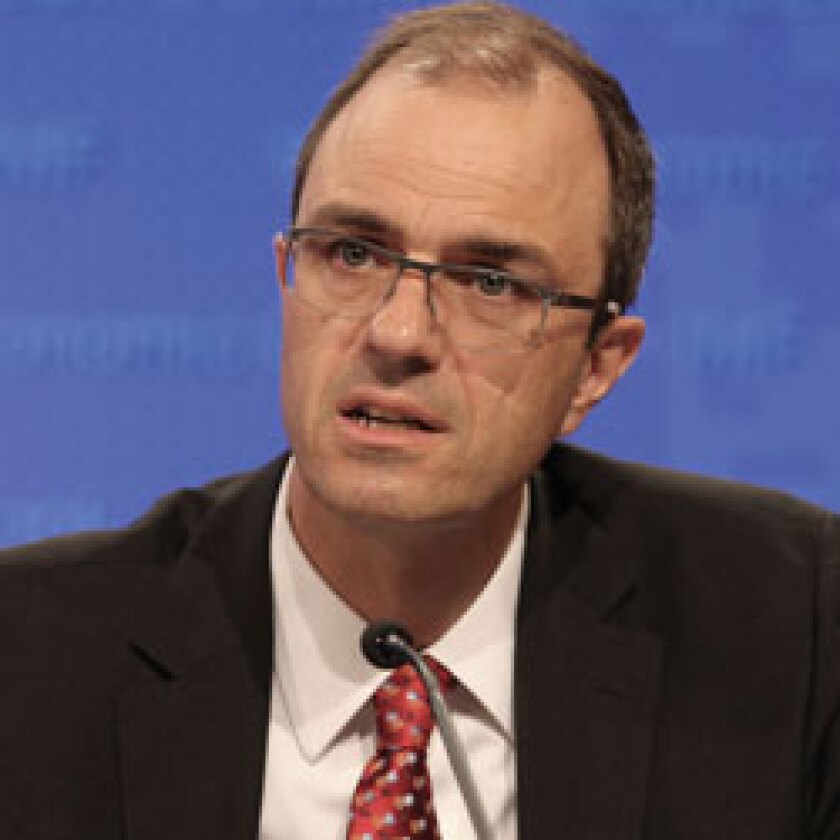
“Growth in emerging markets has a very important impact on commodity markets, because their growth is especially more energy-intensive,” IMF Research Department senior advisor Jorg Decressin said.
According to the IMF’s downside scenario, Asian growth at 2.5 percentage points below the new World Economic Outlook’s (WEO) baseline projections would “be consistent with the drop in oil prices of around 25%,” Decressin said.
But this pessimistic scenario is unlikely to play out despite the gloomy global outlook, Decressin added. “Because of the strong growth that we keep forecasting for the emerging economies, we do not see such a downside scenario materializing for oil prices, and that is also why oil [and other commodity] prices are still relatively high.”
The WEO assumes oil prices (as an average of UK Brent, Dubai and West Texas Intermediate crudes) of $103.20 per barrel in 2011 and $100/bbl in 2012, up from $79.03/bbl in 2010. The WEO also forecasts a fall in non-fuel commodities prices of 3.1% in 2012, after estimated 26.3% and 21.2% rises in 2011 and 2012.
Sub-Saharan Africa appears particularly vulnerable to a downturn in commodity prices. But even if prices fall, sub-Saharan Africa’s recovery should be able to withstand some volatility, IMF Research Department deputy division chief Rupa Duttagupta said.
Commodities prices have driven sub-Saharan growth, but so have “accommodative policies” and the fact that commodity producers “have reoriented their trade toward other developing and emerging markets, including China and India”.
The IMF sees resilience in the major emerging markets should external risks start materializing, “that will still pull ahead many of the other developing countries, including sub-Saharan Africa”.
Furthermore, there are positive signs that resource exporters are becoming better-equipped to cope with the impact of price volatility, Harvard University Professor Jeffrey Frankel said yesterday. Efforts to build reserves and other “buffers” during times of high prices have been “impressive”, while many developed countries forgot these lessons in the past decade, Frankel said.
Markets remain bullish about the medium-term commodities price outlook. In a research note issued on Tuesday, Bank of America Merrill Lynch predicted that monetary policy “is already on an easing mode around the world, creating upside risks to our average Brent crude oil price forecast of $114/bbl in 2012”, from a low of $103/bbl in early August. In this context, the bank concluded, “central bankers around the world are likely setting the stage for much higher Brent crude oil prices over the next five years.”
However, Paul Stevens, energy researcher at London think tank Chatham House, cautioned that the fragile global economic outlook may yet act as a brake on oil price growth. “Sentiment is towards higher prices, but the market is very sensitive to bad news on the economy”, he said.