

 |
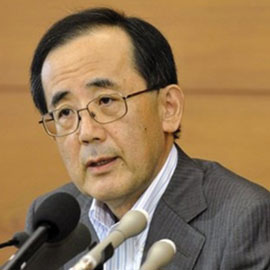
The US and Europe face the prospect of a long and painful period of economic recovery – similar to Japan’s decade long stagnation in the 1990s - in the aftermath of the global crisis, Bank of Japan (BoJ) governor Masaaki Shirakawa, predicted at the close this year’s IMF annual meetings. "We need to accept the fact that, once a country experiences a bubble, it will take a fairly long time to rise up from the bottom in the aftermath of a burst," he said.
As Japan's experience shows, "it is a hard fact that an economy will be unable to achieve a strong recovery without resolving excesses accumulated during a bubble period," said the BoJ governor. Shirakawa warned central bankers in Europe and the US might overshoot with stimulus policies, in an over-zealous attempt to ensure the failures of Japan in the 1990s are not repeated.
If "foreign countries mistakenly [assume that] the most crucial lesson from Japan's experience is the necessity of short-term stimulative policy measures, they will face the risk of writing the wrong prescription" added Shirakawa.
"We cannot rule out the possibility that the current unprecedented easy monetary policy in many advanced countries, if continued for an extended period, will produce unintended consequences" such as the "emergence of another asset bubble".
Having "won the war" of warding off another Great Depression through rapid and coordinated action in the wake of the global financial crisis, industrial countries "are losing the peace," Mohamed El-Erian, chief executive officer of Pimco, the world’s largest bond investor, said.
Delivering this year's annual Per Jacobsson lecture in Washington, El-Erian restated his ‘new normal’ thesis of the global economy characterized by: "low growth; high unemployment that is increasingly structural in nature; welfare losses, including a growing number of citizens falling through the large gaps created by overly stretched safety nets; and a rising risk of protectionism."
Adding his voice to the generally gloomy assessment, senior advisor to Citigroup William Rhodes called for global leaders to take decisive action on economic and financial policy. Ahead of next month's G20 summit in Seoul, he called for a rolling bank of current "protectionist moves in trade and finance", governments to flesh out medium-term fiscal consolidation plans and a strategy to correct global imbalances.
Rhodes, vice chairman of the Institute of International Finance (IIF), a bank lobby group, called on international financial regulators to establish a "level playing field for financial services firms."
Failing to implement such reforms, "the vulnerabilities already present in today's economic landscape will not be reversed," Rhodes said. "Beggar-thy-neighbour trade policies will become increasingly pronounced, while a completely fragmented international financial system emerges," he concluded.