
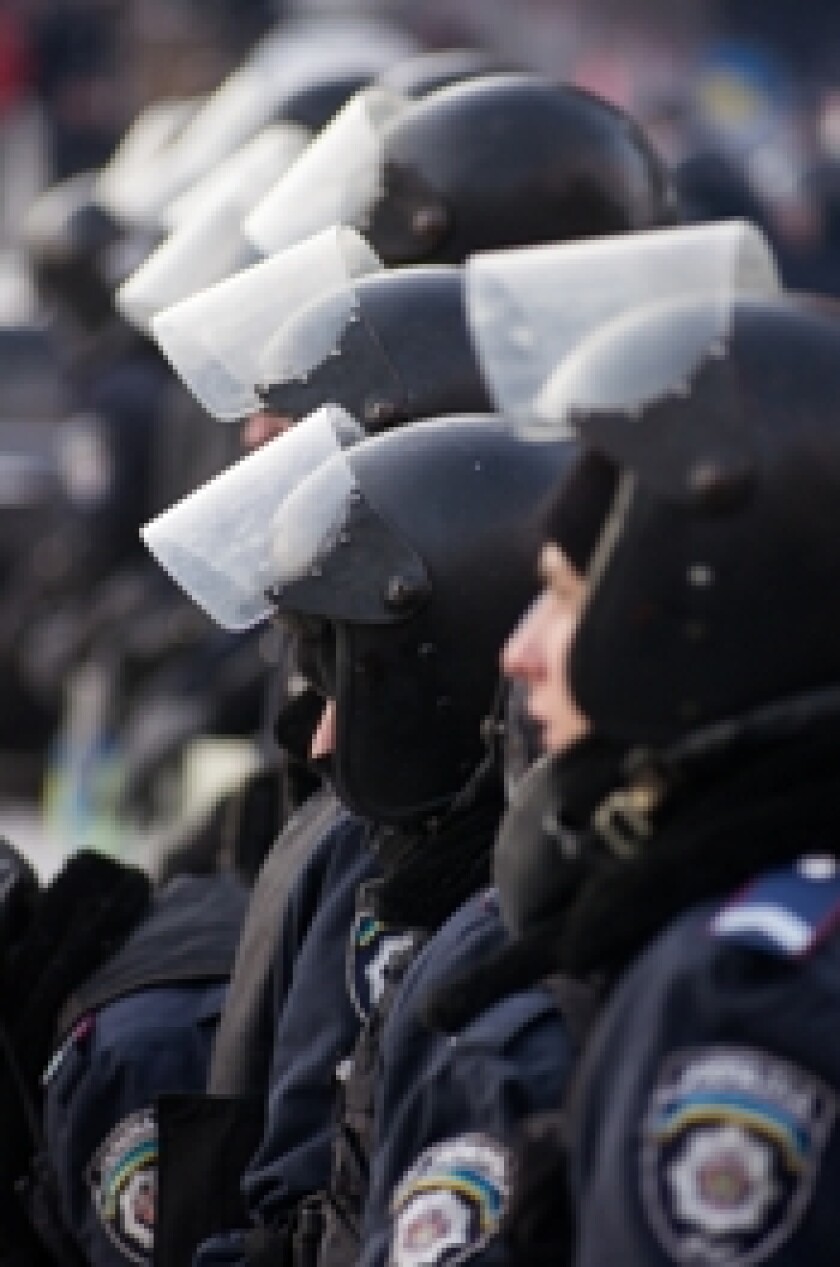
Kiev has been the centre of violent protests in Ukraine since November 2013 when ousted president Viktor Yanukovych cancelled at the last minute a free trade agreement with the EU that many felt would have made Ukraine a likely new member state. Instead, Yanukovych increased ties with Russia, agreeing in principle a $2bn loan. That loan Russia has since withheld after Russia’s finance minster Anton Siluanov told Russian press that Ukraine should seek IMF funding.
While Russia’s intentions in withholding may have as much to do with enlisting the IMF's help as bullying Ukraine, it is almost impossible to see this as anything other than a threat of more to come should Ukraine install a pro-western Europe government in place of its ousted pro-Russia one. Russia has precedent in stopping supplies to Ukraine when it wants to impose its dominance. In 2009, Russia shut off gas to the country in a dispute over allegedly unpaid bills.
The protests appear to have reached an uneasy peace for now, with a decreased police presence in Kiev. The lives lost — 88, according to Ukraine’s health ministry — on both sides of the protest is by far the largest tragedy in the country.
Meanwhile, the impact this will have on Ukraine’s corporate borrowers could be profound. They were already out of favour with the wider syndicated loan market and have spent the last five years clawing back their reputations after a spate of corporate defaults and the threat of sovereign default in 2008 and 2009.
These historic problems were brought sharply to the fore again on Friday 21 as ratings agency Standard & Poor’s lowered the sovereign’s foreign currency rating from CCC+ to CCC, stating that the political crisis there means that the sovereign is likely to default.
Shakier ground
Of course, the firm occasionally tries to push its terms too far. This happened most notably in November 2011 when its $1bn loan, which was priced 250bp below its then most recent deal at 300bp, received a distinctly lukewarm market reception.
But which firm doesn’t try to push as hard as possible, even in times of turmoil? Just look at Turkey, where financial institution Akbank priced its latest loan at 90bp all-in, despite the widespread protests in the country.
Metinvest and energy firm DTEK have asked banks about new loans this year without any real movement in the market. Both deals went quiet in January, according to loans bankers, many of whom blamed the problems in Ukraine for keeping them at bay.
Likewise, the bond market was also growing used to Ukrainian corporates, but even before the protests began, deals were being pulled due to what investors considered an oversupply. In May 2013, Creative Group cancelled its five year debut after its compatriots MHP, Mriya, Ukrlandfarming and DTEK all printed notes two months earlier. And since March 2013, Ukraine’s CDS has only been moving up, according to Markit, the financial information services company. March 15, 2013 five year CDS was 537bps. This has risen consistently and dramatically since then, hitting a 12 month peak of 1325bp on February 19, 2014.
The road ahead is going to be very difficult for Ukraine’s corporate borrowers. Hopefully, they learned enough during their last funding crisis of 2008-09 to tough it out.