Northeast Asia
-
 ICBC Financial Leasing Co brought home $2bn from its latest dual tranche deal on Wednesday, hitting its regulatory cap and meeting its pricing goals.
 -
Hyundai Capital America seized on Asian investor liquidity to close a $1.1bn deal across three tranches, including a floating rate note, on Wednesday.
-
Kunming Dianchi Water Treatment Co has raised HK$1.3bn ($167.3m) after avoiding an aggressive stance on its IPO and pricing at the bottom of guidance instead.
-
China Boqi Environmental Co began testing investor appetite this week for its upcoming Hong Kong IPO, which could raise $100m, according to a source familiar with the matter.
-
Renminbi internationalisation is back on the table after People’s Bank of China (PBoC) signalled actions to increase the currency’s offshore usage in 2017. But the process will be slow, experts warn, given the upcoming 19th Party Congress and demand to limit capital outflows.
-
Mimi Cheng, chief representative of First Gulf Bank in Hong Kong, has left the firm less than a year after taking over the position.
-
Issuers from Greater China are dominating the dollar debt market, as they vie for investor attention on Thursday alongside a couple of south and southeast Asian names.
-
MSCI’s new consultation paper has increased the probability of A-shares’ entering the benchmark emerging markets (EM) index in 2017. However, the inclusion’s impact is likely to be long-term rather than immediate.
-
Thriving local investor demand, as well as determined government efforts at both national and local level to finance Japanese green projects, could soon encourage an underwhelming domestic green bond market to bloom, writes David Bell.
-
A feeling of cautious optimism surrounds the Japanese economy, according to minutes from the Bank of Japan’s monetary policy meeting in January. This positive mood is encouraging some to suggest that, under the dramatic reforms of prime minister Shinzo Abe, the country is on the right track.
-
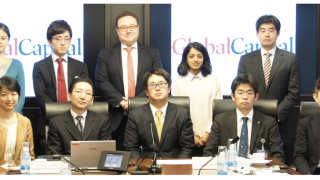
Four years after Abenomics was implemented, and following ratings downgrades in 2015, prospects are beginning to improve for Japan’s top credits. With the financial year starting in April there are reasons to be positive. Foreign investors are returning to the Japanese debt market, the economy is showing some improvement and companies are ramping up their funding targets. GlobalCapital sat down with senior officials from some of the most highly regarded issuers in Japan, as well as respected bankers, to find out about their fundraising plans and how they will approach the debt markets.
-
Japan’s economic and political stability is making its domestic credit markets an attractive haven in light of political uncertainty in Europe and the US. With global monetary policies diverging, Japanese debt is becoming an attractive proposition for an increasing number, and variety, of overseas investors, writes David Bell.