Top Section/Ad
Top Section/Ad
Most recent


Where do investors look when JGBs and USTs are no longer reliable?


Asian buyers driving callable SSA market have resurfaced in public benchmark deals

Public sector issuers have become more flexible when executing cross-currency interest rate swaps
More articles/Ad
More articles/Ad
More articles
-
 Expecting the unexpected has been market philosophy since the Brexit vote last June. Adherents may well have thought that made Marine Le Pen a certainty to win this year’s French presidential election.
 -
It is obvious that there is no love lost among Republicans for the Consumer Financial Protection Bureau and its director, Richard Cordray. However, one GOP congressman’s recent tirade against the CFPB’s mortgage lending rules is worrying given the experience of the housing bust.
-
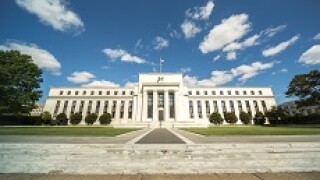
Back in the early days of quantitative easing, one of the biggest fears on the Street was the inevitable unwind. But now the US Federal Reserve has broached the topic, perhaps it is better, as former deputy governor of the Bank of England Minouche Shafik seemed to suggest in September, that it is here to stay.
-
Governments are often pilloried for privatisations, sometimes for years afterwards. It’s hard for them to win, with one of the biggest risks being taking the blame for underpricing the asset.
-
Donald Trump’s presidency may be the most unknown commodity to hit markets since ancient alchemists started hawking something called 'bronze' to befuddled cavemen, but his stone-age political manoeuvring has smoothed the future path of public sector borrowing.
-
The Bank of England’s new biennial ‘exploratory’ scenario (BES) suggests stress testing has entered an improved and more mature phase, putting the spotlight on business models as well as capital adequacy.