China
-
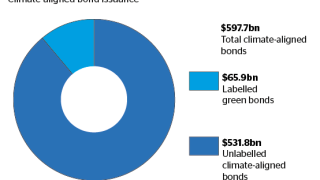
 Given that green bonds still account for a minuscule 1% of the total global fixed income market, it is supply that is needed most if the sustainable capital market is to gather the traction it needs.
 -
Although Asia as a whole has been slow to embrace green financing standards relative to some parts of Europe, China stands out as having taken big strides towards greening its financial system. Green bonds are at the heart of this move with China’s market having the potential to be the largest in the world.
-
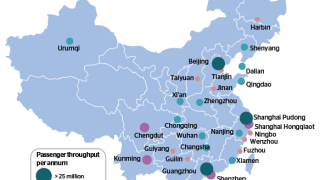
According to some, infrastructure in China is now so well developed that it is perhaps the Asian economy that has the least need for infrastructure investment. However, it cannot afford to slow down, not least because of the noxious state of its environment.
-
China’s One Belt, One Road project and rising supply of investable projects will help to underpin growing institutional demand for infrastructure assets in Asia, which in turn should drive the acceptance of public-private partnerships across the region.
-
As much as $60tr will need to be spent between now and 2030 just to plug the global infrastructure gap. The challenge of meeting this vast requirement will be all the more formidable given that solutions for doing so will be utterly pointless if they fail to incorporate sustainability safeguards to prevent further irreversible damage caused by climate change.
-
HSBC has appointed long-serving banker Montgomery Ho to the newly created role of chief executive for Guangdong as it seeks to solidify its presence in southern China.
-
November was a big month for the RMB qualified foreign institutional investor (RQFII) programme. One new jurisdiction, Malaysia, entered the arena, while Bank of China Luxembourg (BoC Luxembourg) and ICBC (Europe) became the first Luxembourg quota recipients.
-
Offshore renminbi funding costs have increased 100bp-150bp in recent weeks after China’s central bank shut down cross-border lending. The move was designed to reduce volatility in offshore renminbi (CNH) ahead of the IMF decision on its Special Drawing Rights basket, several offshore traders have said to GlobalRMB.
-
While it’s a now presumed the renminbi will make it into the IMF’s Special Drawing Rights (SDR) basket, one thing still up for debate is the size of inflows into the currency. GlobalRMB rounds up some of the predictions in the market.
-
Doosan Power Systems (DPS) and the Sydney branch of Industrial and Commercial Bank of China started attracting interest from bond investors on November 30, opening books for their respective dollar deals.
-
China Greenland Rundong Auto Group has become the latest auto dealer from the Mainland to increase the size of its borrowing thanks to strong demand.
-
Chinese authorities are expected to allow the renminbi to depreciate following the decision on the IMF Special Drawing Rights (SDR) basket, though there is a debate about how severe that fall will be. Either way, it is likely a hike in rates by the Federal Reserves (Fed) could hold more sway on the RMB's future than SDR inclusion.