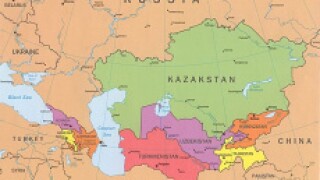
Central Asia
-
 Kazakhstan is a step closer improving foreign investor access to its domestic market and has signed a memorandum of interest with Euroclear, which will allow the settlement provider to clear bonds denominated in tenge.
 -
China has relaxed access to the onshore renminbi (CNY) foreign exchange market for overseas banks based in Cambodia, Kazakhstan, Mongolia and Thailand, all countries that fall under the Belt and Road initiative, GlobalRMB has learned.
-
A planned Eurobond from Tengri Bank, Kazakhstan’s 24th largest lender, failed to appear in the public market on Friday, when it had been expected to be priced.
-
Kazakhstan’s 24th largest lender Tengri Bank was asking investors this week to extend financing amounting to over 50% of its total assets. The bemused buy-side is not exactly piling in.
-
Emerging market bankers said a pipeline of local currency Eurobonds is building for 2018 — including another in tenge — with Development Bank of Kazakhstan’s (DBK) recent tenge trade setting a good tone in the market last week.
-
Development Bank of Kazakhstan on Thursday priced the first ever tenge Eurobond, raising the equivalent of $300m from a three year note.
-
International investors were eyeing the first Kazakh tenge trade to be cleared by Euroclear on Thursday.
-
A variety of corporate deals are keeping EM investors busy in what is expected to be the last week for new issues before the end of the year.
-
The Development Bank of Kazakhstan has mandated three banks for the first ever tenge senior unsecured Eurobond from the country.
-
National rail company Kazakhstan Temir Zholy (KTZ) has printed a $780m 10 year trade that came around 18bp wide of fair value on a yield basis, though the deal easily covers the amount needed to finance a tender offer on the borrower’s 2020s.
-
Kazakhstan Temir Zholy (KTZ) kicked off this week’s new issues with a 10 year note on Monday as investors begin to dial back risk appetite in order to protect returns as the year end approaches.
-
Emboldened by the ability of its neighbour Tajikistan to access the capital markets, Uzbekistan is preparing ground to secure its first sovereign rating, with a view to issuing a Eurobond in the future, according to sources.