Awards
-
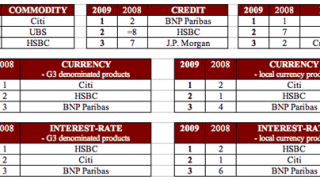
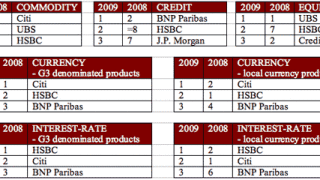
 BNP Paribas, Citi, HSBC and UBS impress with their product platforms in a volatile marketplace, according to respondents in Asiamoney's largest ever structured products survey.
 -
Only a short while ago, forward starts were viewed with disdain by much of the loan market — an instrument that many believed let borrowers get away with murder. But perceptions have changed as the instrument has been standardised to suit the needs of lenders as well as borrowers.
-
Amid volatile markets, some market stalwarts continued to impress, while other banks shot up the rankings in different product areas.
-
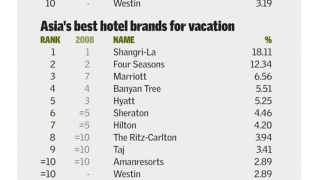
Security became the primary concern for business travelers over the past year, according to Asiamoney’s Travel Poll 2009. Amid a wave of terrorist attacks, plane accidents and riots across the region, respondents revealed their favourite hotels, airports and airlines in our largest industry insight to date. But Asia’s best-known brands will have to work even harder this year amid a bleak outlook. Bernice Lam reports.
-
UBS has set the standard for banking advice in Australia, and 2008 was no exception. It boasted a string of stand-out deals, including Westpac’s acquisition of St. George, Suncorp-Metway’s hybrid security issue and some rapid financing deals. Despite a less than dominant debt capital markets presence, it earns Asiamoney’s award.
-
Westpac reaped the benefits of a conservative lending policy, being present on many of last year's benchmark deals. It lent to firms from an array of sectors, including finance, telecoms, broadcasting as well as a metals producer. It deserves credit for supporting clients via its consistent and broad lending policy during a difficult year.
-
The Swiss bank topped deal tables during the past year, participating in several accelerated non-renounceable rights offers. Among its most eye-catching transactions, it arranged a follow-on for GPT that helped the property firm to fight another day. UBS earns Asiamoney's award.
-
In a straight fight between UBS and Caliburn Partnership to earn Asiamoney’s award for best M&A adviser in Australia over the past year, the Swiss bank edged out the boutique advisory firm. Asiamoney felt it did a slightly better job at gaining a good outcome for clients, while it was also represented on more sizeable deals through the year.
-
Macquarie Leasing’s securitisation deal last June was underpinned by auto- and equipment-backed loans, where spreads tend to be wider. While it had an Australian dollar tranche, it included an Irish special purpose vehicle. Its structure was impressive enough for St. George to copy it and the deal rightly earns Asiamoney’s award.
-
Primary Health launched the largest leveraged buy-out loan in Australia during 2008. It promised to sell surplus assets of target Symbion and to use the proceeds to refund much of the money it had been lent. The promise of early repayment and appealing pricing attracted interest from a selection of high-quality banks.
-
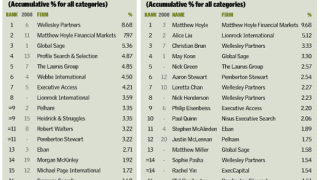
Staff at banks have been on the front line as far as the global financial crisis is concerned, with bonuses slashed and entire teams of people let go. It was a challenging environment for the region’s recruiters too, with firing strongly outstripping hiring. Asiamoney reveals which firms have prospered in the toughest year in a decade.
-
Asiamoney is pleased to announce the results of its largest ever travel poll. In total, 462 business travelers from 25 countries participated, making the results of this survey our most comprehensive guide yet to the preferences of the region’s elite business clientele.