Asia Pacific
-
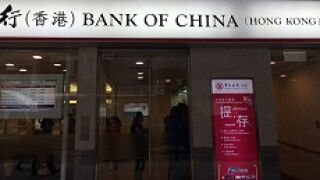
 Wang Xiao Zhou, who heads up loan syndication and product portfolio management at Bank of China, is leaving for a new position with Bank of China Group Investment (BoCGI).
 -
Geely Automobile Holdings is laying the groundwork for a dollar-denominated green bond that is expected to launch in the middle of the year.
-
Guosen Securities (Overseas) Company Limited issued a clarification announcement on March 31 to the Hong Kong Stock Exchange saying that Bank of New York Mellon, the trustee of its outstanding dim sum bonds, has issued a notice to bondholders stating that no event of default of its bonds has occurred.
-
The Republic of the Philippines is getting ready to meet investors to provide them an update on recent economic developments and performance.
-
Bank of China received board approval this week to issue tier two notes of up to Rmb60bn ($9.2bn), according to a filing on the Hong Kong Stock Exchange.
-
Citi has boosted its research capabilities in Asia, hiring Liu Li-Gang as chief economist for China.
-
ChemChina will choose the banks to participate in the $20bn tranche of its Syngenta acquisition loan imminently, according to a banker close to the deal.
-
The Bank of Japan’s decision to cut interest rates below zero has already had an impact on the ability of bankers to generate cross-border deals. But the wider ramifications of the move may be reflected in the domestic bond market. Matthew Thomas reports.
-
Japan’s top-rated credits are used to getting a captive audience from international investors, cheap spreads at home and their choice of funding markets. But the global volatility that has defined the financial markets over the last few years has made things tough even for these well placed issuers. GlobalCapital sat down with some of the most highly-regarded issuers in Japan, as well as respected senior bankers, to discuss how these issuers can best approach the debt markets.
-
Since Shinzo Abe was elected as prime minister in December 2012, ‘Abenomics’ has been a buzzword for international and domestic investors alike. Abe’s determination to turn the Japanese economy around, combined with the aggressive style of his hand-picked central bank governor, has brought unprecedented attention to Japan in a time of global volatility. That makes the job of communicating the strengths of the Japanese economy to investors all the more important. GlobalCapital sat down with Eiko Kimata, director for debt management and JGB investor relations at Japan’s Ministry of Finance, on March 11 to find out how investors have reacted to the central bank’s recent move into negative interest rates, how international investors are viewing the potential of the Japanese economy, and how the Ministry of Finance can best approach a tricky funding environment.
-
Guosen Securities (Overseas) Company Limited has told the trustee for its bondholders that part of the keepwell deed attached to its CNH bonds that mature in 2017 is no longer in full force and effect. According to a notice that trustee Bank of New York Mellon sent out to bondholders on March 23 2016 and which has been obtained by GlobalRMB, this constitutes an event of default.
-
The Bank of Japan has proven itself to be among the most aggressive central banks in the world over the last few years. But the central bank went a step further in February, pushing interest rates below zero. Investors and issuers are still struggling to figure out just what the policy means for them. Matthew Thomas reports.