
American academic Matthew Crawford, writing in the New York Times, stated “attention is a resource; a person has only so much of it.”
Bond issuers and debt capital markets bankers know it well. Catching investors' attention with a new issue is paramount — losing it can be fatal.
That's why markets all but shut down when investors jet off on holiday over the summer, or turn towards home at Christmas and Thanksgiving. Issuance patterns mirror school holidays, so market windows are defined as much by local education authorities as data releases or equity futures.
Once every four years, another distraction comes along, perhaps more dangerous than the rest, because less official and — let's face it — more exciting.
For many in the market, the big event on Thursday will not be the European Central Bank's meeting, at which it is expected to raise the euro deposit rate, but the opening of the football World Cup with Mexico's game against South Africa.
With 48 teams competing this year instead of the usual 32, this mega-spectacle will run until just after Bastille Day, which typically starts the capital markets' unofficial summer break.
Minds on other things
Many are looking forward to the football action, but from the market's point of view, it is hardly helpful.
With investor sentiment febrile and everything from war in the Middle East to central bank rate paths already hogging attention, the buzz of the World Cup could just make investors switch off their new issue screens.
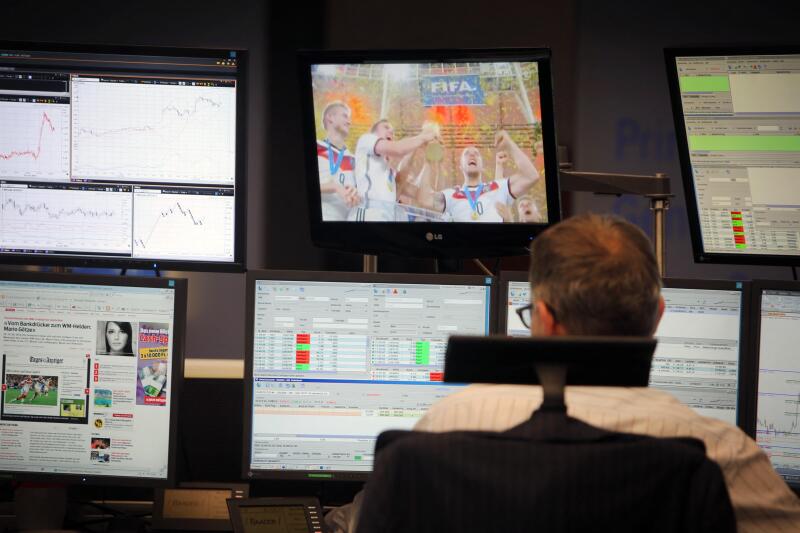
The last World Cup, played in Qatar in December, was watched by almost 2.9bn people, according to Fifa. In Germany alone, even though it failed to get beyond the group stages, 60m people watched the tournament, over 70% of the population. Viewer numbers are likely to be higher this time.
An ECB working paper, published in 2012, analysed stock market flows during the 2010 World Cup in South Africa. It found “a strong sense that stock markets were following developments on the soccer pitch rather than in the trading pit”.
The volume of trades made on Dax 30 stocks fell by 59% when the German national team was playing.
Similarly, the volume of Bund futures traded during German matches at the 1998, 2002, 2006 and 2010 World Cups dropped by 48%, the ECB researchers said. Of these four tournaments, all but one — 2002’s tournament in Japan and Korea, where Germany finished second — were held in Europe's timezone.
Other European footballing and capital markets powerhouses, like France and England, also had trading volumes shrink during their teams' games.
Revisiting their research in December 2022, ahead of the last World Cup, the ECB researchers, Michael Ehrmann and David-Jan Jansen, found investors had continued to avoid the markets during national matches in the 2014 and 2018 tournaments.
Not only that, the 2012 study found that the usual co-movement between the returns of national stock indices and global markets decreased by 20% during games, showing that prices were influenced, as well as volume.
So far, bond new issues have not been studied in the same way. But it is common knowledge among market participants that when investors' attention is elsewhere, execution gets trickier.
When Amazon broke records with its €14.5bn debut in euro bonds earlier this year, three issuers tried to share the limelight, but two found themselves paying up to do so.
As Brian Clough, the ‘greatest head of DCM England never had’, might have said, “if God had wanted us to watch football during trading hours, he'd have put the World Cup on Bloomberg”.
Night watching
Thankfully — perhaps — for issuers in Europe, this year the World Cup returns to north America, so the earliest kick-off time will be 5pm London time, 6pm in Madrid, Paris and Frankfurt.
Bankers and investors may try to scarper early to get themselves comfortable before big games, but there should be fewer excuses for the World Cup distracting participants from the real beautiful game of syndication.
A bigger problem may be late nights. All Scotland's group stage games start at 11pm or 2am UK time, for example. How bright-eyed are Scottish bankers — not to mention investors — likely to be on a 7am call after those? Issuers might need a little extra NIP to wake them up.
Some have even suggested wandering minds might help the market.
Citigroup researchers this week forecast short term rates volatility to ease in Europe and the US as the World Cup drags traders' eyeballs away from their curves and regressions.
Weirdly, if the World Cup really does calm rates volatility, even marginally, it could open a window for European borrowers to score a stable deal before the first game of the day kicks off just after European markets close.
During previous tournaments, GlobalCapital has made plenty of calls to bankers who have had one eye on the iTraxx and the other on the big match.
This year, most of the time, there should be less fretting during trading hours about 30 years of hurt, and more about 30bp of spread. But issuers would still be wise to check the fixtures schedule before finalising plans for a deal — or they might end up limping off for an early bath.