South Africa
-
 Markit is preparing to launch what it said will be the first tradable emerging markets interest rate swap index.
 -
Standard Bank is in the market for two loans, a $750m deal for Standard Bank of South Africa and a deal for its Kenyan subsidiary, Stanbic Kenya, according to bankers.
-
Renaissance Capital has opened a new office in Cape Town, South Africa.
-
South Africa has strong links to the rest of the continent and a ready-made hub in Johannesburg’s business district. But is it doing enough to fulfil its potential? Chris Wright reports
-
South Africa’s well capitalised banks are profitable despite strong economic headwinds, but obstacles remain as the country’s financial institutions look for long-term and stable sources of funding. Tyler Davies reports.
-
A strong institutional investor base, high liquidity and a wide variety of instruments make South Africa’s domestic bond market one of the most sophisticated in the developing world. Lucy Fitzgeorge-Parker reports.
-
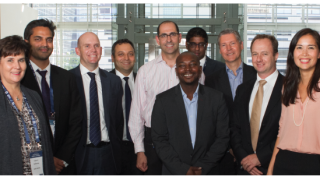
Though the South African economy is struggling, its corporates are still sought-after in the international and the domestic bond and loan markets. But the risks of expanding businesses within Africa were highlighted last year by the $5.2bn fine on South African telecommunications company MTN. And as Basel III is introduced in the country, it will become more harder, or at least more expensive, to tap the loan market for maturities of five years or more. Meanwhile, the US rate rise will surely make the international bond markets more expensive for South African borrowers. At GlobalCapital’s roundtable, held in Cape Town on November 26, representatives from companies, banks and institutional investors gathered to discuss the changing environment for corporate issuers and investment in them.
-
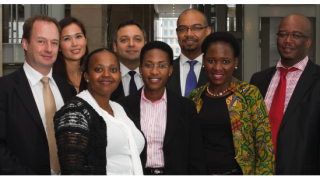
South Africa’s economy is under siege from a host of challenges both global and domestic — and many of them beyond the country’s control. How can a country thrive when dire unemployment is combined with electricity shortages and a worsening drought, and when everything from Chinese growth to commodity prices and vulnerability to Federal Reserve interest rate rises seem to be conspiring against it? In an interview with GlobalCapital, the National Treasury presents a more positive narrative: of resilience, transformation and the promise of progress. South Africa intends to realise its potential.
-
South African issuers are rarely seen in international markets, but have traditionally received a warm welcome. Will that still be the case in 2016? Lucy Fitzgeorge-Parker reports.
-
The Republic of South Africa had a difficult end to 2015. Fitch cut the country’s credit rating one level on December 4 to BBB-, the lowest notch in investment grade, and in line with the assessment of S&P, which lowered its outlook to negative from stable on the same day. Just days later, President Jacob Zuma abruptly replaced his finance minister, Nhlanhla Nene, with David Van Rooyen and then a few days later — after strong local and international criticism — reappointed Pravin Gordhan. who had held the job between May 2009 and May 2014. The country’s growth has disappointed over the last year and is expected to continue to do so, as power shortages and job strikes take their toll. Meanwhile, the government’s decision not to tighten fiscal policy in the face of weakening revenue and rising debt levels has been heavily criticised, with Fitch naming it as one of factors behind the downgrade. At GlobalCapital’s roundtable, held in Cape Town on November 26, South Africa’s National Treasury, sub-sovereign issuers and leading bankers discussed how best to access the capital markets at this difficult point in time, and their outlook for the South African economy.
-
The world’s economy is yet to recover fully from the global financial crisis of 2008. Global recovery is uneven,
-
With foreign direct investment (FDI) commonly touching $20bn, a renewed focus on education and long overdue investment in the power sector, South Africa is clearly worth investing in. But there are plenty of challenges, not least the moribund domestic economy, electricity shortages, rising US rates, drought and a China slowdown. As a result, there will continue to be short term pain, but the outlook for the long term is brightening. Chris Wright reports.