Europe
-
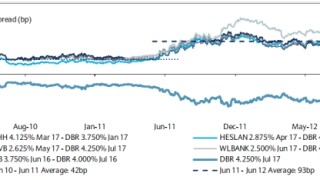
 French and German covered bonds have outperformed sovereign and agency debt from the same countries, and investors would now benefit from switching out of covered bonds, Barclays analysts have advised. But traders countered that a dearth of new issuance is preventing such profit taking, and will help keep core covered bond spreads tight in the short term.
 -
Raiffeisenlandesbank Niederösterreich-Wien made its debut in the Swiss franc market on Thursday, with a Sfr150m 1% November 2020 covered bond.
-
European banks are pulling back from emerging markets globally. The real surprise is not the pace of retreat but the speed at which the gaps are being plugged
-
Ad hoc policy measures must now be accompanied by “a comprehensive set of policies that address the underlying problems," El Erian said
-
Singapore hopes the latest measures will boost the European economy but challenges remain
-
China’s slowdown means Latin American countries will have to push forward reform agendas
-
The author of the “Doom, Gloom and Boom Report” has actually bought stocks in eurozone countries
-
Some smaller offshore tax zones are likely to suffer because of the measures imposed by the US to crack down on tax evaders
-
Norddeutsche Landesbank has sold a stand-out debut dollar covered bond, ending Germany’s six year absence from the 144A covered market. The three year deal on Wednesday carried the lowest ever coupon for a covered bond in that currency and is the only outstanding public sector backed trade in the dollar covered market.
-
Nearly a quarter of Spanish mortgages could be in negative equity, Moody’s has warned, but with Cédulas collateral marked at historic levels, investors have little transparency on the value of their claim. An updated covered bond structure is fully warranted, but unless it was legally enshrined, the benefit would be negligible, reports The Cover.
-
Five years since the crisis first struck, the global economy remains in a parlous state. The threats to world growth are only mounting
-
Emerging nations are talking big about investing in each others’ currencies. But diversifying reserves out of traditional assets will not be so easy