
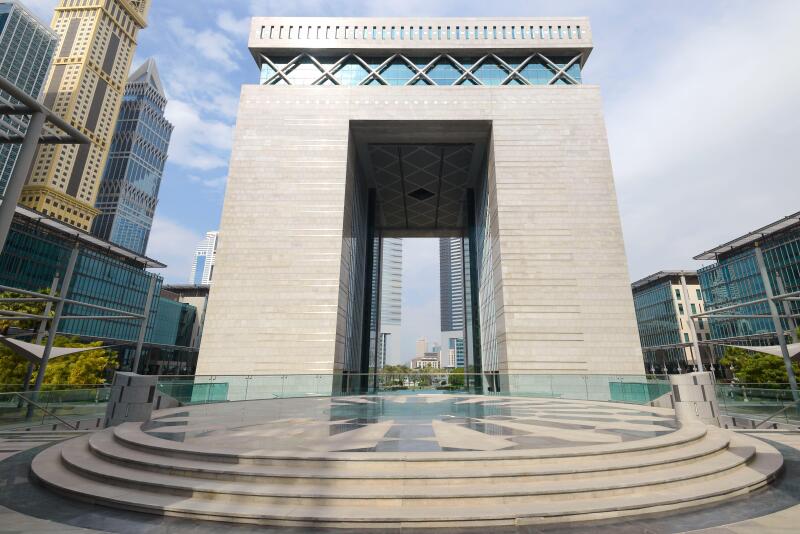
The extraordinary scenes this week with the United Arab Emirates under Iranian bombardment — and some casualties and damage to property — are far from what anyone is used to or ever expected to happen on this usually tranquil coast.
But this war, triggered by the US and Israel's attack on Iran, will not alter the longer term perception and attractiveness of Dubai as an increasingly important international financial centre.
The emirate — whose Dubai International Financial Centre is jokingly called 'Canary Wharf in the desert' by the bankers who work there — has been an extraordinary success story of the last decade.
The heat in the summer is unbearable and the traffic is hell on earth, but the remarkable number of banks and funds that have set up there to tap into the Gulf’s oil wealth is testament to the dreams and ambitions many have for the region, as well as the personal delights of a tax-free environment.
Just last week Abu Dhabi printed a $1.75bn 10 year bond at a mere 25bp over US Treasuries. At the time, bankers and investors talked about it likely being the last issue from Abu Dhabi before the UAE starts a phased exit from JP Morgan’s Emerging Market Bond Index (Embi) series from March 31.
All new issuance from the UAE, whether sovereign or quasi-sovereign, was deemed ineligible for Embi inclusion from last Tuesday.
For a country to develop economically to such a point that it is formally discharged from the ranks of emerging markets is a rare event.
Getting through it
With all this in mind, market participants' reaction to the attacks on the Gulf states this week may be less similar to the turmoil half-expected and priced in to many other emerging markets — and more analogous to the terrorism attacks on New York or London in the 2000s, which made people nervous about those cities for years after.
How deep that psychological wound goes, and how quickly Dubai and the rest of the region can put this behind them, both on the ground and in the eyes of outsiders, will depend on how long the missiles and drones overhead continue, how much damage they do and how the conflict ends, or whether it becomes frozen.
Alarmingly, Bloomberg is reporting that interceptor missile stocks in Qatar will run out in four days, Dubai’s in seven.
Nevertheless, it seems inconceivable that Dubai will not get through this crisis and move on from it, as London and New York did.
Critics emboldened
People outside Dubai love to hate it. Despite its plethora of top end restaurants and incredible architecture, there is still an overriding wider perception of Dubai as a place chock full of vapid influencers, not helped this week by the videos coming out of these people trying to get on planes to leave.
Detractors mutter that a region in a constant state of sectarian warfare was obviously never the best place to live, despite its publicity on how safe it is for families day-to-day, even compared with London.
These undermining voices have grown louder this week as the Gulf is dragged into a war it clearly did not want to fight.
Whatever JP Morgan says, it is difficult for the UAE to escape the EM label and the risks of where it is.
But progress is rarely linear. Just because Dubai is down this week does not mean it is out.