

Panellists:
Cosette Canilao, executive director, Public-Private Partnership (PPP)
Aaron A. Domingo, executive vice president and general manager, Meralco Powergen
Mark Giblett, group head of project finance, Asia, SMBC
Tim Histed, head, North Asia, Multilateral Investment Guarantee Agency, The World Bank
Patrick Mispagel. associate managing director, infrastructure finance group, Moody's
Takanori Satake, chief representative, Manila, JBIC
Kalpana Seethepalli, senior infrastructure economist, The World Bank
Frank Thiel, managing director, Quezon Power
Moderator: Richard Morrow, editor, Asiamoney
Asiamoney (AM): In April, Neeraj Jain, the country director of the Asian Development Bank for the Philippines, said that around 2.5%-3% of the country's GDP is currently being spent on infrastructure, but it needs to be raised to around 7%. What are the areas of infrastructure funding that need to be focused on?
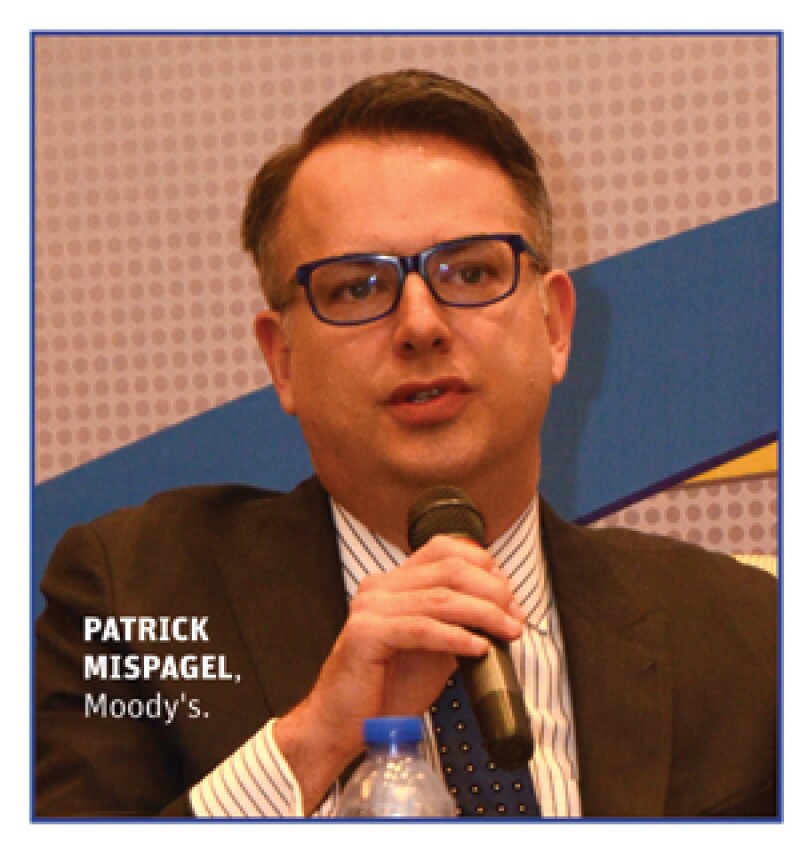
Patrick Mispagel, Moody's: You touched on an important point about the scale of infrastructure funding needs in the Philippines, and certainly as the country looks to cover ground in increasing its investment relative to GDP, it is going to be fairly broad-based. But from our interactions with the market here and discussions with issuers: power, water and ports are three significant areas that are currently the focus for potential offshore activity.
The combination speaks to two significant needs in the Philippines: one is increasing economic growth, but the other is meeting the real social needs, such as increasing access to potable water.
AM: What are some of the hurdles you see to project financing in the Philippines and across the ASEAN region?
Kalpana Seethepalli, World Bank: By and large, projects are not fully prepared when they come to market. There are a number of financing issues that deal with the lack of commercial viability. Infrastructure PPPs are inherently loss-making propositions. Because of the history of low tariffs, potential revenues are lower than costs. This creates a viability gap — and what you need is some public money to come in to bring the cost down to a level that can be recovered by expected revenue streams.
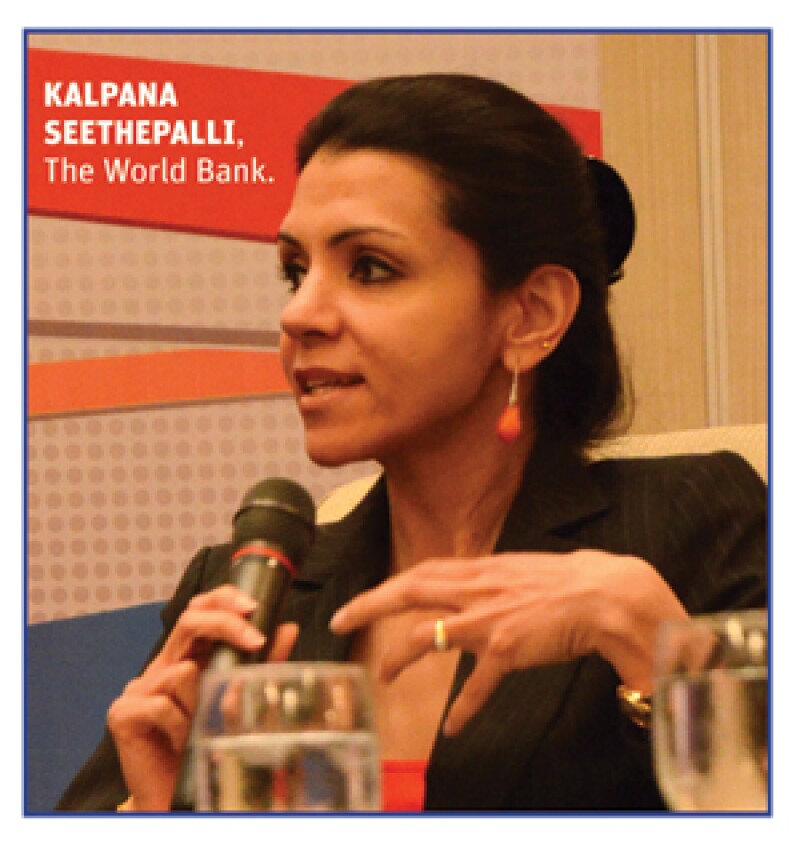
That is one side of the challenge. But you also have the risks that individual project managers are exposed to. Of course, you have macroeconomic risks, but you also have contractual risks — in particular, the risk that governments say they will increase tariffs, but when it comes time to do so, they change their mind.
A number of countries in Asean (Association of Southeast Asian Nations) have done all they can to deal with both of these problems and they still found that PPP projects are not moving. This is because of the non-financial challenges, in particular, land acquisition, environmental clearances and inter-agency coordination. The key issue here is integrating the financing challenges with the non-financing constraints.
Cosette Canilao, PPP: These are all real issues we had to face when the PPP programme was launched in 2010. This is why it took some time for us to lay the foundation, to adjust the policies, to improve coordination among agencies, and to learn how to interact with the market. But since then, we have already awarded seven projects. That is no small feat, after starting from scratch.
The government was willing to provide viability gap funding for four out of those seven projects, but in each case, the private sector opted instead to pay the government to secure the righ to build and operate the various infrastructure projects that were tendered. We have done what we need to do so far to encourage private sector participation in our program, and we have seen that that properly structured projects attract competition.
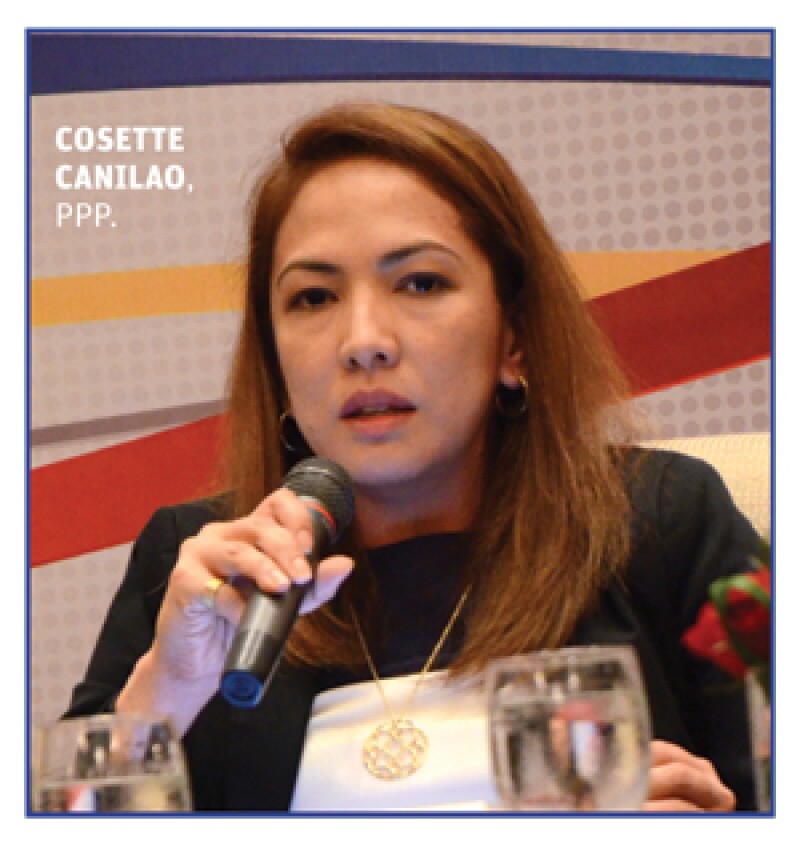
We now have a very robust pipeline of about 50 projects in various stages of development. That has never been done by past administrations. This is a different PPP programme than before. We are very thankful for multilateral agencies, and for the Australian government and the Canadian government, for giving us technical assistance. But the next challenge for us is, of course, in the implementation of the awarded projects. We are now looking at how we can work closely with line agencies to make sure projects are being implemented successfully.
AM: It is clear that power projects are going to be a major source of project finance activity in the Philippines over the next few years, and we're lucky enough to have representatives from Meralco Power and Quezon Power on the panel today. Gentlemen, can you share a little bit of your experience — and in particular the areas where you feel there is need for improvement?
Aaron Domingo, Meralco Powergen: There is pressure to reduce tariffs. Not only to reduce them, but also to reduce the volatility. And when we look at capacity payments, buyers would rather make those payments on a peso basis. That forces you to look at your financing on a peso basis.
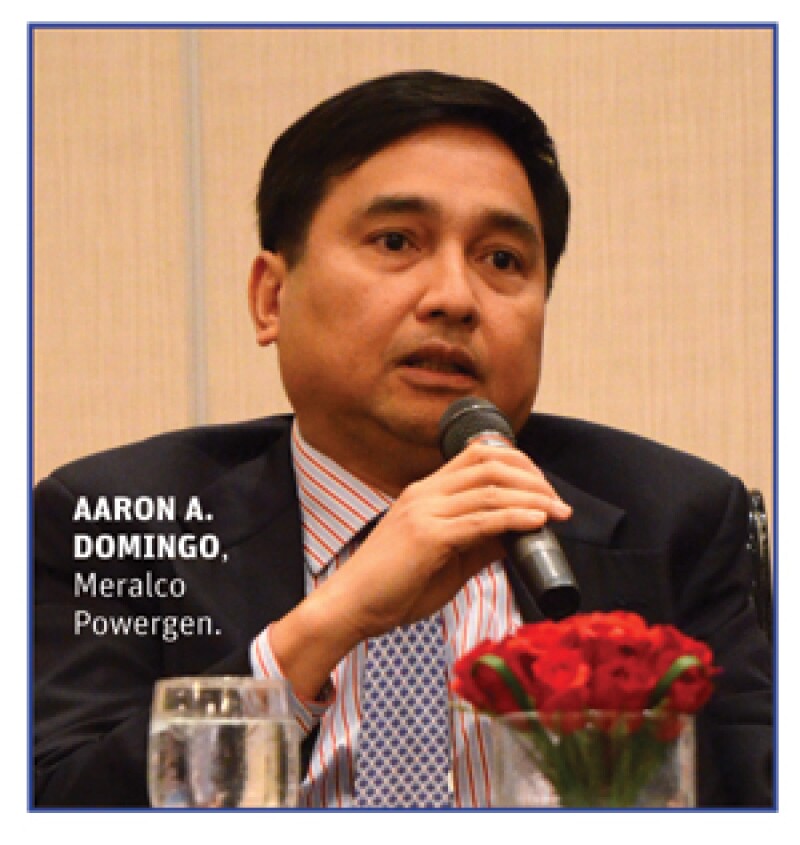
Fortunately, the Philippine bank market has the capacity to provide such financing. Unfortunately, it becomes very expensive if you want to match the tenor of your contract, so you end up having to take some refinancing risk because the only option becomes to borrow short-term. You need to convince the regulator that the refinancing risk must be part of the tariff base, otherwise the equity investors are taking significant extra risk.
Frank Thiel, Quezon Power: I agree with Aaron. One of the issues we're facing is a little bit of uncertainty on the regulatory environment. We're trying to make a very significant investment in the Philippines — over $1bn — and one of the things we want to get is an assurance that your tariff will remain as you think it should be. You don't want to go ahead and make a big investment with the possibility that your tariff may go south when you finish construction. That is a big challenge, and we are trying to sort our way through that right now.
The Department of Energy in the Philippines has a very detailed plan for capacity expansion and, as a result, we see this as being a very active market. But it can take anywhere from two to three years to get an environmental compliance certificate, so project development in the Philippines can go from as short as five years to as long as 10 years.
You can get things done here, but it certainly takes longer than anywhere else I have worked. There are a lot of agencies that need to be consulted here, and it takes time to sort through all the regulations. It takes more than 180 permits to get a project underway.
AM: It appears that local bank funding is far and away the preference for sponsors lining up new projects. Why are foreign banks not more active in this market?
Mark Giblett, SMBC: The main issue, of course, is that local banks are very liquid at the moment. There are only a handful of projects that actually make it to the financing stage, so there is a lot of demand for these projects. That makes it very difficult for the offshore lenders.
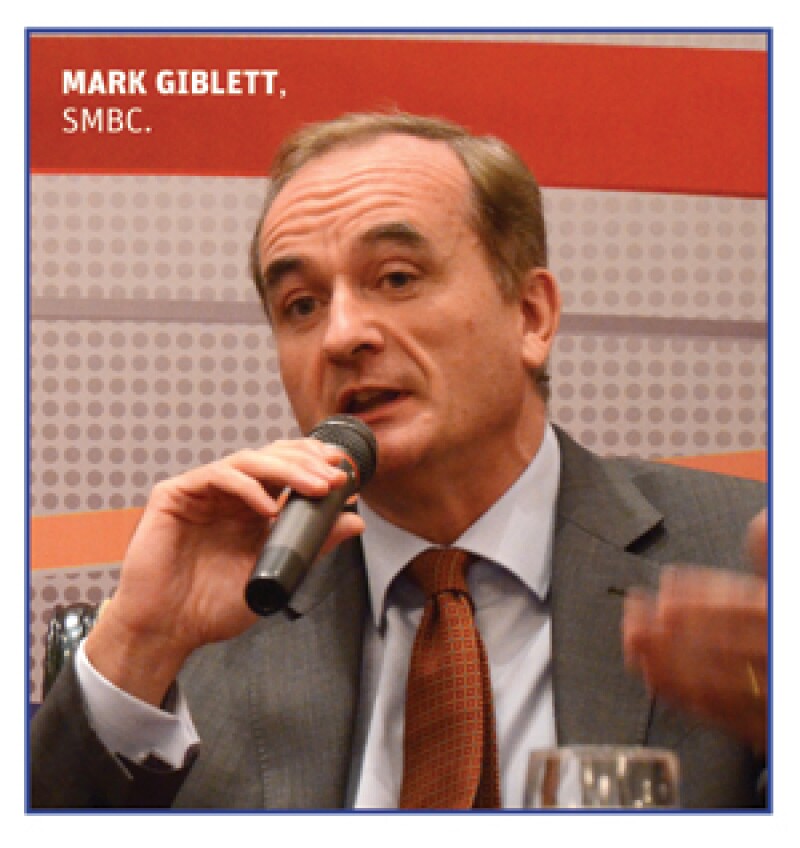
Power projects can be structured with a mix of US dollars and pesos in the tariff, but the pure PPP projects — school projects or water projects, for instance — are entirely peso-based, so it makes sense to keep your financing in pesos.
There is also a difference in approach. Philippine banks tend to look through project finance deals towards the corporate, so they structure the deal very much based on who is sponsoring it. Clearly, international banks look at sponsors too, but that is very much the first tick in the box. Then we look at the project itself, and ask whether it makes sense. Most of these projects are limited recourse or non-recourse, so even if something goes wrong, the sponsors are unlikely to step in.
One of the strengths of the offshore banks is that they can push the tenors out. Philippine banks are starting to do that, but international banks have more experience of taking much longer tenors. That is one strength we can bring to the market, but we still face problems of peso liquidity being very high, margins being a bit too low, and deals not always being structured in a way that we want them to be structured.
Domingo, Meralco Powergen: For us, there is a role for international banks, especially when a project gets larger and more sophisticated. You can get Ps50bn ($1.14bn) locally, but if you double that, the dynamics change and you are forced to look at more international lenders. We make sure that we are able to execute the project quickly, and if that means borrowing locally, we will do that. But when projects become very large, we definitely turn to international banks.
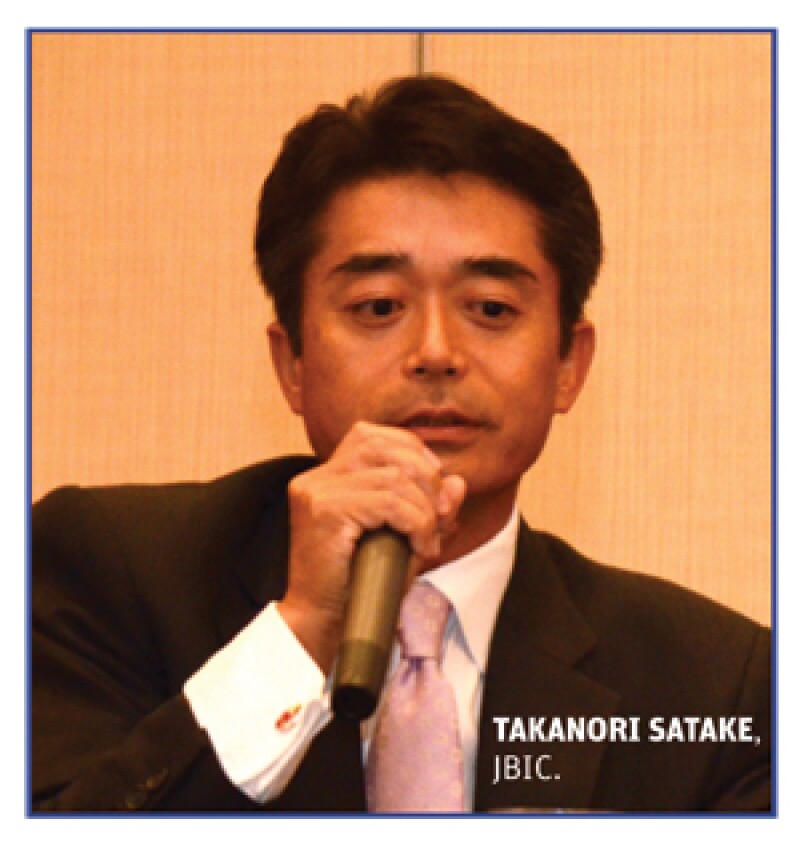
We support Japanese companies in their investments, but compared to other neighbouring countries in the Asean region, it seems that Japanese countries are not so active here in infrastructure projects. One of the reasons is the attractiveness of projects in relation to risk allocation. It is still not enough for a lot of international investors.
Canilao, PPP: One of the reasons why local banks are lending to PPPs is that one of the early things we did is ask the central bank for a waiver to single borrower limits for PPP projects, which was granted until 2016. But we will certainly need the participation of foreign banks, not only for financing but also their sophistication and understanding of project finance.
Tim Histed, MIGA: We provide insurance, so we react to the business needs of our clients. We cover cross-border investment, so if banks and sponsors are not coming to us, we cannot guarantee anything. The reasons we do not get a lot of demand here is the local liquidity. But we are certainly beginning to get the enquiries with the PPP projects coming up now. That's a positive development.
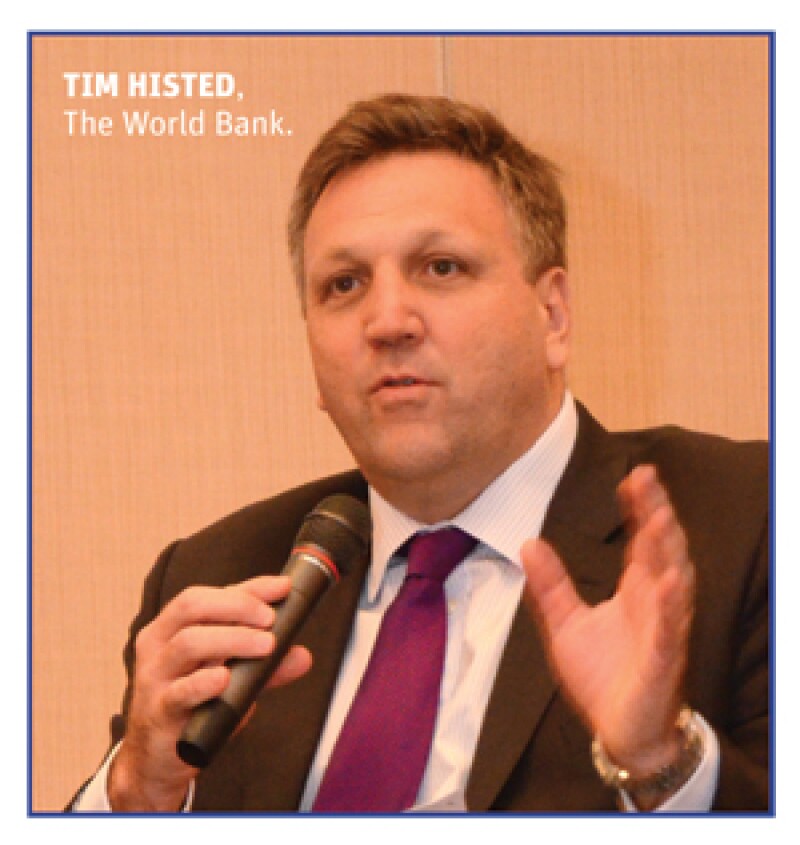
Mispagel, Moody's: We need to bear in mind that there is no one solution; it is not just PPPs, it is not just domestic banks — it is a range of solutions. But one of the next steps we will see is credit enhancement being added to deals by multilateral institutions, and the introduction of more offshore investors that are well-matched to particular projects.
AM: The flipside to this discussion is, of course, why sponsors should turn to foreign banks at all, especially with the abundance of local liquidity.
Giblett, SMBC: It really comes with size, but as mentioned previously it is also about tenor as well. The Philippine banks are slowly going out, so in three or four years time, we may see them pushing out the tenors to 18 or 20 years.
The third point, that Cosette mentioned, is the experience that international banks have about ECA financing. That is going to be particularly important as some of these projects ramp up, and you require equipment being imported from Japan or Korea or the US, in order to raise some of the debt and also provide the cover, you may try to get US Exim financing, JBIC financing or Kexim financing. This is not an area where Philippine banks have expertise at the moment.
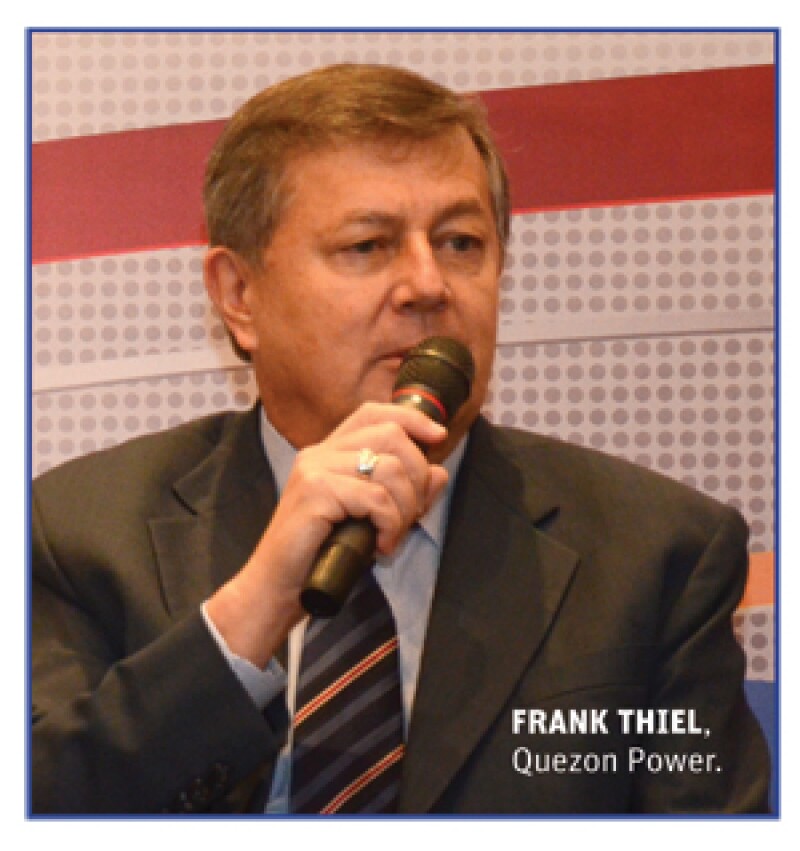
Thiel, Quezon Power: We look to structure our deals so they can be attractive to both international and domestic banks. We make no real distinction between the two. We try to bring to the table a project that is well-structured, with an off-take agreement — in our case we were able to secure a 20 year-plus power supply agreement — and also with
AM: How much impact is Basel III going to have on project financing in the Philippines and elsewhere in the Asean region?
Giblett, SMBC: The jury is still out to some extent. There have been quite a lot of banks moving out of project finance in the last few years, particularly on the European bank side. This was more due to European sovereign crisis and the global financial crisis than Basel III.
Basel III will have an impact, in particular with respect to the net stable funding requirement, which requires banks to put in place longer-term funding to reduce their risks. But there is a common misconception here that this requires match funding, which is not always the case. When banks are providing loans in excess of 12 months, they have to put in funding of at least 12 months. Of course, banks are now being prudent — they're not just raising 12 month funds, they're raising three year, five year or 10 year funds. But clearly they are not always going to match funds, because if they tried to raise 20 year funding it would be very expensive.
The net result, however, is that there will be an impact on pricing as banks try to be more prudent by reducing maturity mismatches, if not eradicating them. But it's worth bearing in mind that project finance as an asset class is still very attractive and, from our perspective, it is a market we're still very committed too.
Seethepalli, World Bank: I fully agree with Mark's view that the jury is still out on Basel III but one factoid in this regard is that, globally, the PPP market has hit a pause button. In countries which had strong programmes where there was private money coming into infrastructure — whether South Africa, the UK, or Korea — we have seen PPPs slow down, for a variety of reasons. This is sometimes for political reasons, especially when new administrations come in and could downplay achievements and highlight weaknesses of incumbent policies, as well as due to financial and non-financial issues I referred to earlier.
But because pipelines have slowed down in these mature markets, investors and bankers in these markets are looking to put money overseas. Asean countries potentially have a very good opportunity to capitalise on the lack of investments in the more mature markets. The Philippines market is definitely more vibrant than some of its neighbours, so it is an opportune time to capitalise on international banks looking for somewhere to invest.
AM: How much more can the government put in place before the next election in 2016? Is there much more progress that can be made?
Canilao, PPP: We've prepared for the election, hence we are trying to institutionalise some of the things we are doing now. But aside from that, we are trying to roll out 15 new projects in the next 12 months. By the end of this government’s term, we intend to have at least 15 contracts signed, 10 projects handed over to the private sector for operations and maintenance, and five projects completed. We also want to leave a pipeline of around 50 projects for the next administration to work with.
AM: How big are the opportunities going to be for JBIC and MIGA in the next few years? Is there already a decent pipeline of activity coming your way?
Satake, JBIC: I understand that there are infrastructure needs in the Philippines, and I hope that more Japanese companies are going to be involved as contractors or as investors in these projects. We want to be able to support those projects in the future. One project we're working on now is a transportation-related project — that we're hoping to provide finance for soon. We also understand that some of Japanese companies are hoping to work on water projects.
Histed, MIGA: We also hope to be more involved in the future. We've got the capacity to do it. But when you move to long-dated project finance below investment grade the capital requirements are a lot higher — even when you are providing political risk insurance to banks, they don't get the regulatory capital relief. When you're investment grade and above, political risk insurance does kick in as a real risk mitigant to banks when they're lending.
Mispagel, Moody's: We recently published a report about government solutions to improving infrastructure investment, in light of increased interest not only in Asia but Africa, the Americas, and elsewhere. There is a range of different approaches we describe in this report in terms of government involvement in trying to facilitate infrastructure investment. Some of these do focus on PPPs, and facilitating project finance bonds. But what we have seen is that you cannot simply take a model entirely from another market; there needs to be a groundswell of support within a local market and the model a country puts in place needs to be an expression of the reality on the ground there.